👷 CAREERS
💼 Library & Information Science (MLIS)
VA Economics, Civics & Career Readiness SOL K.8, 1.8, 2.8, 3.9
Public Librarian
Information Detectives Opening Free Doors to Wonder
Grade 1 • Early Reader • 67 words
🧭 Career FieldPublic Libraries, Civic Archives & Community Learning Hubs
🛠️ Key Tools & SkillsDigital catalogs, book scanners, research databases, 3D makerspace gear, and storytelling skills
🏢 WorkplacePublic reading rooms, children's story corners, community makerspaces, and bookmobiles
⚡ Everyday Impact SparkConnects every neighbor—for free—with trustworthy answers, stories, and digital tools
🤯 Mind-Blowing Fact • Grade 1
There are more public libraries across the United States than there are McDonald's restaurants!
✨ Word Sparks (Grade 1 Glossary)
Tap 🔊 to hear
borrow
To use something and give it back
catalog
An organized list of items to find
scanner
A tool that reads barcodes with light
🪝
Where can you borrow a hundred adventures without spending one penny?
1
Step Inside Wonder
Beep! A tiny reads your library card. Shelves of dragon tales, shark facts, and space books tower all around you.
2
Story Time Guides
Need a funny book about frogs? Ask a public librarian! They know right where the best stories hide. At story time, they read with silly voices and puppets.
3
Free for Everyone
You take books home, read them, and bring them back to share. Everyone in town is welcome here!
1. How much money does it cost to check out a book with a public library card?
2. How can a public librarian help if you love sharks?
🤯 Mind-Blowing Fact • Grade 2
Many modern public libraries lend out telescopes, musical instruments, board games, sewing machines, and flower seeds alongside books!
✨ Word Sparks (Grade 2 Glossary)
Tap 🔊 to hear
bookmobile
A traveling van or bus carrying library books
organize
To put things in neat, helpful order
resource
Something useful that helps people learn or work
🪝
Why are modern libraries filled with robots, audiobooks, and lively helpers instead of just quiet whispers?
1
Not Just 'Shhh!' Anymore
Forget the old rumor that libraries are always silent! Step into a town library today and you might hear puppet shows, coding clubs, and neighbors chatting at computer stations.
2
Treasure Hunters of Knowledge
Guiding all this activity is the public librarian. They thousands of books by number and subject so nothing gets lost. When you have a big question, they help you hunt down true answers in books and safe websites.
3
Rolling Books to You
Some librarians even drive colorful ''—libraries on wheels—to visit parks, farms, and neighborhoods far from town!
2. Besides paper books, what else can people often find at today's public libraries?
🤯 Mind-Blowing Fact • Grade 3
Benjamin Franklin helped launch America's first subscription lending library in Philadelphia in 1731 so neighbors could pool money and share expensive books!
✨ Word Sparks (Grade 3 Glossary)
Tap 🔊 to hear
call number
Numbers and letters showing a book's shelf spot
reference
Checking reliable sources to find accurate facts
makerspace
A shared workshop for building and inventing
🪝
How do librarians keep millions of facts organized—and spot sneaky fake facts online?
1
Information Detectives
Type a question into the internet and millions of pages pop up in half a second—some true, and some completely made up! Standing ready at the desk, a public librarian acts as a trained information detective who helps people find trustworthy facts.
2
Mastering Clever Systems
Imagine trying to find one mystery novel in a building holding eighty thousand books! Librarians use smart classification systems, like the Dewey Decimal System, along with digital catalogs and barcodes. Every item gets a —a street address on the shelf.
3
Curating for the Whole Town
Librarians also choose which new graphic novels, e-books, large-print mysteries, and bilingual picture books to buy so every neighbor sees their interests reflected.
4
Makerspaces and Summer Reading
Many branches feature with 3D printers and craft tools, plus summer reading challenges that keep kids' brains sharp all vacation long!
1. How does a call number on a book's spine help library visitors?
2. Why are librarians called 'information detectives'?
🤯 Mind-Blowing Fact • Grade 4
Americans visit their local public libraries more than one billion times a year and check out millions of digital e-books and audiobooks from home!
✨ Word Sparks (Grade 4 Glossary)
Tap 🔊 to hear
interlibrary loan
Libraries sharing books with other library branches
media literacy
Checking whether news and websites are trustworthy
archive
A protected collection of historical documents
🪝
Why do democracies depend on public librarians to keep knowledge open and accessible to every citizen?
1
A Palace for Every Neighbor
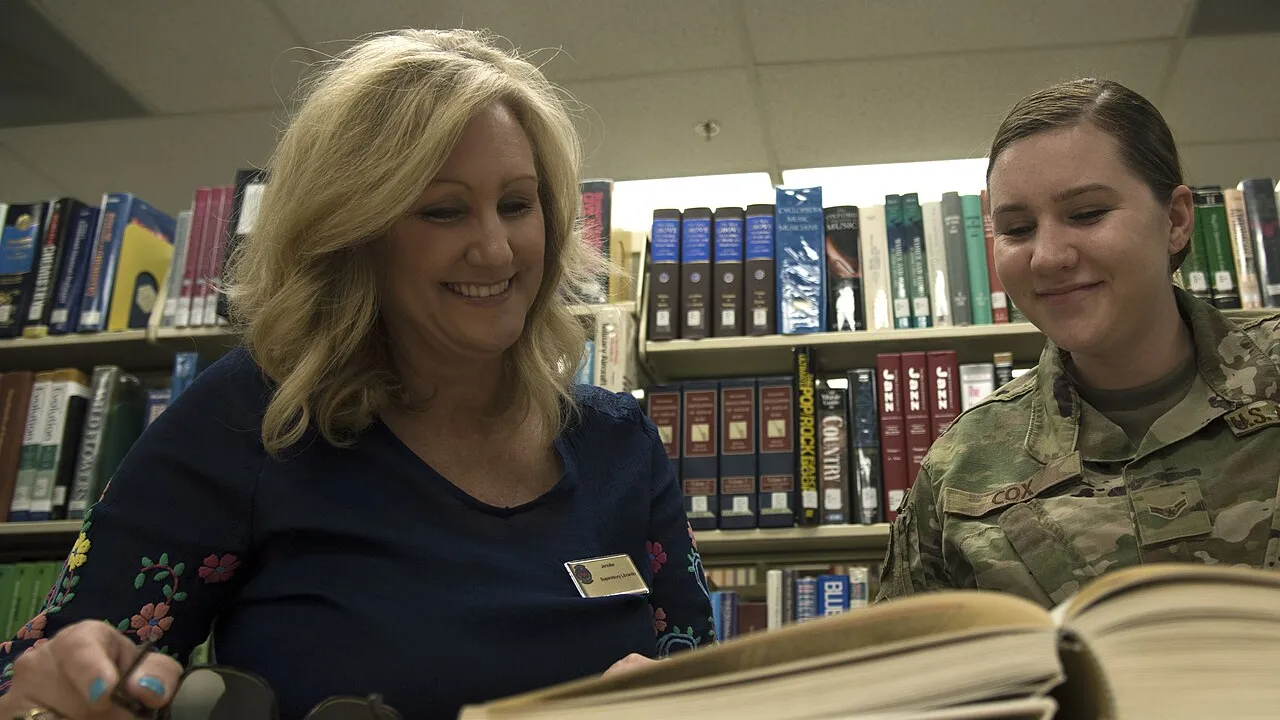
Walk through the doors of a city or county library on a Saturday afternoon: a fourth grader researches Virginia history for a project, a grandparent learns how to spot email scams, and an entrepreneur prints a prototype on a 3D printer. Guiding all three—without charging a dime—is a public librarian.
2
The Science Behind the Shelves
Professional librarians usually earn a master's degree in Library and Information Science (MLIS). Rather than just reading all day, they study metadata, database architecture, archival preservation, and digital literacy. They maintain massive online networks that allow a small rural branch to borrow rare books from libraries hundreds of miles away through .
3
Bridging the Digital Divide
Not every household can afford high-speed Wi-Fi, expensive encyclopedias, or hundreds of hardcover books. Public libraries bridge that gap by offering free internet access, portable Wi-Fi hotspots, homework tutoring, career workshops, and bilingual story hours funded by local towns and counties.
4
Teaching Media Literacy
In an era of viral online rumors, librarians coach students and adults to ask smart detective questions: Who wrote this source, when was it published, and what evidence backs it up? Practicing that habit builds critical thinking and strengthens informed citizenship across every neighborhood.
1. How does interlibrary loan help someone at a small town library?
2. How do public libraries help bridge the 'digital divide'?
🤯 Mind-Blowing Fact • Grade 5
The Library of Congress in Washington, D.C.—the largest library on Earth—holds more than 175 million items across roughly 838 miles of bookshelves!
✨ Word Sparks (Grade 5 Glossary)
Tap 🔊 to hear
metadata
Structured details describing a book or file
lateral reading
Checking outside sources to verify online claims
preservation
Protecting fragile books and records from decay
🪝
From ancient papyrus scrolls to artificial intelligence, how have librarians evolved into guardians of civic knowledge?
1
Where Curiosity Meets Infrastructure
Behind the welcoming hum of a children's reading room lies a sophisticated information network. Every time a patron taps 'borrow' on a tablet at midnight or searches local Virginia census records from 1910, a public librarian's invisible architecture of cataloging standards, digital licensing agreements, and search algorithms goes to work.
2
Centuries of Shared Knowledge
More than two thousand years ago, scholars at the Great Library of Alexandria cataloged papyrus scrolls on Pinakes—the ancient world's first subject index. Centuries later, in 1833, Peterborough, New Hampshire established the first tax-supported free public library in the United States, pioneering the bold civic idea that universal access to knowledge strengthens self-government. In 1876, Melvil Dewey introduced his decimal classification system so growing collections could be navigated logically.
3
Information Science in the Digital Age
Today's credentialed librarians hold a Master of Library and Information Science (MLIS) and manage hybrid collections spanning print volumes, peer-reviewed research databases, local oral-history archives, and streaming accessibility tools like Braille and talking-book services for visually impaired readers. Using standardized MARC records, they make millions of items searchable across statewide networks in milliseconds.
4
Defending Truth and Verification
As synthetic media, deepfake images, and misinformation flood digital feeds, librarians teach —cross-checking unfamiliar claims across independent primary sources and academic databases before trusting a headline. They also protect patron privacy and preserve fragile town newspapers in acid-free archives.
5
Civic Anchors for All
Across more than 17,000 U.S. public library buildings and rural bookmobiles, librarians uphold one of democracy's rarest promises: an open, welcoming civic space where lifelong curiosity requires no ticket, only a question.