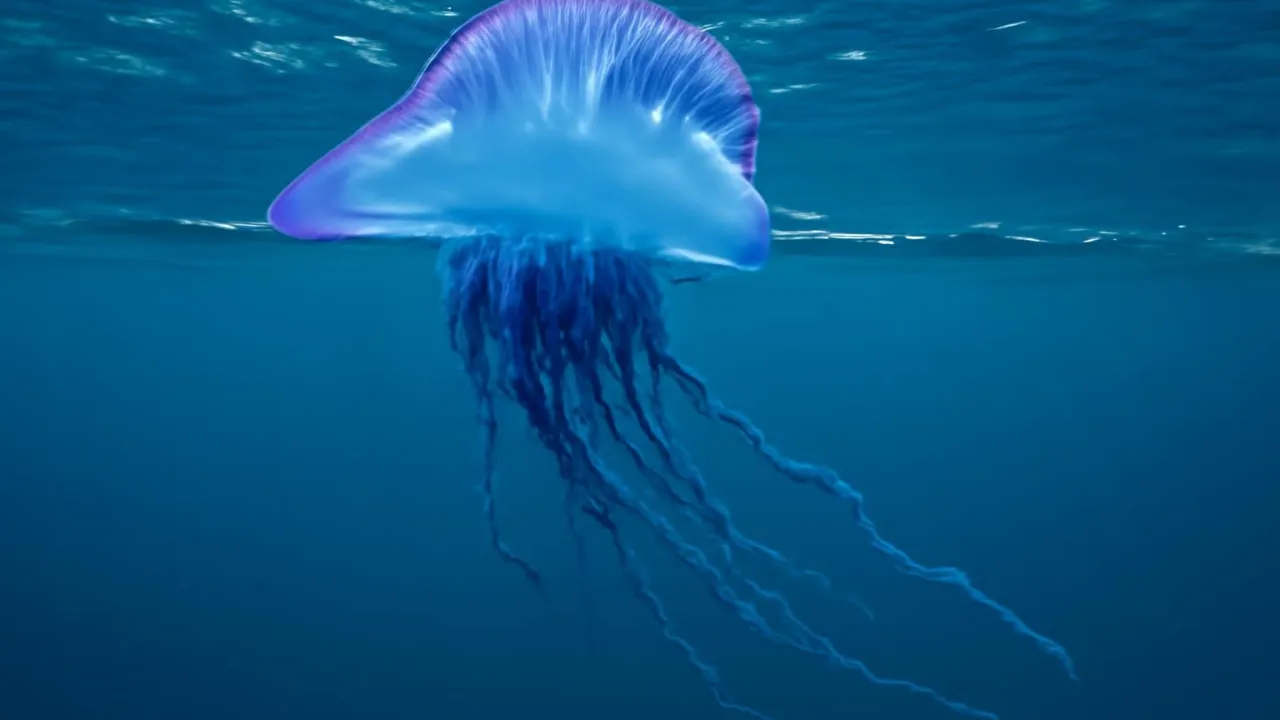
A Man o’ War’s tentacles can be longer than a school bus!
✨ Word Sparks (Grade 2 Glossary)
Tap 🔊 to hear
plankton
Tiny sea plants and animals
currents
Moving water in the ocean
armada
A group floating together
🪝
Did you know some sea creatures look like balloons but can sting you?
1
A Floating Wonder
The Portuguese Man o’ War floats on the ocean, looking like a shiny blue balloon. Its float helps it stay on the water’s surface, moving with the wind and waves. This animal is not a jellyfish, but it looks like one. It is made of four parts that work together as a team.
2
Super Long Tentacles
Long, thin tentacles dangle from its body and can be very hard to see. These tentacles can reach up to 30 feet long and are covered in stingers. The stingers help the Man o’ War catch tiny fish and for food. The sting can hurt people, so it is best to watch from a safe distance.
3
Where It Lives
You can find the Man o’ War in warm oceans all around the world. It floats in groups called ‘’ that drift with the . Sometimes, strong winds push them onto beaches where people might see them. Even washed-up Man o’ Wars can still sting, so never touch them.
2. Why should you never touch a washed-up Man o’ War?
🤯 Mind-Blowing Fact • Grade 3
The Man o’ War’s float can dry out and still sting days later!
✨ Word Sparks (Grade 3 Glossary)
Tap 🔊 to hear
colony
A group living together as one
nematocyst
A tiny stinging cell
venom
Poison some animals use to hunt
🪝
Can you imagine an animal that looks like a balloon but is really a team?
1
Not a Jellyfish!
The Portuguese Man o’ War may look like a jellyfish, but it is not one at all. It is actually a made of four different types of animals called polyps. Each polyp has a special job, like floating, stinging, feeding, or reproducing. Working together, they survive as one amazing creature.
2
Tentacles That Hunt
The Man o’ War’s tentacles can stretch up to 50 meters long underwater. These tentacles are covered in tiny stinging cells called that inject into prey. Small fish and plankton get paralyzed by the sting and become easy meals. The tentacles can still sting even after the animal is washed up.
3
Floating and Drifting
Its bright blue, purple, or pink float is like a sail, catching the wind to move. The float can be up to 12 inches long and helps the stay at the ocean’s surface. The Man o’ War cannot swim on its own, so it drifts with the currents. Sometimes, large groups called armadas are pushed onto beaches after storms.
4
A Role in the Ocean
The Man o’ War is both a predator and prey in its ocean habitat. It eats small fish and plankton, but some animals, like the loggerhead turtle, can eat it safely. Its stings help protect it from most predators. The Man o’ War is important for keeping the balance in the ocean food web.
1. What is special about the Man o’ War’s tentacles?
2. What does the Man o’ War eat?
🤯 Mind-Blowing Fact • Grade 4
The Man o’ War’s float can change shape to catch more or less wind, helping it travel farther!
✨ Word Sparks (Grade 4 Glossary)
Tap 🔊 to hear
siphonophore
A colony of animals acting as one
buoyant
Able to float easily on water
polyps
Tiny animals with special jobs
🪝
What if you saw a blue balloon drifting on the ocean, but it was alive and dangerous?
1
A Living Team, Not a Single Animal
The Portuguese Man o’ War is a , which means it is a colony of four specialized working together as one organism. Each polyp type has a unique job: the pneumatophore forms the gas-filled float, the dactylozooids create the stinging tentacles, the gastrozooids digest food, and the gonozooids help with reproduction. This teamwork lets the Man o’ War survive in the open ocean, where conditions can be harsh and unpredictable.
2
Deadly Tentacles and How They Work
The Man o’ War’s tentacles can grow up to 165 feet long and are packed with thousands of nematocysts, or stinging cells. When a fish or small creature brushes against a tentacle, the nematocysts fire tiny harpoons that inject venom, quickly paralyzing the prey. The tentacles then pull the food up to the digestive . Even after being separated from the colony, the tentacles can still deliver a painful sting to humans and animals.
3
Floating, Drifting, and Surviving
The Man o’ War’s colorful float acts like a sail, catching the wind and letting it drift across the ocean’s surface. It cannot swim or steer itself, so it relies on ocean currents and wind to travel. Sometimes, huge groups called armadas wash up on beaches after storms, surprising beachgoers. The float can be up to a foot long and is filled with gases like carbon monoxide, which helps it stay .
4
Ecosystem Role and Human Encounters
The Man o’ War is both a top predator and an important prey species in marine food webs. It helps control populations of small fish and plankton, but it is also eaten by animals like the loggerhead turtle and the blanket octopus, which are immune to its venom. Human encounters are usually accidental and can be painful, but the Man o’ War is not aggressive. Scientists study its venom for possible medical uses, and beach warnings help keep people safe.
A single Man o’ War tentacle can deliver enough venom to paralyze over 60 small fish at once!
✨ Word Sparks (Grade 5 Glossary)
Tap 🔊 to hear
zooid
A special part of a colony animal
venomous
Able to inject poison into prey
buoyancy
The ability to float in water
🪝
What if the most dangerous thing floating on the ocean isn’t a jellyfish, but a living colony with a sail?
1
A Siphonophore, Not a Jellyfish
Although often mistaken for a jellyfish, the Portuguese Man o’ War (Physalia physalis) is a siphonophore—a colonial organism composed of four distinct , each highly specialized for a particular function. The pneumatophore, or float, keeps the colony at the water’s surface, while the dactylozooids form the tentacles, the gastrozooids handle digestion, and the gonozooids are responsible for reproduction. These zooids cannot survive independently, but together, they create a complex and efficient marine predator. This division of labor is a remarkable example of biological cooperation and adaptation.
2
Physiology and Venom Delivery System
The Man o’ War’s float can reach up to 12 inches (30 centimeters) in length and is filled with gases, including carbon monoxide, which provides exceptional . Its tentacles, sometimes extending over 165 feet (50 meters), are armed with millions of nematocysts—microscopic capsules that explosively eject threads upon contact. This venom contains toxins that rapidly paralyze and kill small fish and plankton, providing a steady food supply for the colony. Even detached tentacles retain their stinging ability for days, posing a risk to unsuspecting beach visitors.
3
Life Cycle and Reproduction
Portuguese Man o’ Wars reproduce sexually by releasing eggs and sperm into the water, where fertilization occurs externally. The resulting larvae develop into new colonies, each beginning as a single polyp that buds additional specialized as it matures. Unlike true jellyfish, the Man o’ War does not have a medusa stage in its life cycle. Colonies can live for several months, drifting vast distances across ocean currents and sometimes forming massive armadas that stretch for miles.
4
Ecological Importance and Human Impact
As both predator and prey, the Man o’ War plays a vital role in marine ecosystems by regulating populations of small fish and plankton. Its tentacles deter most predators, but certain species, such as loggerhead turtles and the blanket octopus, have evolved resistance and feed on it. Human encounters, often accidental, can result in severe stings that require medical attention, but fatalities are extremely rare. Beach closures and warning signs help minimize risks, while scientists study Man o’ War venom for potential medical breakthroughs.
5
Distribution, Adaptations, and Conservation
Portuguese Man o’ Wars are found in warm waters of the Atlantic, Pacific, and Indian Oceans, especially in the Gulf Stream and tropical regions. Their floats can change shape to catch more or less wind, allowing them to travel up to 100 miles (160 kilometers) in a single week. Climate change and shifting ocean currents may influence their distribution, occasionally leading to mass strandings on beaches. While not currently endangered, their populations are monitored due to changing ocean conditions and increasing human interactions.