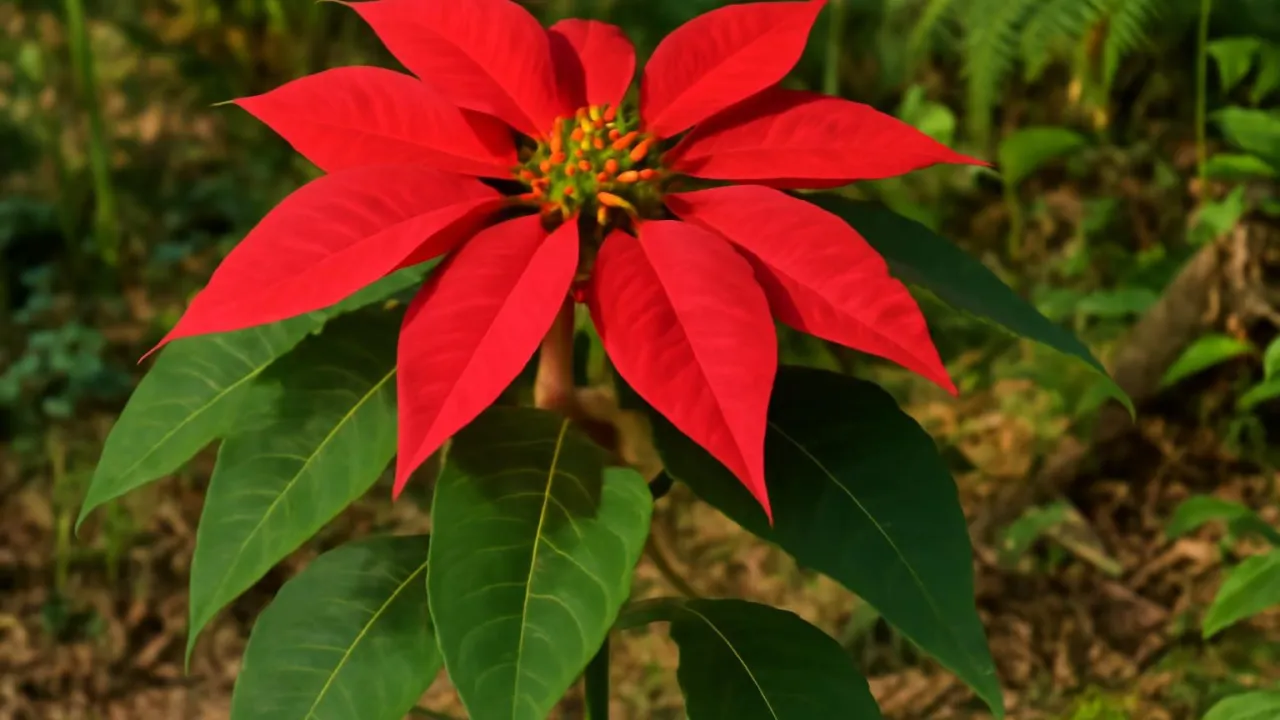
Poinsettias’ red parts are not petals but colorful leaves called bracts!
✨ Word Sparks (Grade 2 Glossary)
Tap 🔊 to hear
bracts
Leaves that look like flower petals
insects
Small animals like bees and butterflies
decorate
To make a place look nice and bright
🪝
Have you ever seen a plant with leaves as bright as flowers?
1
Colorful Leaves That Shine
Poinsettias have bright red leaves that look like flowers. These leaves are called . They help the plant attract . The real flowers are small and yellow.
2
Warm Places to Grow
Poinsettias grow best in warm places like Mexico. They need bright sunlight and water to stay healthy. They do not like cold weather. People often bring them inside when it gets cold.
3
A Special Holiday Plant
Many people use poinsettias to their homes at Christmas. The bright red color makes homes feel warm and happy. Poinsettias can live for many years if cared for well.
Poinsettias use bright bracts to attract pollinators and protect tiny flowers!
✨ Word Sparks (Grade 3 Glossary)
Tap 🔊 to hear
pollination
When insects help plants make seeds
adaptation
A change that helps plants survive better
nectar
Sweet liquid that flowers make for insects
🪝
Did you know poinsettias use colorful leaves to trick insects?
1
Bright Bracts Help Survival
Poinsettias have bright red bracts that attract pollinators like bees and butterflies. These colorful leaves surround tiny yellow flowers that produce . This helps the plant survive and reproduce in its environment. The bracts also protect the flowers from harsh sun.
2
Warm Habitat and Growth
Native to southern Mexico, poinsettias thrive in warm climates with plenty of sunlight. They grow as shrubs reaching up to 10 feet tall. Their roots absorb nutrients and water from the soil to support healthy growth. Cold temperatures can damage their leaves and slow development.
3
Role in Ecosystems
Poinsettias provide for insects, which helps and supports food webs. Birds and small animals may use the shrubs for shelter. Humans cultivate poinsettias widely during winter holidays, influencing their spread beyond native areas. Their bright colors also deter some herbivores.
4
Interesting Plant Features
Unlike many flowers, poinsettias’ showy parts are bracts, not petals. The true flowers are small and clustered in the center. This botanical feature surprises many people who think the red parts are petals. The plant’s latex sap can cause skin irritation for some individuals.
1. What do poinsettia bracts do to help the plant?
2. Why do poinsettias grow best in warm places?
🤯 Mind-Blowing Fact • Grade 4
Poinsettias’ red bracts both attract pollinators and protect tiny flowers from harm.
✨ Word Sparks (Grade 4 Glossary)
Tap 🔊 to hear
symbiotic
When two living things help each other
ornamental
Plants grown to look pretty and decorate
pollinators
Animals that move pollen between flowers
🪝
How do poinsettias’ bright bracts affect their survival and human use?
1
Bright Bracts and Pollination
Poinsettias have bright red bracts that attract such as bees and butterflies, which help transfer pollen to flowers. This cause-and-effect relationship ensures the plant’s reproduction and survival. The bracts also protect the small yellow flowers from harsh sunlight and predators. These adaptations increase the plant’s chances of thriving in its native habitat.
2
Ecosystem Roles and Food Webs
In their native Mexican ecosystems, poinsettias provide nectar that supports many insects, which in turn feed birds and other animals. This relationship strengthens local food webs. Additionally, the shrubs offer shelter to small animals, contributing to biodiversity. Human cultivation of poinsettias during the holiday season has expanded their geographic range beyond natural limits.
3
Geographic Distribution and Human Impact
Originally from southern Mexico and Central America, poinsettias are now grown worldwide as plants. Their popularity during Christmas has led to widespread commercial farming. However, improper disposal of poinsettia plants can affect local ecosystems. Conservation efforts promote sustainable cultivation and educate people about the plant’s ecological importance.
4
Unique Botanical Features
Unlike many flowering plants, poinsettias’ bright red parts are actually bracts, not petals, which is a unique botanical adaptation. The true flowers are tiny and located at the center of the bracts. This feature surprises many gardeners and consumers. Additionally, the plant produces a milky sap that can cause skin irritation and should be handled carefully.
1. What role do poinsettias play in their ecosystem?
2. Why should people handle poinsettias carefully?
🤯 Mind-Blowing Fact • Grade 5
Poinsettias change leaf color using pigments triggered by daylight length, not flower petals!
✨ Word Sparks (Grade 5 Glossary)
Tap 🔊 to hear
anthocyanins
Pigments that make leaves red or purple
deciduous
Plants that lose leaves in some seasons
latex
Milky sap that can protect plants
🪝
What makes the poinsettia a fascinating botanical marvel with unique ecological and cultural roles?
1
Taxonomy and Botanical Classification
The poinsettia, scientifically named Euphorbia pulcherrima, belongs to the Euphorbiaceae family, which includes many species with milky sap. It is a flowering shrub native to southern Mexico and Central America, where it grows in tropical forests. Its classification highlights its unique botanical features, such as the presence of colorful bracts instead of showy petals. This plant’s taxonomy reflects its evolutionary adaptations to its native environment.
2
Physiological Adaptations and Mechanisms
Poinsettias have evolved bright red bracts that function to attract pollinators while protecting the inconspicuous true flowers at their center. The bracts contain pigments called , which develop in response to shorter daylight periods, triggering color changes. The plant’s sap contains compounds that deter herbivores, providing a chemical defense mechanism. Additionally, poinsettias regulate water efficiently to survive in their native warm, sometimes dry habitats.
3
Conservation and Botanical History
Poinsettias were introduced to the United States by Joel Roberts Poinsett in the early 19th century, which is why the plant bears his name. Since then, poinsettias have become a symbol of Christmas worldwide. Conservation efforts focus on sustainable cultivation to prevent overharvesting from wild populations. Botanical gardens and researchers study poinsettias to understand their ecological roles and improve cultivation techniques.
4
Quantitative Comparisons and Growth
Poinsettias can grow between 3 and 10 feet tall (1 to 3 meters) depending on environmental conditions. Their bracts change color in response to day lengths of less than 12 hours, usually in late autumn. The plant thrives in temperatures between 60 and 70 degrees Fahrenheit (15 to 21 degrees Celsius). Commercially grown poinsettias can produce thousands of bracts per plant, making them highly valued for decorative use.
5
Ecological and Cultural Significance
Ecologically, poinsettias support pollinators such as bees and butterflies by providing nectar, thus playing a key role in local food webs. Culturally, they are deeply embedded in Mexican holiday traditions and have become a global symbol of Christmas cheer. Their bright red bracts and unique botanical features continue to fascinate botanists, gardeners, and holiday enthusiasts alike. Responsible cultivation ensures their ongoing ecological and cultural importance.