👷 CAREERS
💼 Astronomy Education, Fulldome Visualization & Museum Leadership
VA Economics, Civics & Career Readiness SOL K.8, 1.8, 2.8, 3.9
Planetarium Director
Bringing the Starry Universe Down to Earth
Grade 1 • Early Reader • 74 words
🧭 Career FieldAstronomy, Museum Science Education & Digital Media
🛠️ Key Tools & SkillsFulldome star projectors, 3D sky-mapping software, telescopes, and laser pointers
🏢 WorkplaceDomed planetarium theaters, science museums, universities, and rooftop observatories
⚡ Everyday Impact SparkFlying audiences across constellations, planets, and distant galaxies without leaving their seats
🤯 Mind-Blowing Fact • Grade 1
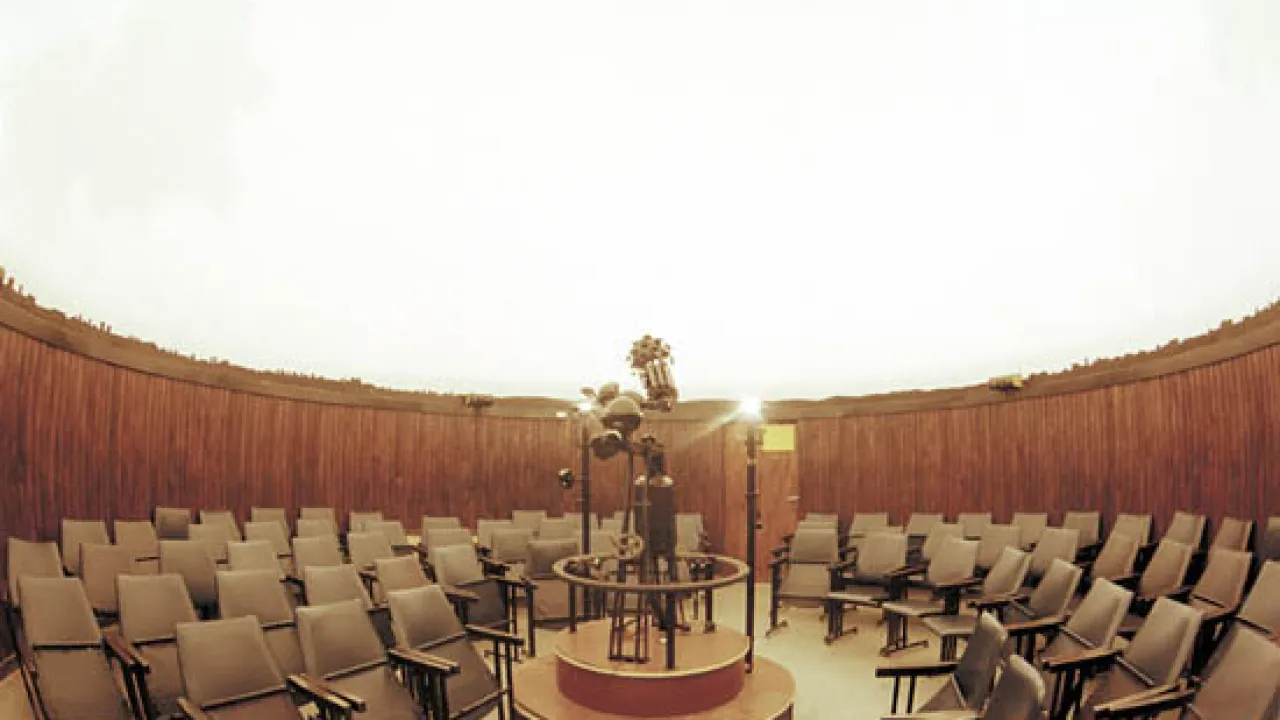
Planetarium seats tilt backward so everyone can gaze straight up at the curved ceiling dome just like lying on a grassy hill at night!
✨ Word Sparks (Grade 1 Glossary)
Tap 🔊 to hear
dome
A large rounded roof shaped like half-ball
projector
A machine shining bright pictures onto screens
constellation
A pattern of stars in the sky
🪝
Where can you see twinkling stars and glowing planets in the middle of the afternoon?
1
Lights Down, Stars Out!
Hush! The round ceiling above your tilted chair fades to velvet black. Suddenly, thousands of bright stars sparkle overhead! A friendly voice welcomes you—that is the planetarium director.
2
Connecting Star Pictures
Using a glowing pointer and big , the director traces star shapes like the Big Dipper. Next, we zoom right past Saturn's icy rings!
3
Sharing Space Wonder
Planetarium directors plan space shows, school trips, and telescope nights. They help kids fall in love with exploring the night sky!
1. What happens inside a planetarium theater when the room lights dim?
2. Why do planetarium chairs tilt backward?
🤯 Mind-Blowing Fact • Grade 2
The first modern optical star projector debuted in Munich, Germany, in 1923 and looked like a giant robotic insect covered in lenses!
✨ Word Sparks (Grade 2 Glossary)
Tap 🔊 to hear
console
Control desk with buttons, screens, and sliders
eclipse
When one space object blocks another's light
observatory
Building with telescopes for watching space
🪝
How can a planetarium director speed up time or fly you to Mars before lunch?
1
Piloting a Sky Theater
Seated at a glowing control at the edge of a curved dome, a planetarium director taps a keyboard and slides a joystick. Instantly, tonight's sunset fast-forwards into midnight, showing city kids thousands of faint stars normally hidden by streetlights!
2
Building Exciting Space Shows
Directors wear many hats at science centers and schools. They write scripts about moon phases, , and space rovers, choose music, and blend computer animations with real NASA telescope photos.
3
Stargazing With the Community
When real night falls outdoors, planetarium directors often roll brass and mirror telescopes out onto museum lawns so families and students can spot Saturn's icy rings and Jupiter's bright moons with their own eyes!
1. Why can you often see more stars in a planetarium than in a bright city?
2. Where do real planetarium space photos often come from?
🤯 Mind-Blowing Fact • Grade 3
Sixty-two NASA astronauts—including Neil Armstrong and Sally Ride's predecessors in the Apollo program—practiced star navigation inside planetarium domes before flying to space!
✨ Word Sparks (Grade 3 Glossary)
Tap 🔊 to hear
axis
Imaginary line an object spins around
navigate
To find your way using landmarks or stars
optical
Using lenses and mirrors to focus light
🪝
How did astronauts training to walk on the Moon use a planetarium dome to steer through space?
1
A Three-Dimensional Map of Space
Whoosh! Earth shrinks into a glowing blue marble behind your seat as the curved dome rushes past rusty red Mars, the rocky asteroid belt, and Jupiter's swirling Great Red Spot. Modern planetarium directors pilot digital 3D universes built from millions of real star positions measured accurately by space observatories!
2
Training Moon Explorers
During the 1960s Space Race, NASA Mercury, Gemini, and Apollo astronauts trained inside Morehead Planetarium! Directors blacked out windows and projected realistic spacecraft window views so astronauts could home safely using 57 bright guide stars if onboard computers ever failed.
3
Matching Shows to Curious Minds
In a single busy morning, a director might teach third graders why Earth's tilted creates changing seasons, then host an evening public show explaining black holes, meteor showers, and brand-new James Webb Space Telescope discoveries.
4
Science, Storytelling, and Leadership
Beyond piloting star projectors, planetarium directors train museum presenters, maintain delicate lenses, and partner with local astronomy clubs to host community solar and lunar eclipse celebrations.
1. Why did Apollo astronauts practice inside a planetarium before flying to the Moon?
2. What makes digital planetarium star maps scientifically accurate?
🤯 Mind-Blowing Fact • Grade 4
Large planetarium domes are perforated with millions of tiny holes so sound passes cleanly from speakers behind the ceiling and projector light doesn't bounce around and wash out faint stars!
✨ Word Sparks (Grade 4 Glossary)
Tap 🔊 to hear
hemisphere
Half of a round sphere shape
perforated
Pierced with rows of tiny holes
exoplanet
A planet orbiting a distant star
🪝
What happens behind the curved perforated aluminum screen of a giant modern fulldome theater?
1
Inside the Perforated Dome
Look closely at a major museum planetarium ceiling—like The Dome at the Science Museum of Virginia in Richmond or the Einstein Planetarium at the Smithsonian in Washington, D.C.—and you will uncover a cool engineering secret! That smooth overhead is actually built from curved aluminum panels punched with millions of microscopic pinholes. Those tiny holes let surround-sound speakers hidden behind the dome fill the room clearly without echoes while stopping stray light from bouncing across the sky.
2
Two Projection Technologies Working Together
Many planetarium directors operate hybrid projection systems. Rising in the center of the room stands a precision optomechanical star ball that uses fiber-optic pinpoints to cast razor-sharp, pitch-black night skies, while rings of ultra-crisp 8K laser video projectors around the cove stitch seamless 360-degree fulldome animations overhead.
3
Translating New Space Discoveries Overnight
Whenever astronomers photograph a distant , land a rover inside a Martian crater, or spot an approaching comet brightening in the east, an agile planetarium director downloads the orbital coordinates, programs a custom 3D flight path, and flies school groups directly to the discovery the very next morning!
4
Exploring More Than Just Stars
Modern fulldome visualization software isn't limited to outer space! Directors also pilot audiences inside microscopic human cells, down along glowing mid-ocean volcanic ridges, through hurricane cloud bands, and across ancient Polynesian, Lakota, and Greek constellation stories.
1. Why are modern planetarium domes built from aluminum panels with millions of tiny holes?
2. What non-space subjects can modern fulldome planetarium systems also visualize?
🤯 Mind-Blowing Fact • Grade 5
Modern planetarium databases plot the real three-dimensional positions and motions of more than one billion stars mapped by the Gaia space observatory!
✨ Word Sparks (Grade 5 Glossary)
Tap 🔊 to hear
calibrate
Adjust equipment precisely for accurate results
light-year
Distance light travels in one year
skyglow
Wasted artificial light brightening night skies
🪝
How does a planetarium director blend astrophysics, computer graphics, public speaking, and museum leadership into one career?
1
Navigating the Cosmic Atlas Live
Seated at the glowing control console of a tilted 76-foot dome, a planetarium director enters orbital coordinates into real-time astrophysical simulation software such as OpenSpace or Digistar. Smoothly, the entire theater lifts off from Earth's afternoon horizon, glides past the International Space Station's live trajectory, accelerates past the glowing gas pillars of the Orion Nebula 1,344 away, and pulls back until the barred spiral arms of our Milky Way galaxy wheel below—every point of light plotted from billion-star catalogs measured by the European Space Agency's Gaia spacecraft.
2
Spherical Optics, Calibration, and Fulldome Production
Projecting distortion-free imagery onto a concave hemisphere requires sophisticated spherical geometry and color science. Planetarium directors automated camera-alignment and edge-blending algorithms across six to ten synchronized laser projectors so overlapping seams vanish completely into velvet blackness. Behind the scenes, they write original documentary scripts, direct voice actors and composers, and collaborate with scientific visualizers to render supercomputer simulations of black-hole gravity lenses or planetary magnetospheres.
3
Aligning With Classroom Science Standards
Educational leadership anchors the profession. University, school-district, and museum planetarium directors design grade-specific shows aligned with state Earth-and-space standards—such as Virginia's Standards of Learning—demonstrating lunar phases, Earth's 23.5-degree axial tilt, eclipses, retrograde planetary loops, and stellar life cycles in intuitive three-dimensional space that flat textbook diagrams struggle to convey.
4
Cultural Astronomy and Dark-Sky Stewardship
Thoughtful directors weave physics together with global human heritage, sharing how Greco-Roman, Mayan, Indigenous North American, Chinese, and Polynesian wayfinders read seasonal star risings to plant harvests and cross oceans, while educating towns on how shielded outdoor LED fixtures prevent urban .
5
Pathways to the Dome Console
Most planetarium directors earn bachelor's or graduate degrees in astronomy, physics, planetary geology, or science education, sharpening live storytelling skills as student dome operators in college before leading portable inflatable school domes, university observatories, or flagship science museums.