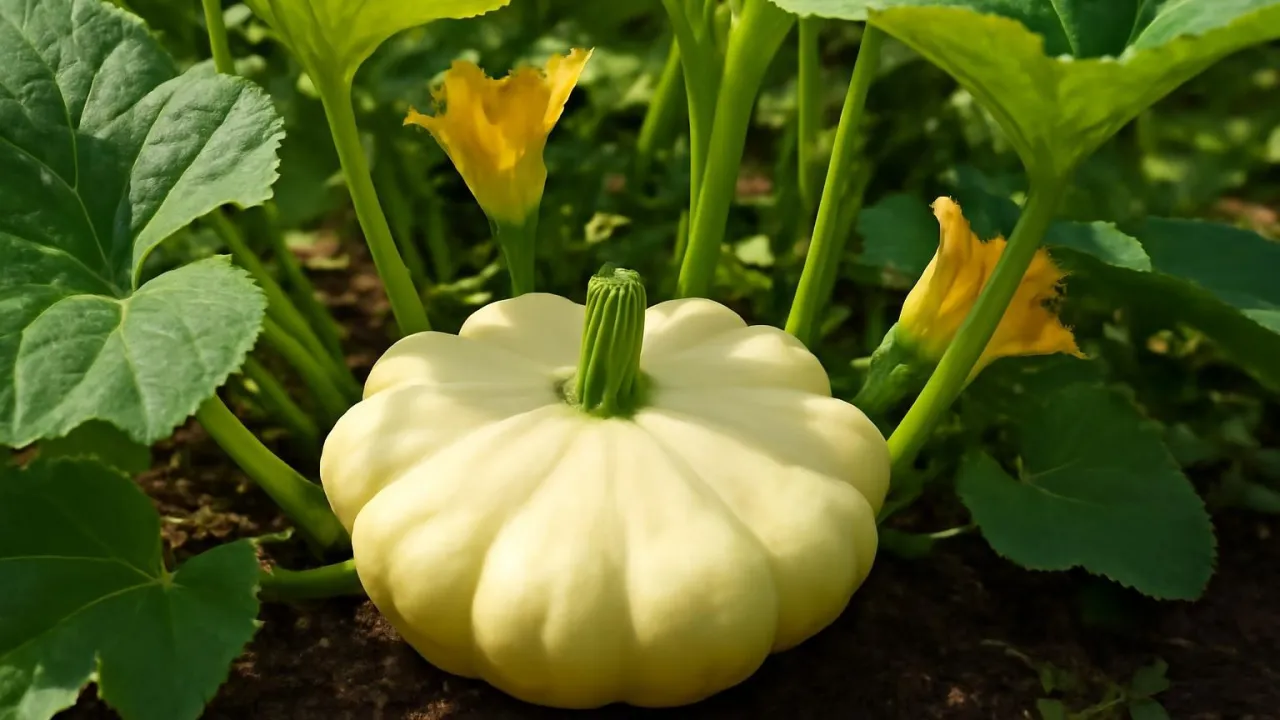
Pattypan squash's shape helps it stand out in gardens and kitchens!
✨ Word Sparks (Grade 2 Glossary)
Tap 🔊 to hear
scalloped
Edges that look like small waves
sunlight
Light from the sun plants need
roast
Cook food in hot oven heat
🪝
Have you ever seen a vegetable shaped like a tiny flying saucer?
1
Unique Shape and Colors
Pattypan squash has a round, flat shape with edges, making it look like a tiny flying saucer. It comes in bright colors like yellow, green, and white. These colors help gardeners spot it easily among leaves.
2
Where It Grows
This squash grows best in warm gardens with full and plenty of water. Farmers and gardeners plant it in soil that drains well. It grows during summer and needs care to produce tasty fruits.
3
A Tasty Treat
Pattypan squash is soft and sweet when cooked, making it a favorite vegetable for many families. People , grill, or steam it to enjoy its mild flavor. It is healthy and full of vitamins.
Pattypan squash’s unique shape helps it hide and attract helpful insects.
✨ Word Sparks (Grade 3 Glossary)
Tap 🔊 to hear
camouflage
Colors or shapes that help hide
pollination
How flowers make seeds with help
nutrients
Food parts plants and animals need
🪝
What makes the pattypan squash’s shape an amazing adaptation for survival?
1
Distinctive Shape and Camouflage
The pattypan squash has a flat, round body with scalloped edges that resemble a flying saucer. This shape helps it blend in among garden leaves, providing against predators. Its bright colors also attract pollinators like bees, which help the plant reproduce.
2
Growth and Life Cycle
Pattypan squash plants grow on vines that spread across the ground, absorbing from the soil. The squash develops from flowers after , growing to about two to four inches wide. This growth cycle takes about two months from flower to harvest.
3
Role in the Garden Ecosystem
This squash provides food for many animals, including insects and humans, making it part of the garden’s food web. Its leaves offer shelter for small insects, while the fruit stores that animals eat. Growing pattypan squash also supports soil health by covering the ground.
4
Physical Features and Adaptations
The scalloped edges of the squash may help reduce water loss by limiting surface area exposed to sun. Its smooth, waxy skin protects it from pests and diseases. These adaptations increase its chances of survival in warm, sunny environments.
1. Why does pattypan squash’s shape help it survive?
2. What role do pollinators have with pattypan squash?
🤯 Mind-Blowing Fact • Grade 4
Pattypan squash helps gardens stay healthy by feeding insects and protecting soil.
✨ Word Sparks (Grade 4 Glossary)
Tap 🔊 to hear
erosion
When soil washes away by water or wind
biodiversity
Many different plants and animals living together
temperate
Mild weather, not too hot or cold
🪝
How does the pattypan squash fit into its ecosystem and affect people’s lives?
1
Adaptations and Survival
The pattypan squash’s flat, scalloped shape reduces water loss by minimizing sun exposure on its surface, which helps it survive in warm climates. Its waxy skin acts as a barrier against pests and diseases, increasing its chances to mature fully. These adaptations allow it to thrive in garden environments.
2
Ecosystem Role and Food Web
Pattypan squash plays an important role in garden ecosystems by providing food for insects, small animals, and humans. Its flowers attract pollinators like bees, which are essential for fruit production. The plant also contributes to soil health by covering the ground and preventing .
3
Agricultural Impact and Human Use
Farmers grow pattypan squash for its unique shape and mild flavor, which makes it popular in fresh markets and kitchens. It is often harvested young to keep its tender texture. Its cultivation supports local food systems and encourages in vegetable gardens.
4
Geographic Distribution
Originally native to North America, pattypan squash is now grown worldwide in regions. It prefers warm summers and well-drained soils, thriving best where temperatures range between 70 and 85 degrees Fahrenheit. Gardeners across many countries enjoy growing this versatile vegetable.
1. How does pattypan squash help prevent soil erosion?
2. Where is pattypan squash originally from?
🤯 Mind-Blowing Fact • Grade 5
Farmers worldwide preserve pattypan squash heirloom seeds to protect its genetic diversity.
✨ Word Sparks (Grade 5 Glossary)
Tap 🔊 to hear
taxonomy
How scientists group living things
photosynthesis
How plants make food from sunlight
vascular
Tubes that carry water inside plants
🪝
What scientific secrets make the pattypan squash a fascinating vegetable to study?
1
Scientific Classification and Taxonomy
Pattypan squash belongs to the species Cucurbita pepo, which includes many types of summer squashes and pumpkins. It is classified in the Cucurbitaceae family, known for climbing vines and fleshy fruits. This helps scientists understand its evolutionary relationships with other gourds and vegetables.
2
Physiological Mechanics and Growth
The plant produces flowers that require insect pollination to develop fruit. Its broad leaves maximize by capturing sunlight efficiently. Water moves through specialized tissues, supporting rapid fruit growth to 2–4 inches in diameter within 50 to 70 days after flowering. This efficient system allows the plant to thrive in warm environments.
3
Conservation and Botanical History
Pattypan squash has been cultivated by Native American peoples for centuries as a reliable food source. Modern agricultural practices encourage its growth worldwide, but preserving heirloom varieties helps maintain genetic diversity. Conservation efforts focus on protecting these traditional strains from genetic loss due to industrial farming.
4
Quantitative Comparisons and Environmental Needs
Pattypan squash thrives in temperatures between 70 and 85 degrees Fahrenheit and requires about one inch of water weekly. Its fruit weighs roughly 3 to 5 ounces, making it smaller than many other summer squashes. This size and water efficiency make it ideal for home gardens and small farms, especially in temperate climates.
5
Culinary and Nutritional Importance
Rich in vitamins A and C, pattypan squash supports human health and nutrition. Its mild flavor and tender texture allow it to be cooked in diverse ways, including roasting, grilling, and sautéing. This vegetable’s versatility has made it a staple in many cultural cuisines around the world, highlighting its global importance.