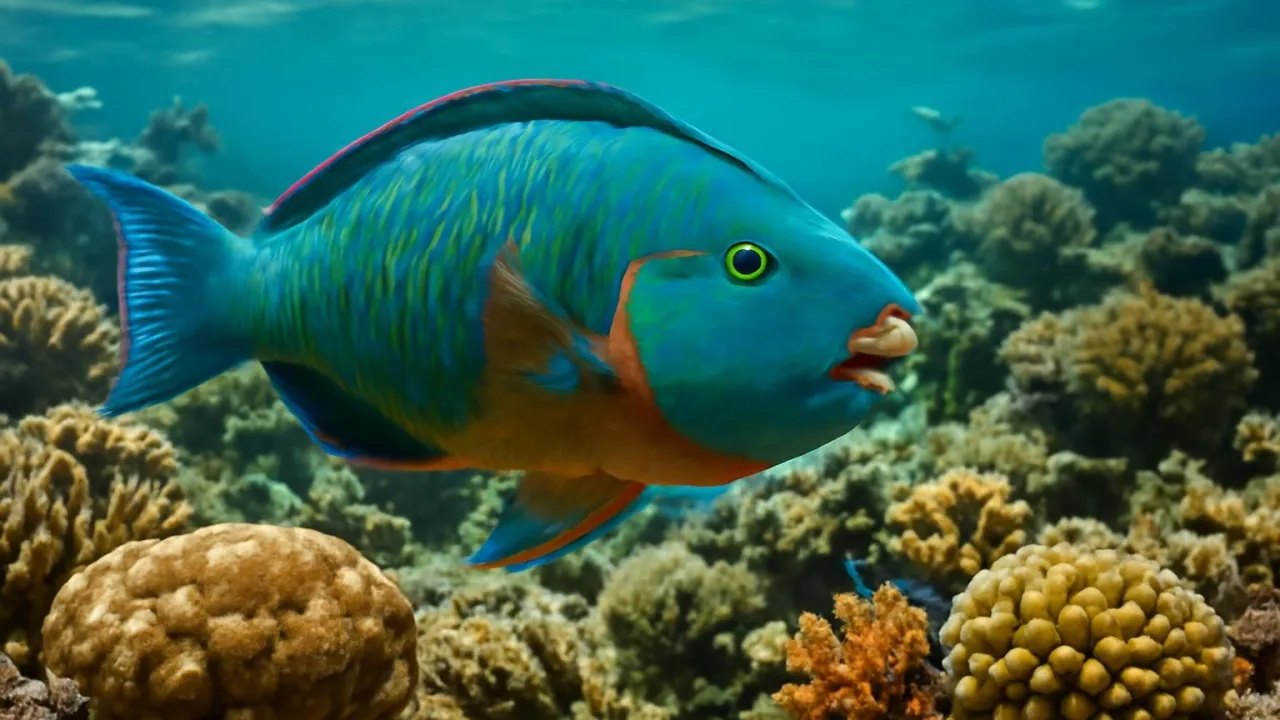
Parrotfish teeth are fused together to form a strong beak that can crush coral!
✨ Word Sparks (Grade 2 Glossary)
Tap 🔊 to hear
polyps
Tiny animals that live in coral
predators
Animals that hunt other animals
tropical
Warm places near the equator
🪝
How does a parrotfish use its beak-like teeth to eat coral?
1
Colorful Fish
Parrotfish have bright colors like blue, green, and pink on their scales. They swim near coral reefs in warm ocean waters. Their colors help them hide from and find friends.
2
Eating and Teeth
Parrotfish use their strong teeth that look like a beak to scrape algae and coral. They eat tiny animals inside the coral called . Their teeth help break coral into small pieces they can swallow.
3
Home in the Ocean
Parrotfish live in coral reefs all over the world. They hide in cracks and rocks when danger comes. Warm water and healthy coral reefs are very important for their home.
Parrotfish produce sand by grinding coral, creating up to 200 pounds yearly per fish!
✨ Word Sparks (Grade 3 Glossary)
Tap 🔊 to hear
camouflage
Colors that help animals hide
adaptation
A body change to survive better
ecosystem
A place where plants and animals live
🪝
Did you know parrotfish play a big role in keeping coral reefs healthy?
1
Amazing Colors and Camouflage
Parrotfish display bright colors like blues, greens, and pinks that help them blend into coral reefs. This protects them from predators while they swim near the reef. Their scales reflect light, making them hard to spot in the water.
2
Strong Beak Teeth and Eating Habits
Parrotfish have fused teeth that form a strong beak to scrape algae and coral polyps off rocks. This helps them get nutrients from coral while also cleaning the reef. Their feeding helps prevent algae from overgrowing and harming coral.
3
Life in Coral Reef Ecosystems
Parrotfish live in tropical coral reefs where they find food and shelter. They hide in crevices to avoid predators like sharks. Their grazing helps maintain balance in the reef by controlling algae growth.
4
Parrotfish and Coral Reef Survival
By eating coral and algae, parrotfish contribute to reef health and growth. Their feeding creates sand from coral pieces, which helps build beaches. This relationship is an example of and balance.
Parrotfish can produce up to 90 kilograms of sand annually by grinding coral with their beak-like teeth.
✨ Word Sparks (Grade 4 Glossary)
Tap 🔊 to hear
overgrowth
Too much plant or algae growth
herbivore
An animal that eats plants
conservation
Protecting nature and animals
🪝
How does the parrotfish’s unique beak shape affect coral reef ecosystems worldwide?
1
Colorful Camouflage and Protection
Parrotfish exhibit vibrant colors that allow them to blend seamlessly with coral reefs, protecting them from predators. Their scales reflect sunlight in ways that make it difficult for enemies to spot them. This camouflage is essential for their survival in the complex reef environment.
2
Beak Adaptation and Feeding Impact
Their fused teeth form a strong beak that efficiently scrapes algae and coral polyps from reef surfaces, preventing algae . This feeding behavior is crucial because it maintains coral health and allows new coral to grow. Without parrotfish, reefs could become smothered by algae.
3
Role in the Food Web and Ecosystem
Parrotfish serve as both prey and in coral reef food webs, linking various species. Their grazing controls algae populations, benefiting corals and other marine life. Additionally, their sand production from ground coral contributes to beach formation, showing their ecological importance.
4
Global Distribution and Human Impact
Parrotfish inhabit tropical reefs worldwide, from the Caribbean to the Indo-Pacific regions, thriving in warm waters. However, overfishing and coral reef destruction threaten their populations. efforts focus on protecting reefs and regulating fishing to preserve parrotfish and reef health. Protecting these fish helps keep coral reefs vibrant and alive.
1. Why is the parrotfish’s beak important for coral reefs?
2. What threatens parrotfish populations?
🤯 Mind-Blowing Fact • Grade 5
A single parrotfish can produce nearly 90 kilograms of sand per year by grinding coral with its specialized teeth.
✨ Word Sparks (Grade 5 Glossary)
Tap 🔊 to hear
sexual dimorphism
Males and females look different
keystone species
Very important for ecosystem health
pharyngeal teeth
Teeth in the throat for grinding food
🪝
What fascinating role do parrotfish play in coral reef ecosystems and sand production worldwide?
1
Taxonomy and Scientific Classification
Parrotfish belong to the family Scaridae within the order Perciformes, known for their fused teeth forming a beak. This unique dental structure classifies them distinctly among reef fishes. They exhibit and complex life cycles involving color changes and sex reversal. These traits help them adapt to their coral reef environments.
2
Physiological Adaptations and Feeding Mechanics
Their beak-like teeth efficiently scrape algae and coral polyps from reef surfaces, breaking down calcium carbonate into fine sand particles. Parrotfish have that further grind coral fragments, aiding digestion. This adaptation allows them to exploit a niche unavailable to many other reef species. Their strong jaws and teeth are vital for their survival.
3
Ecological Role and Conservation Challenges
Parrotfish are in coral reef ecosystems, controlling algal growth and facilitating coral recruitment. Their sand production contributes significantly to tropical beach formation, with individual fish producing up to 90 kilograms annually. However, habitat loss and overfishing threaten their populations globally. Conservation efforts aim to protect both parrotfish and coral reefs.
4
Geographic Distribution and Habitat Preferences
These fishes inhabit tropical and subtropical coral reefs across the Indo-Pacific and Atlantic Oceans, favoring shallow waters between 1 and 30 meters deep. They prefer structurally complex reefs providing shelter and abundant food resources. Climate change and ocean acidification pose additional risks to their habitats. Their survival depends on healthy reef ecosystems.
5
Quantitative Comparisons and Behavioral Traits
Parrotfish can grow up to 1.2 meters long and weigh over 20 kilograms. They swim at speeds around 1 to 2 kilometers per hour while grazing. Their daily feeding can produce hundreds of grams of sand, contributing to sediment dynamics. Behavioral adaptations include nocturnal sleeping in mucous cocoons to avoid predators. These unique traits highlight their ecological importance.