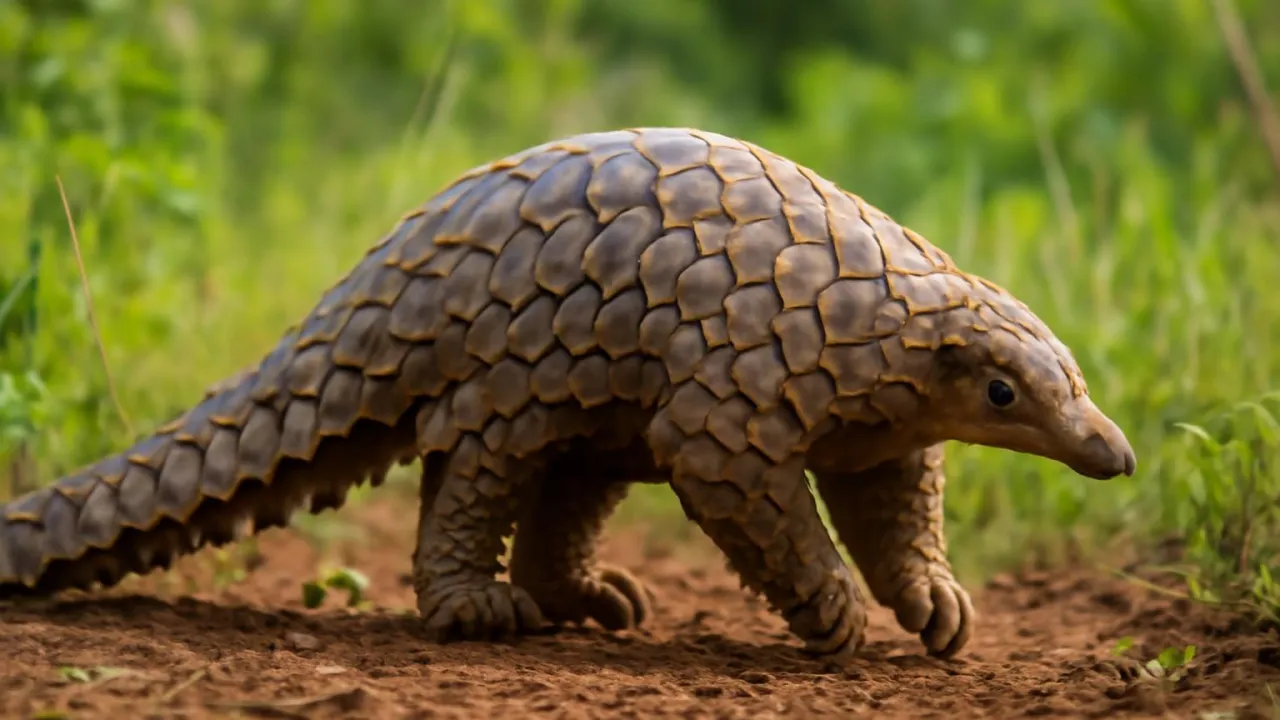
Pangolins can curl up so tightly that even lions cannot open their armor ball!
✨ Word Sparks (Grade 2 Glossary)
Tap 🔊 to hear
predators
Animals that hunt other animals for food
termite
A tiny insect that lives in big groups underground
claws
Sharp nails animals use to dig or catch food
🪝
Have you ever seen an animal that curls into a ball to stay safe?
1
Pangolin’s Armor
Pangolins have tough scales that cover their whole body. These scales protect them from . When danger comes, they roll into a ball. This makes it hard for enemies to hurt them.
2
Where They Live
Pangolins live in forests and grasslands in Africa and Asia. They like warm places with lots of ants. They dig into mounds to find food. They use their strong to break open the nests.
3
Sticky Tongue Trick
Pangolins have very long, sticky tongues that help catch ants and . Their tongues can be longer than their bodies. They use their tongues to reach deep inside nests. This helps them eat lots of bugs quickly.
Pangolins’ scales are made of keratin, the same material as human fingernails!
✨ Word Sparks (Grade 3 Glossary)
Tap 🔊 to hear
keratin
A strong protein that makes up hair and nails
myrmecophagy
Eating mostly ants and termites as food
camouflage
Colors or shapes that help hide animals from others
🪝
Did you know pangolins are the only mammals covered in scales?
1
Unique Scaly Armor
Pangolins have overlapping scales that act like armor. This adaptation helps them avoid predators by making their bodies hard to bite. When threatened, they curl into a tight ball using their strong muscles. This and defense make them very hard to catch.
2
Where Pangolins Live
Pangolins inhabit tropical forests and savannas across Africa and Asia. They prefer habitats rich in ants and termites, their main food source. Their long claws allow them to dig deep into termite mounds and ant nests. This digging behavior is essential for their survival.
3
Special Tongue for Eating
Pangolins have an extremely long, sticky tongue that can extend beyond their body length. This tongue helps them collect ants and termites efficiently. They do not have teeth, so their tongue is their main tool for feeding. This unique feeding adaptation is called .
4
Role in the Ecosystem
Pangolins help control insect populations by eating large numbers of ants and termites. Their digging also aerates soil, benefiting plant growth. They serve as prey for larger predators but rely on their armor to survive. Pangolins play an important role in maintaining healthy ecosystems.
Pangolins are the most trafficked mammals in the world due to demand for their scales and meat.
✨ Word Sparks (Grade 4 Glossary)
Tap 🔊 to hear
defense
Ways animals protect themselves from danger
ecosystem
A community of living things and their environment
conservation
Protecting animals and plants to keep them safe
🪝
How does an animal covered in scales survive in forests and savannas?
1
Scales and Defense
Pangolins’ tough keratin scales provide excellent against predators such as lions and hyenas. When threatened, pangolins curl into a tight ball, making it nearly impossible for predators to bite through their armor. This cause-and-effect defense mechanism helps pangolins survive in dangerous environments. Their scales also help camouflage them among dry leaves and bark.
2
Habitats and Distribution
Pangolins live in tropical forests and savannas across Africa and Asia, preferring warm climates with abundant ants and termites. Their strong claws allow them to dig deep into insect nests, which provides their main food source. Human activities like deforestation and hunting threaten pangolin habitats. efforts are important to protect these unique mammals.
3
Ecosystem Role
By feeding on ants and termites, pangolins help control insect populations that could otherwise damage plants and trees. Their digging behavior aerates the soil, improving nutrient cycling and plant growth. Pangolins also serve as prey for larger predators, contributing to the food web. Their survival supports the balance of many .
4
Protecting Pangolins
Many pangolins are threatened by illegal hunting for their scales and meat used in traditional medicine. Habitat loss from farming and logging also reduces their living space. groups work to protect pangolins by enforcing laws and educating people. These efforts help keep pangolins safe for future generations.
Pangolins consume millions of ants yearly, making them vital natural pest controllers.
✨ Word Sparks (Grade 5 Glossary)
Tap 🔊 to hear
myrmecophagy
Eating mostly ants and termites as food
keratin
Protein that makes up hair, nails, and scales
CITES
International agreement to protect endangered animals
🪝
What makes pangolins unique among mammals in their biology and ecology?
1
Scientific Classification and Biology
Pangolins belong to the family Manidae and genus Manis, comprising eight species across Asia and Africa. They are the only mammals covered entirely with overlapping scales, a unique evolutionary adaptation. Their skeletal structure supports powerful muscles that enable them to curl tightly into a protective ball. Pangolins lack teeth and rely on specialized stomach muscles to grind food.
2
Physiological Adaptations for Feeding
Pangolins have an extraordinarily long, sticky tongue anchored in the chest cavity, allowing extension beyond their body length. This adaptation enables efficient , consuming thousands of ants and termites daily. Their strong forelimbs and sharp claws facilitate breaking into tough insect nests. Additionally, pangolins produce saliva that helps capture prey and prevent tongue damage.
3
Conservation Status and Threats
All pangolin species are listed from vulnerable to critically endangered due to illegal poaching and trafficking for scales and meat. Habitat destruction from deforestation further threatens their survival. International laws like regulate trade, but enforcement remains challenging. Conservation programs focus on habitat protection, anti-poaching patrols, and community education to reduce demand.
4
Ecological Role and Importance
Pangolins play a vital role in controlling insect populations, consuming up to 70 million ants and termites annually per individual. Their digging aerates soil, enhancing nutrient cycling and plant health in tropical ecosystems. They also contribute to food webs as prey for large carnivores. Maintaining pangolin populations supports biodiversity and ecosystem stability.
5
Quantitative Comparisons and Facts
Adult pangolins range from 2 to 3 feet in length and weigh between 8 to 33 pounds depending on species. Their tongue can extend up to 16 inches, longer than their body length. Pangolins can curl into a ball in under ten seconds to evade predators. They inhabit temperatures ranging from 68 to 95 degrees Fahrenheit in tropical climates.