🏢 WorkplaceRocky badlands, desert cliffs, fossil quarries, and museum preparation labs
⚡ Everyday Impact SparkBrings vanished dinosaurs, ancient seas, and prehistoric plants back to life through fossils
🤯 Mind-Blowing Fact • Grade 1
Paleontologists even study fossilized dinosaur poop—called coprolites—to see whether a dinosaur munched plants or meat!
✨ Word Sparks (Grade 1 Glossary)
Tap 🔊 to hear
fossil
Remains or traces of ancient life preserved
chisel
A metal tool for chipping away rock
ancient
From a very, very long time ago
🪝
Who chips giant dinosaur bones out of solid rock?
1
Clink on the Cliff
Tap, clink! A rock hammer chips dry desert stone. Sticking out of a dusty hill is a giant curved tooth! Right away, a paleontologist kneels to look closer.
2
More Than Dinosaurs
are stone clues from life. Some are huge dinosaur ribs or footprints. Others are sea shells, fern leaves, or tiny bugs in amber.
3
Wrapped Like a Cast
Wet plaster bandages wrap around fragile bones like a doctor's cast. Safe inside, the rides to the museum!
1. Why do paleontologists wrap heavy fossils in plaster bandages?
2. Besides dinosaur bones, what else do paleontologists study?
🤯 Mind-Blowing Fact • Grade 2
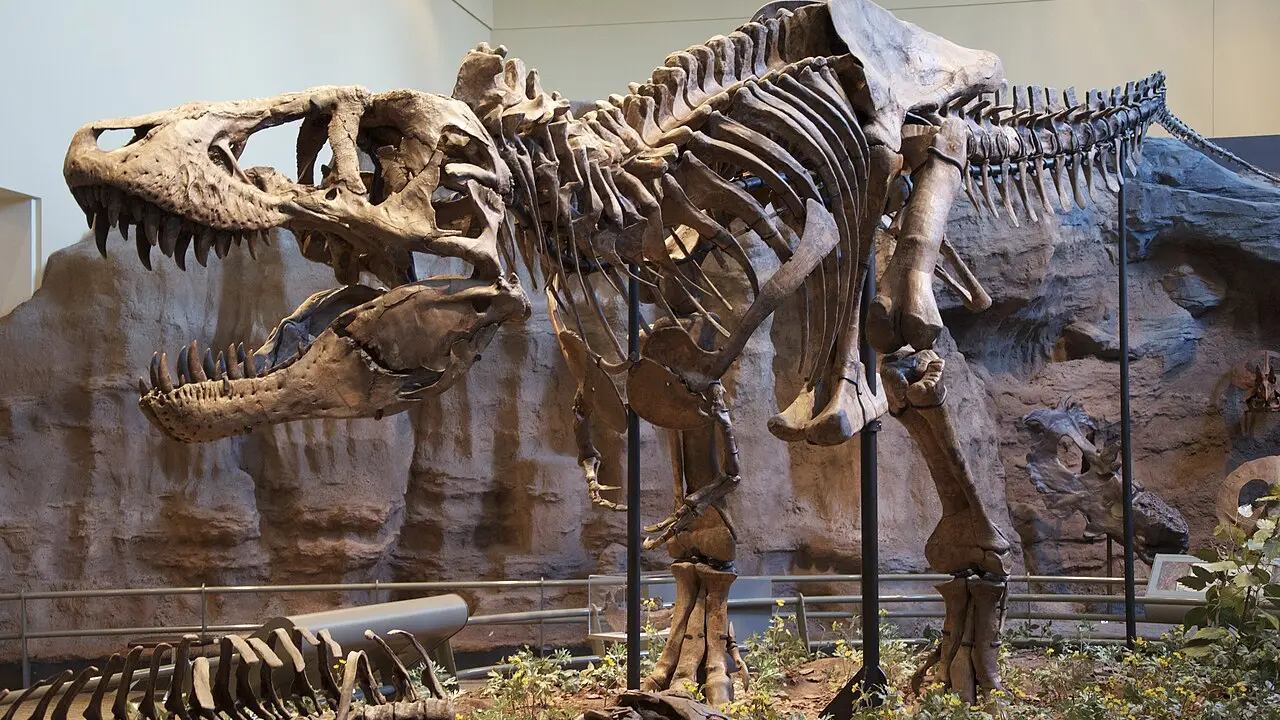
In 1990, fossil hunter Sue Hendrickson spotted dusty bone bits sticking out of a South Dakota cliff and discovered the most complete Tyrannosaurus rex skeleton ever found!
✨ Word Sparks (Grade 2 Glossary)
Tap 🔊 to hear
badlands
Dry, rocky hills worn down by wind
trace fossil
Preserved footprints, burrows, or nests from life
skeleton
The framework of bones inside a body
🪝
How do scientists find a single dinosaur bone hiding across miles of rocky hills?
1
Eyes on the Ground
Hiking slowly across sun-baked canyons, a paleontologist scans the gravel for tiny bits of fossil bone washed loose by rain. Following that trail uphill often leads straight to a still locked inside the cliff!
2
Tiny Tools in the Lab
Digging in the desert is only half the adventure. Back at the museum lab, specialists open the plaster cast and use tiny vibrating needles and dentist picks to clean away rock grain by grain.
3
Solving Movement Mysteries
Fossil footprints—called —show whether prehistoric animals walked in herds, ran fast, or swam through muddy lagoons!
1. What can fossilized footprints (trace fossils) tell a paleontologist?
2. What tools help clean hard rock off delicate fossils inside the museum lab?
🤯 Mind-Blowing Fact • Grade 3
In the early 1800s along England's sea cliffs, twelve-year-old fossil hunter Mary Anning unearthed the first complete skeleton of an ichthyosaur—a giant prehistoric marine reptile!
✨ Word Sparks (Grade 3 Glossary)
Tap 🔊 to hear
sedimentary rock
Rock formed from pressed sand and mud
mineral
Natural crystal building blocks that form rocks
extinct
No longer living anywhere on Planet Earth
🪝
How does a living bone turn into solid stone—and where do paleontologists know to look?
1
Searching the Right Rocks
Not every rock holds fossils! Lava rocks burn bones up, so a paleontologist hunts in —layers of mud, sand, and silt that gently buried plants and animals in ancient rivers, swamps, and seas.
2
Turning Bone into Stone
Over millions of years, -rich underground water seeps through buried bones or shells. Slowly, crystal minerals fill every tiny pore until the remain becomes rock-hard through fossilization.
3
Peeking Inside Dinosaur Eggs
Modern labs don't even have to crack open every rock! Hospital-style X-ray CT scanners peer right inside stone dinosaur eggs and skulls to build detailed 3D computer models of prehistoric brains, inner ears, and tiny unhatched teeth.
4
Feathers and Colors
Powerful electron microscopes have even spotted microscopic pigment sacs on fossilized feathers, revealing the real rust-red, snowy-white, and shiny black colors of feathered dinosaurs that lived millions of years ago!
1. Which type of rock do paleontologists search to find fossils?
2. How can paleontologists look inside a fossilized dinosaur egg without breaking it?
🤯 Mind-Blowing Fact • Grade 4
Virginia's official state fossil, Chesapecten jeffersonius, is a 4-million-year-old giant scallop shell named after Thomas Jefferson, one of America's earliest fossil enthusiasts!
Why are giant whale bones and shark teeth buried beneath grassy farms in Virginia miles from the ocean?
1
Ancient Seas Under Dry Land
Crack open a chunk of gray clay along Virginia's York or Potomac rivers and a serrated megalodon shark tooth the size of your palm might gleam in the sunlight! Guiding students through that mystery, a paleontologist explains that millions of years ago warm ocean waves covered Virginia's entire Coastal Plain.
2
Specialists Across the Tree of Life
Paleontology stretches far beyond famous Mesozoic Era dinosaurs from the Triassic, Jurassic, and Cretaceous periods. study fossil leaves and pollen to reconstruct ancient climates, invertebrate paleontologists examine and scallops like Chesapecten jeffersonius (Virginia's official state fossil!), and micropaleontologists inspect microscopic shells smaller than grains of beach sand.
3
Dating Rocks with Volcanic Ash
Because dinosaur fossils are tens of millions of years old—far too ancient for carbon-14 dating—paleontologists team up with geologists to measure radioactive elements like uranium, argon, and potassium inside volcanic ash layers sandwiched neatly above and below a fossil bed.
4
Lessons from Past Climates
By tracking how marine coral reefs, ancient fern forests, and ocean food webs recovered from prehistoric asteroid impacts and volcanic eruptions, paleontologists give today's wildlife conservationists and Earth scientists vital clues for protecting living biodiversity across the planet.
1. What does finding ancient whale bones and Chesapecten scallop fossils in eastern Virginia prove?
2. How do scientists determine the age of a 70-million-year-old dinosaur fossil bed?
🤯 Mind-Blowing Fact • Grade 5
Because birds descended directly from small feathered theropod dinosaurs, paleontologists classify every robin, eagle, and penguin alive today as a living avian dinosaur!
✨ Word Sparks (Grade 5 Glossary)
Tap 🔊 to hear
taphonomy
How organisms decay and become preserved fossils
permineralization
Minerals filling tiny spaces inside buried bone
biomechanics
Using physics to study how bodies move
🪝
How do paleontologists combine geology, biomechanics, and atomic chemistry to read 3.5 billion years of life on Earth?
1
Rare Snapshots in Deep Time
Fewer than one percent of all species that ever lived left behind fossils, because scavengers, bacteria, and erosion normally recycle organic matter quickly. Standing before an exposed sedimentary outcrop, a paleontologist searches for the rare geologic lottery ticket where rapid burial in low-oxygen mud or fine volcanic ash halted decay.
2
Taphonomy and Fossilization Pathways
Studying everything that happens to an organism from death to museum discovery is called . Depending on groundwater chemistry, remains may undergo —where silica or calcite crystals fill microscopic bone canals—or carbonization, which presses delicate fern fronds and feathered theropods into razor-thin carbon films inside fine-grained shale.
3
Biomechanics and Synchrotron Scans
Twenty-first-century paleontology blends field hammers with physics engineering. Researchers load 3D laser scans of dinosaur jaws and leg bones into finite-element computer simulations—the exact software aerospace engineers use to stress-test airplane wings—calculating that Tyrannosaurus rex bit down with roughly 8,000 pounds of force! Meanwhile, oxygen isotopes locked inside fossil tooth enamel act as ancient thermometers, revealing prehistoric ocean temperatures and whether certain reptiles regulated warm body heat.
4
Mapping the Five Mass Extinctions
Across Earth's 4.54-billion-year history, fossil strata document booming radiations of life—like the Cambrian Explosion 540 million years ago—punctuated by five global mass extinctions, including the Chicxulub asteroid impact 66 million years ago that ended non-avian dinosaurs while sparing avian dinosaurs: modern birds!
5
Stewards of Planetary Memory
By reconstructing how ancient food webs, coral reefs, and forests responded to shifting continents and atmospheres, paleontologists illuminate the deep biological roots connecting every living creature on Earth today.