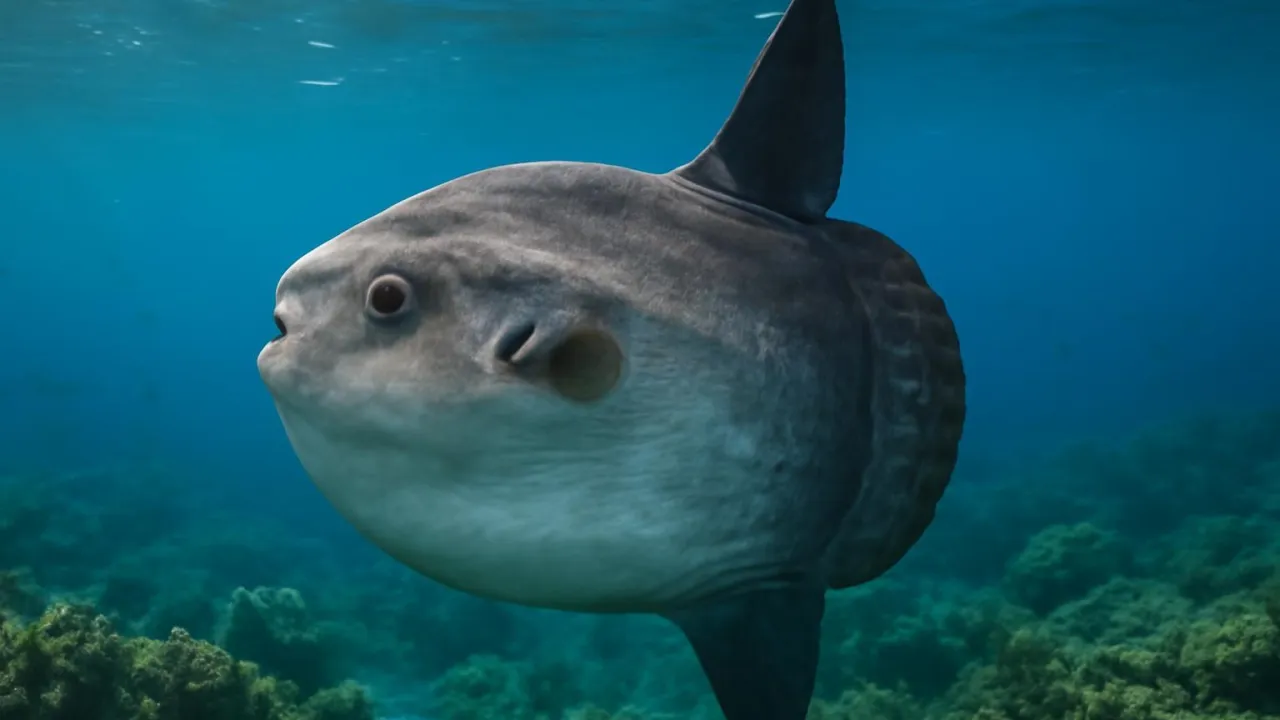
Ocean sunfish can weigh more than 5,000 pounds, heavier than most cars!
✨ Word Sparks (Grade 2 Glossary)
Tap 🔊 to hear
plankton
Tiny sea animals and plants that float
sunbathe
To rest in the sun to get warm
surface
The top part of water or land
🪝
Have you ever seen a fish that looks like a giant floating coin?
1
Big and Flat Fish
The ocean sunfish is very large and flat. Its body looks like a round coin. It can grow very heavy and wide. Its skin is rough and thick to protect it from harm.
2
Where It Swims
Sunfish live in warm oceans all around the world. They swim near the water’s to warm up. They enjoy sunny days and calm seas. Sometimes they dive deep to find food.
3
What It Eats and Does
This fish eats jellyfish, small fish, and . It floats on its side to . This helps it warm up after deep dives. It also moves slowly to save energy.
Ocean sunfish can weigh up to 5,000 pounds, heavier than most sharks!
✨ Word Sparks (Grade 3 Glossary)
Tap 🔊 to hear
clavus
A fin that helps steer the sunfish
camouflage
Blending in to hide from others
symbiotic
A helpful relationship between animals
🪝
Did you know the ocean sunfish is the heaviest bony fish in the world?
1
Unique Body Shape
The ocean sunfish has a flattened, round body that looks like a giant coin. Its body shape helps it float easily near the ocean surface. Unlike most fish, it has no tail fin, only a fin that helps steer.
2
Habitat and Behavior
Sunfish live in temperate and tropical oceans worldwide. They often sunbathe by floating on their sides near the surface to warm their bodies. This behavior helps them recover after deep dives into cold water.
3
Diet and Feeding
Ocean sunfish mostly eat jellyfish, which have few nutrients, so they also eat small fish and plankton. Their large mouths help them catch prey efficiently. Eating jellyfish helps control jellyfish populations in the ocean.
4
Survival Adaptations
The sunfish’s flattened body provides by blending with the ocean surface from below. Its thick skin protects it from predators and parasites. Sunfish also have relationships with cleaner fish that remove parasites.
1. How does the ocean sunfish’s body help it survive?
2. Why do sunfish sunbathe near the ocean surface?
🤯 Mind-Blowing Fact • Grade 4
Ocean sunfish can weigh as much as a small car and grow over 10 feet long!
✨ Word Sparks (Grade 4 Glossary)
Tap 🔊 to hear
metabolism
How animals use energy to live
bycatch
Animals caught by accident in fishing
symbiosis
A helpful relationship between animals
🪝
How does the ocean sunfish’s strange shape help it live in oceans worldwide?
1
Body Shape and Movement
The ocean sunfish has a flattened, oval-shaped body that helps it float near the ocean surface with little effort. Its clavus fin replaces a traditional tail fin, steering the fish slowly but steadily through the water. This body design reduces energy use during long swims across oceans. Its large dorsal and anal fins help propel it gently through the water.
2
Habitat and Global Range
Sunfish are found in temperate and tropical oceans worldwide, from shallow coastal waters to deep seas. They often sunbathe near the surface to warm up after deep dives into cold water layers. This warming behavior is essential for their and digestion. They migrate long distances following warm currents and food availability.
3
Role in Ocean Ecosystems
Ocean sunfish eat large amounts of jellyfish, helping control jellyfish populations that can disrupt food webs. Their diet also includes small fish and plankton, making them important mid-level predators. Sunfish serve as hosts for cleaner fish that eat parasites, showing in marine ecosystems. This relationship benefits both species by keeping sunfish healthy.
4
Human Impact and Conservation
Sunfish are sometimes caught accidentally in fishing nets, which can harm their populations. Their slow swimming makes them vulnerable to boats and fishing gear. Conservation efforts focus on reducing and protecting their habitats to keep ocean ecosystems balanced. Public awareness campaigns encourage safer fishing practices to protect sunfish.
1. Why do ocean sunfish sunbathe near the surface?
2. How do sunfish help ocean ecosystems?
🤯 Mind-Blowing Fact • Grade 5
The ocean sunfish is the heaviest bony fish, weighing more than most sharks and dolphins!
✨ Word Sparks (Grade 5 Glossary)
Tap 🔊 to hear
clavus
A fin that helps steer the sunfish
bycatch
Animals caught by accident in fishing
metabolism
How animals use energy to live
🪝
What makes the ocean sunfish one of the most unusual and largest bony fish on Earth?
1
Taxonomy and Scientific Context
The ocean sunfish, scientifically named Mola mola, belongs to the family Molidae within the order Tetraodontiformes. It is the heaviest known bony fish species, distinct from cartilaginous sharks and rays. Its unique body plan includes a truncated tail and fin, setting it apart from other fish.
2
Physiological Mechanics and Adaptations
Ocean sunfish have a flattened, laterally compressed body up to 10 feet long and weigh over 5,000 pounds. Their fin acts as a rudder, while large dorsal and anal fins provide propulsion. They regulate buoyancy by adjusting swim bladder volume and sunbathe near the surface to raise body temperature after deep cold dives.
3
Diet, Ecological Role, and Behavior
Mola mola primarily feed on gelatinous zooplankton like jellyfish, which have low caloric value, so they supplement their diet with small fish and plankton. By controlling jellyfish populations, they maintain ocean food web balance. Their slow swimming and vertical migrations expose them to parasites, leading to symbiotic cleaning by smaller fish.
4
Conservation and Human Impact
Ocean sunfish face threats from in commercial fisheries and collisions with boats due to their slow movement. Conservation efforts include bycatch reduction technologies and marine protected areas. Understanding their migratory patterns helps scientists develop effective protections for this species.
5
Quantitative Comparisons and Interesting Facts
Ocean sunfish can weigh up to 5,000 pounds (2,300 kg), comparable to a small car, and reach lengths over 10 feet (3 meters). They swim at speeds up to 1.2 miles per hour (2 km/h), much slower than many fish. Their body temperature can increase by several degrees Celsius after sunbathing, aiding digestion and muscle function.