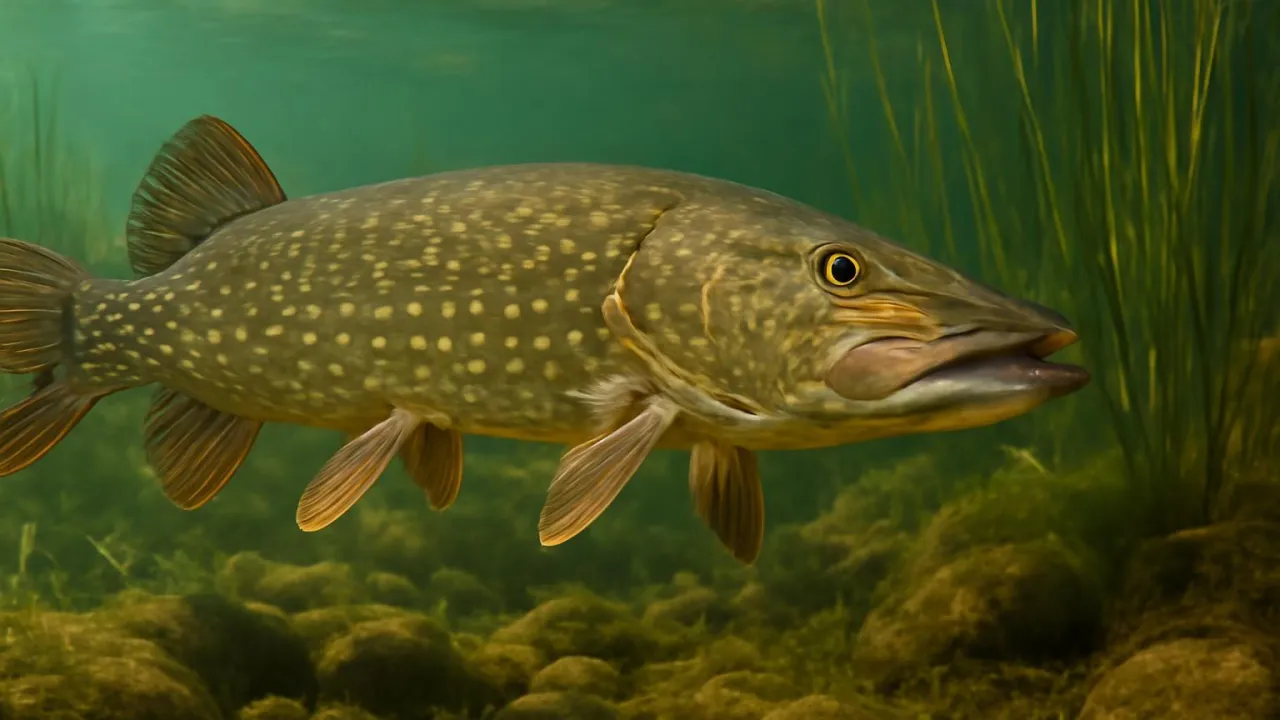
Northern Pike can accelerate from still to swimming fast in just a few seconds!
✨ Word Sparks (Grade 2 Glossary)
Tap 🔊 to hear
prey
An animal that another animal eats
camouflage
Colors that help animals hide in places
freshwater
Water that is not salty, like lakes
🪝
How does the Northern Pike catch its prey so quickly in the water?
1
A Fish with Sharp Teeth
The Northern Pike has many sharp teeth that help it catch slippery fish easily. It can swim very fast when it wants to catch food. This fish is long and green with spots that help it hide well.
2
Where the Pike Lives
Northern Pike live in cool lakes and rivers with lots of plants. They like fresh water and often hide among weeds. These plants help them stay hidden from other animals and sneak up on .
3
How It Hunts and Eats
The pike waits very still near plants and then strikes quickly at fish or frogs. It uses its sharp teeth to grab tightly. This fast attack helps the pike catch food before it can escape.
Northern Pike can remain perfectly still for minutes, then strike at prey in less than a second!
✨ Word Sparks (Grade 3 Glossary)
Tap 🔊 to hear
ambush
To hide and wait to surprise catch prey
predator
An animal that hunts other animals for food
ecosystem
A place where plants and animals live together
🪝
Why is the Northern Pike called a stealthy ambush predator in freshwater?
1
Camouflage and Body Shape
The Northern Pike’s green body with light spots helps it camouflage among water plants. This adaptation makes it hard for prey and to see it. Its long, slender shape allows it to move quickly through weeds without making noise. These features help the pike survive in its habitat.
2
Habitat and Hunting Strategy
Northern Pike live in freshwater lakes and rivers with dense vegetation. They use plants to hide and wait patiently for prey to swim close. This hunting strategy saves energy and increases success. They are top in their and control fish populations.
3
Diet and Teeth
Northern Pike eat fish, frogs, and sometimes small mammals or birds. Their sharp teeth are angled backward to hold slippery prey tightly. This prevents prey from escaping once caught. Their powerful jaws deliver a quick, deadly bite to secure food.
4
Life Cycle and Growth
Northern Pike lay thousands of eggs in shallow waters during spring. The eggs hatch into tiny larvae that feed on plankton. As they grow, young pike develop hunting skills and teeth. Adult pike can reach lengths over four feet and weigh more than 20 pounds.
1. What helps Northern Pike catch prey without being seen?
2. What do Northern Pike mostly eat?
🤯 Mind-Blowing Fact • Grade 4
Northern Pike’s ambush hunting helps keep freshwater fish populations healthy and balanced.
✨ Word Sparks (Grade 4 Glossary)
Tap 🔊 to hear
conservation
Protecting animals and places from harm
spawning
When fish lay eggs in water
predator
An animal that hunts others for food
🪝
How does the Northern Pike’s hunting style affect freshwater ecosystems?
1
Camouflage and Ambush Hunting
The Northern Pike’s green and spotted body provides excellent camouflage among aquatic plants, allowing it to ambush prey effectively. This stealthy hunting style means the pike can remain motionless for long periods, conserving energy while waiting for fish or frogs to come close. Its streamlined body and sharp teeth help it strike quickly and hold onto slippery prey. These adaptations make the pike a top in many freshwater habitats.
2
Role in Food Webs
As a top , the Northern Pike controls populations of smaller fish and amphibians, helping maintain balance in freshwater ecosystems. By preying on weaker or slower animals, it indirectly supports healthier fish populations. Humans also impact pike habitats through fishing and water pollution, which can affect their numbers. efforts aim to protect these important predators and their freshwater homes.
3
Geographic Distribution and Habitat
Northern Pike are found across North America, Europe, and parts of Asia in cool lakes and slow-moving rivers. They prefer habitats with dense aquatic vegetation that offers cover for ambush hunting. Seasonal changes affect their behavior, with occurring in spring in shallow, vegetated waters. Their wide distribution shows they are adaptable but still rely on healthy freshwater ecosystems.
4
Life Cycle and Growth Patterns
Northern Pike spawn in early spring, laying thousands of eggs in shallow water among plants. The eggs hatch into larvae that feed on tiny plankton before growing into juvenile fish. Young pike develop hunting skills and body features like sharp teeth as they mature. Adult pike can grow over four feet long and live up to ten years in the wild.
1. Why is the Northern Pike important in freshwater food webs?
2. Where do Northern Pike usually lay their eggs?
🤯 Mind-Blowing Fact • Grade 5
Northern Pike can swim up to 30 miles per hour and strike prey in less than a second!
✨ Word Sparks (Grade 5 Glossary)
Tap 🔊 to hear
lateral line
A fish’s sense organ that detects water movement
acceleration
How fast something speeds up quickly
habitat
The natural home where an animal lives
🪝
What unique adaptations make the Northern Pike a successful predator in freshwater ecosystems worldwide?
1
Taxonomy and Scientific Classification
The Northern Pike, scientifically named Esox lucius, belongs to the family Esocidae and order Esociformes. It is one of the largest species in the pike family, characterized by its elongated body and sharp teeth. This fish is native to freshwater across North America, Europe, and northern Asia. Its evolutionary adaptations have allowed it to thrive in diverse aquatic environments.
2
Physiological Mechanics of Hunting
Northern Pike use a combination of camouflage, rapid , and powerful jaws to ambush prey. Their streamlined bodies reduce water resistance, enabling bursts of speed up to 30 miles per hour. The backward-pointing teeth prevent prey from escaping once caught. Their system detects vibrations, helping them locate prey even in murky water or low light conditions.
3
Conservation Status and Human Impact
Although Northern Pike populations remain stable in many regions, loss from pollution and water development threatens some local populations. Overfishing can reduce their numbers, disrupting freshwater food webs. Conservation efforts include habitat protection, fishing regulations, and public education to maintain healthy ecosystems where pike play a key predatory role.
4
Botanical and Ecological Interactions
Northern Pike rely heavily on aquatic vegetation for camouflage and spawning sites. These plants provide shelter for eggs and juvenile fish, increasing survival rates. The pike’s predation helps regulate fish populations, which in turn affects aquatic plant health and nutrient cycles. This interconnected relationship highlights the importance of preserving freshwater .
5
Quantitative Comparisons and Life History
Adult Northern Pike can reach lengths up to 4.6 feet (1.4 meters) and weigh over 30 pounds (14 kilograms). They can accelerate from rest to top speed in less than a second, making them one of the fastest freshwater fish predators. Their lifespan can reach up to 10 years in the wild, with spawning occurring annually in spring. These traits make the Northern Pike a remarkable example of evolutionary success.