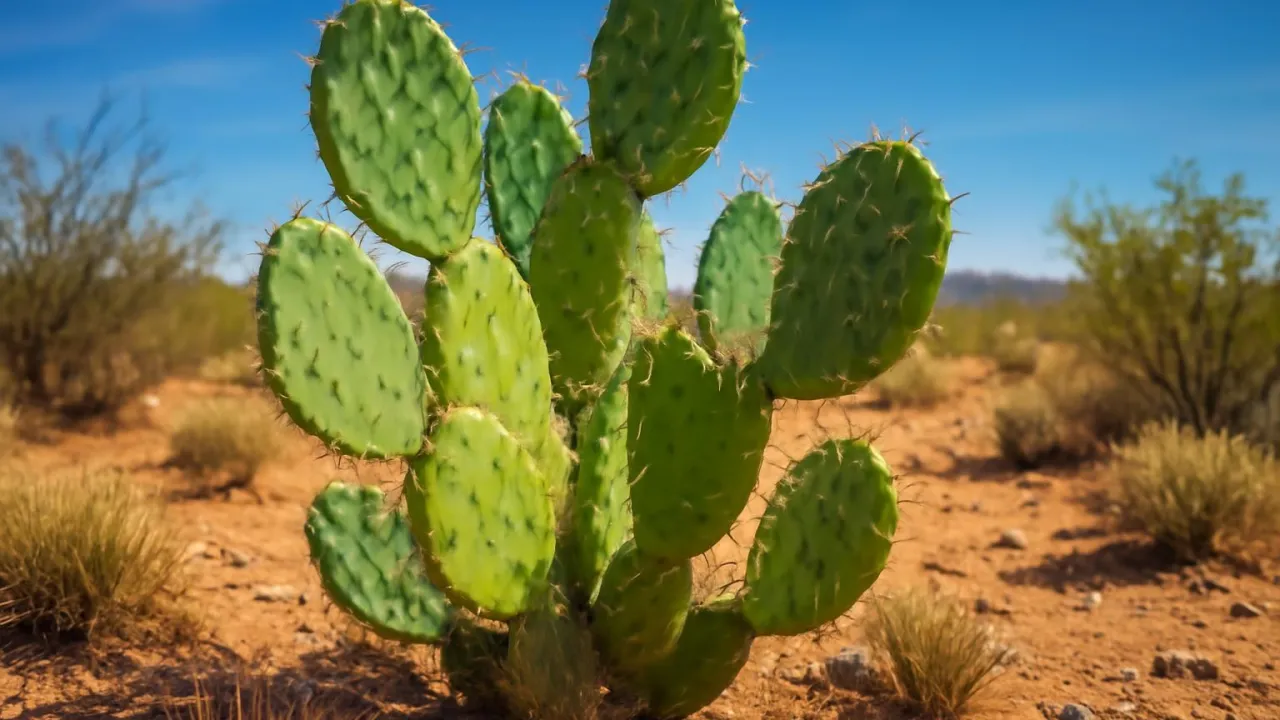
Nopales pads can store water inside to survive long dry seasons without rain.
✨ Word Sparks (Grade 2 Glossary)
Tap 🔊 to hear
spines
Tiny sharp points that protect plants
harvest
To gather plants or food to eat
texture
How something feels when you touch or eat it
🪝
Have you ever seen a cactus you can eat like a vegetable?
1
Nopales Are Special Cactus Pads
Nopales are flat, green cactus pads that grow on prickly plants. They have tiny to protect themselves from animals. People these pads to cook and eat in many dishes.
2
Where Nopales Grow and Live
Nopales grow mostly in hot deserts where rain is very rare. They need lots of sunlight and very little water to survive. These cactus pads store water to help them live in dry places.
3
A Cool Feature of Nopales
The pads have tiny that keep animals away from eating them. When cooked, the pads taste a little sour and have a slightly crunchy . Nopales are healthy and full of vitamins.
Nopales pads not only store water but also help protect desert animals by providing shelter.
✨ Word Sparks (Grade 3 Glossary)
Tap 🔊 to hear
predator
An animal that hunts other animals for food
adaptation
A change that helps a plant or animal survive
camouflage
When something blends in to hide from others
🪝
Did you know nopales are cactus pads people eat as vegetables?
1
Nopales and Their Protective Spines
Nopales are flat, green pads from the prickly cactus Opuntia ficus-indica. Their spines act as a defense against like hungry animals. These spines help the cactus survive in harsh desert environments by discouraging animals from eating them.
2
How Nopales Adapt to the Desert
Nopales grow in arid deserts where water is scarce and sunlight is intense. Their thick pads store nutrients and water to survive dry spells. This allows them to thrive where many plants cannot survive.
3
Nopales in Human Food and Culture
People harvest nopales pads to cook in salads, stews, and tacos. The pads have a slightly sour taste and a crunchy texture when cooked. Nopales are rich in vitamins and fiber, making them a healthy food choice.
4
The Role of Nopales in the Ecosystem
Nopales provide food and shelter for desert animals like birds and insects. Their pads offer , blending with the dry environment. This helps protect both the cactus and the animals that live nearby.
1. What is one way nopales survive in dry deserts?
2. How do nopales help desert animals?
🤯 Mind-Blowing Fact • Grade 4
Nopales help prevent soil erosion in deserts by stabilizing the ground with their roots and pads.
✨ Word Sparks (Grade 4 Glossary)
Tap 🔊 to hear
herbivores
Animals that eat only plants
biodiversity
Many different kinds of plants and animals living together
erosion
When wind or water wears away soil
🪝
How does the prickly nopales cactus survive and help its desert ecosystem?
1
Nopales’ Physical Adaptations
Nopales have thick, flat pads covered with tiny spines that protect them from and reduce water loss through evaporation. Their pads store water and nutrients, allowing survival during long dry periods in arid deserts. These adaptations help the cactus thrive where many plants cannot survive harsh conditions. Additionally, the waxy coating on the pads helps seal in moisture and reflects sunlight.
2
Nopales’ Role in the Food Web
Nopales serve as a food source for many desert animals, including insects, birds, and mammals. Humans also harvest nopales for their nutritional value, incorporating them into traditional dishes. This shows how nopales connect different parts of the desert food web and support . Their presence helps maintain the balance of desert ecosystems.
3
Geographic Distribution and Growth
Nopales primarily grow in Mexico and parts of the southwestern United States, thriving in dry, sunny climates. They require minimal water and prefer well-drained soils, making them ideal for desert environments. Their ability to grow in poor soils helps prevent and supports soil health. Nopales can also reproduce easily from detached pads, allowing quick spread.
4
Human Impact and Agricultural Use
Farmers cultivate nopales for food and livestock feed, promoting sustainable agriculture in arid regions. However, overharvesting and habitat loss can threaten wild populations. Conservation efforts balance human use with protecting natural nopales habitats to ensure their long-term survival. Education about sustainable harvesting helps protect these important plants.
Nopales perform CAM photosynthesis, opening stomata at night to save water in hot deserts.
✨ Word Sparks (Grade 5 Glossary)
Tap 🔊 to hear
cladodes
Flat cactus pads that act like leaves
CAM photosynthesis
A way plants save water by opening stomata at night
glochids
Tiny, sharp cactus hairs that protect the plant
🪝
What makes nopales a unique cactus with important ecological and cultural roles?
1
Scientific Classification and Description
Nopales belong to the species Opuntia ficus-indica, a member of the Cactaceae family. This cactus species is characterized by its flat, fleshy pads called , which perform photosynthesis. The pads are covered with and spines that serve as protective mechanisms against herbivory. These adaptations allow the plant to thrive in arid environments where few others can survive.
2
Physiological Adaptations for Desert Survival
Nopales utilize Crassulacean Acid Metabolism (CAM) photosynthesis, allowing them to open stomata at night to reduce water loss. Their thick, succulent pads store water efficiently, enabling survival in arid environments with temperatures often exceeding 100°F (38°C). This water conservation strategy is vital for enduring long droughts typical of desert climates.
3
Cultural Significance and Conservation
Nopales have been cultivated in Mexico for thousands of years, integral to indigenous diets and traditional medicine. Their popularity has spread globally due to their nutritional benefits, including high fiber and antioxidants. Conservation efforts focus on sustainable harvesting to prevent wild population decline caused by habitat destruction and overuse.
4
Quantitative Comparisons and Growth Characteristics
Nopales pads typically measure between 6 and 12 inches (15 to 30 centimeters) wide and can weigh up to 1.5 pounds (0.7 kilograms) each. The cactus thrives in regions with annual rainfall below 20 inches (50 centimeters) and temperatures ranging from 50°F to 110°F (10°C to 43°C). Their growth rate varies with water availability and soil quality.
5
Ecological Impact and Agricultural Importance
Nopales contribute to desert ecosystems by providing food and shelter for numerous species, including insects and birds. Agriculturally, they serve as fodder for livestock and as a food crop for humans, supporting sustainable farming in arid regions. Their root systems stabilize soil, reducing erosion and promoting ecosystem health, which benefits surrounding plant and animal communities.