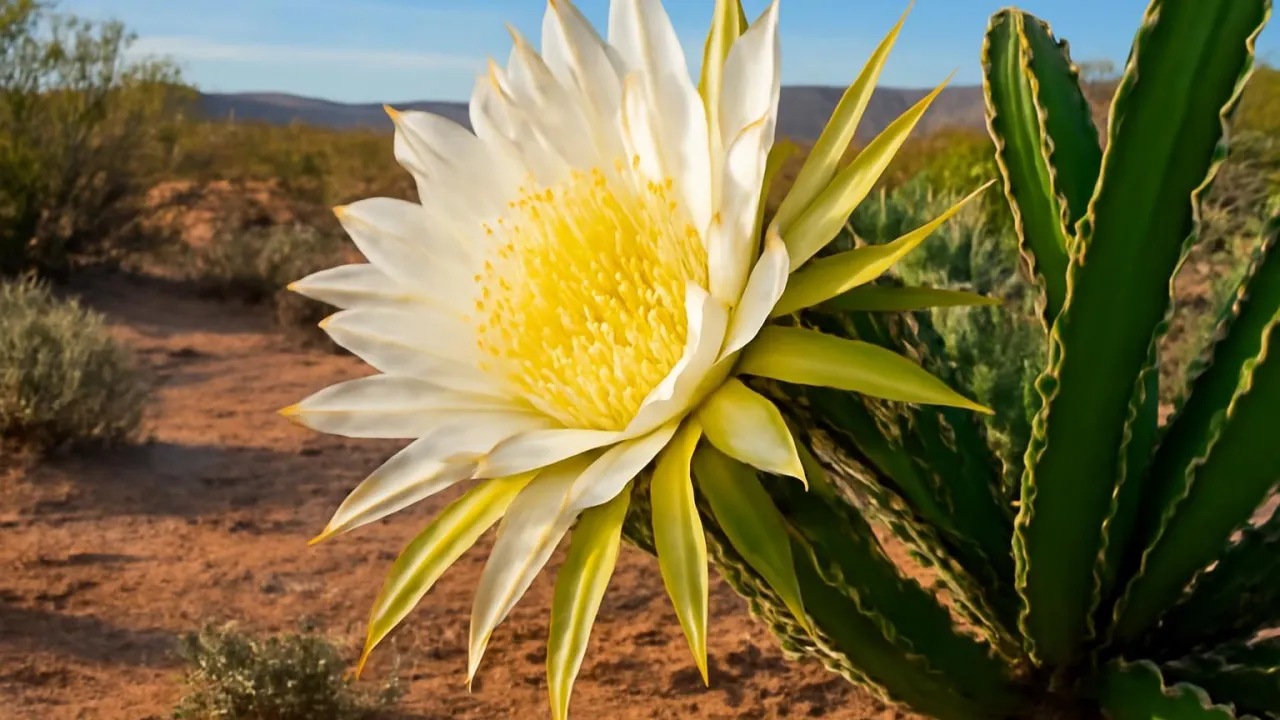
1. When does the night-blooming cereus flower open?
2. What color are the cereus flowers?
🤯 Mind-Blowing Fact • Grade 2
Each night-blooming cereus flower lasts for just one night before closing forever.
✨ Word Sparks (Grade 2 Glossary)
Tap 🔊 to hear
pollinator
An animal that helps flowers make seeds
cactus
A plant that stores water in its stem
petal
The colorful part of a flower
🪝
Have you ever seen a flower that only blooms at night?
1
Nighttime Flower Magic
The night-blooming cereus opens its flowers only when the sun goes down. These large white flowers glow under the moonlight and smell very sweet. They close again by morning, disappearing until the next night.
2
Where It Grows
This -like plant grows in warm, dry places like deserts and tropical forests. It climbs on trees or rocks to reach sunlight and can grow very tall over time. It needs some water but not too much to survive.
3
Amazing Flower Features
The flowers are huge and have many that look soft and silky. They attract night like moths and bats with their scent and bright color. This helps the plant make seeds to grow new plants.
1. What helps the night-blooming cereus make seeds?
2. Where does the night-blooming cereus usually grow?
🤯 Mind-Blowing Fact • Grade 3
The night-blooming cereus flower can open and close fully in just a few hours during the night.
✨ Word Sparks (Grade 3 Glossary)
Tap 🔊 to hear
adaptation
A change that helps a plant survive better
pollination
When pollen moves to help flowers make seeds
drought
A long time with very little or no rain
🪝
Why does the night-blooming cereus open its flowers only at night?
1
Night Blooming and Survival
The night-blooming cereus opens its large white flowers at night to attract special pollinators. These pollinators, like moths and bats, are active only after dark. This helps the plant survive in its dry, hot habitat.
2
Plant Structure and Growth
This cactus has thick, green stems that store water to survive . Its climbing growth habit helps it reach sunlight by growing on trees or rocks. The stems also protect the plant from predators by being tough and spiny.
3
Pollination and Reproduction
The bright white petals and sweet scent attract night pollinators, which transfer pollen between flowers. This process is called and is vital for producing seeds. The seeds then grow into new plants, continuing the species.
4
Habitat and Ecosystem Role
The night-blooming cereus grows in tropical and desert edges where water is scarce. It plays a role in the food web by providing nectar for pollinators. Its presence helps maintain a balanced ecosystem in these harsh environments.
1. Why does the night-blooming cereus open flowers at night?
2. What helps the cereus survive droughts?
🤯 Mind-Blowing Fact • Grade 4
The night-blooming cereus flowers open quickly after sunset and close by dawn, lasting less than 12 hours.
✨ Word Sparks (Grade 4 Glossary)
Tap 🔊 to hear
nocturnal
Active during the night instead of the day
nectar
Sweet liquid in flowers that animals drink
photosynthesize
How plants make food using sunlight
🪝
How does the night-blooming cereus survive and thrive in dry, hot environments?
1
Adaptations for Desert Life
The night-blooming cereus has thick, water-storing stems that help it survive long droughts in desert regions. Its climbing habit allows it to reach sunlight by growing on other plants or rocks, which increases its chance to efficiently. The large white flowers open only at night to avoid the harsh daytime heat and attract pollinators.
2
Role in the Ecosystem
This plant provides to night pollinators such as moths and bats, supporting their survival in desert ecosystems. By attracting these animals, the cereus ensures effective pollination, which is crucial for seed production and plant reproduction. Its presence helps maintain biodiversity and balance within its habitat.
3
Geographic Distribution
The night-blooming cereus is native to tropical and subtropical regions of the Americas, especially near desert edges. It thrives in areas with warm temperatures and low rainfall, often growing in dry forests and scrublands. Human activity can impact its habitat, but some populations grow in protected reserves.
4
Flowering Timing and Environmental Effects
The cereus flowers open quickly at sunset, which helps reduce water loss during the hot day. This timing also matches the activity of pollinators that help the plant reproduce. If climate changes affect these pollinators, the plant’s reproduction could be at risk.
1. What helps the night-blooming cereus reduce water loss?
2. How could climate change affect the cereus?
🤯 Mind-Blowing Fact • Grade 5
The night-blooming cereus flowers open fully within one hour after sunset and close by dawn, lasting less than 12 hours.
✨ Word Sparks (Grade 5 Glossary)
Tap 🔊 to hear
succulent
A plant that stores water in thick stems or leaves
cross-pollination
When pollen moves between different plants to make seeds
habitat
The natural home where a plant or animal lives
🪝
What unique biological and ecological traits allow the night-blooming cereus to flourish in desert-edge environments?
1
Scientific Classification and Taxonomy
The night-blooming cereus, scientifically named Selenicereus grandiflorus, belongs to the Cactaceae family. This taxonomic group includes many plants adapted to arid environments. Its genus name, Selenicereus, means 'moon cereus,' highlighting its nocturnal blooming habit. The species is closely related to other night-blooming cacti native to the Americas.
2
Physiological Adaptations and Blooming Mechanics
This cactus stores water in its thick, ribbed stems, allowing survival through prolonged droughts typical of desert edges. Its flowers open rapidly after sunset due to changes in temperature and humidity, reaching full bloom within an hour. The large, white, fragrant flowers emit strong scents to attract nocturnal pollinators like bats and moths, which are essential for .
3
Ecological Role and Conservation Status
The night-blooming cereus plays a vital role by providing nectar to nocturnal pollinators, supporting desert food webs. loss due to human expansion threatens some populations, but conservation efforts protect several habitats. Understanding this species’ ecological niche helps preserve biodiversity in fragile desert-edge ecosystems.
4
Botanical History and Cultural Significance
Historically, indigenous peoples valued the night-blooming cereus for its rare and spectacular flowers, often associating them with spiritual meanings. Botanists first described the species in the 19th century, fascinated by its unique nocturnal blooming. Today, it remains a symbol of fleeting beauty and desert resilience.
5
Quantitative Comparisons and Growth Characteristics
The plant can grow up to 30 feet (9 meters) tall, with flowers measuring up to 12 inches (30 centimeters) wide. Blooming occurs at temperatures between 60 and 80 degrees Fahrenheit (15 to 27 degrees Celsius). Each flower lasts less than 12 hours, opening quickly after sunset and closing by dawn. Its water storage capacity allows survival during droughts lasting several months.