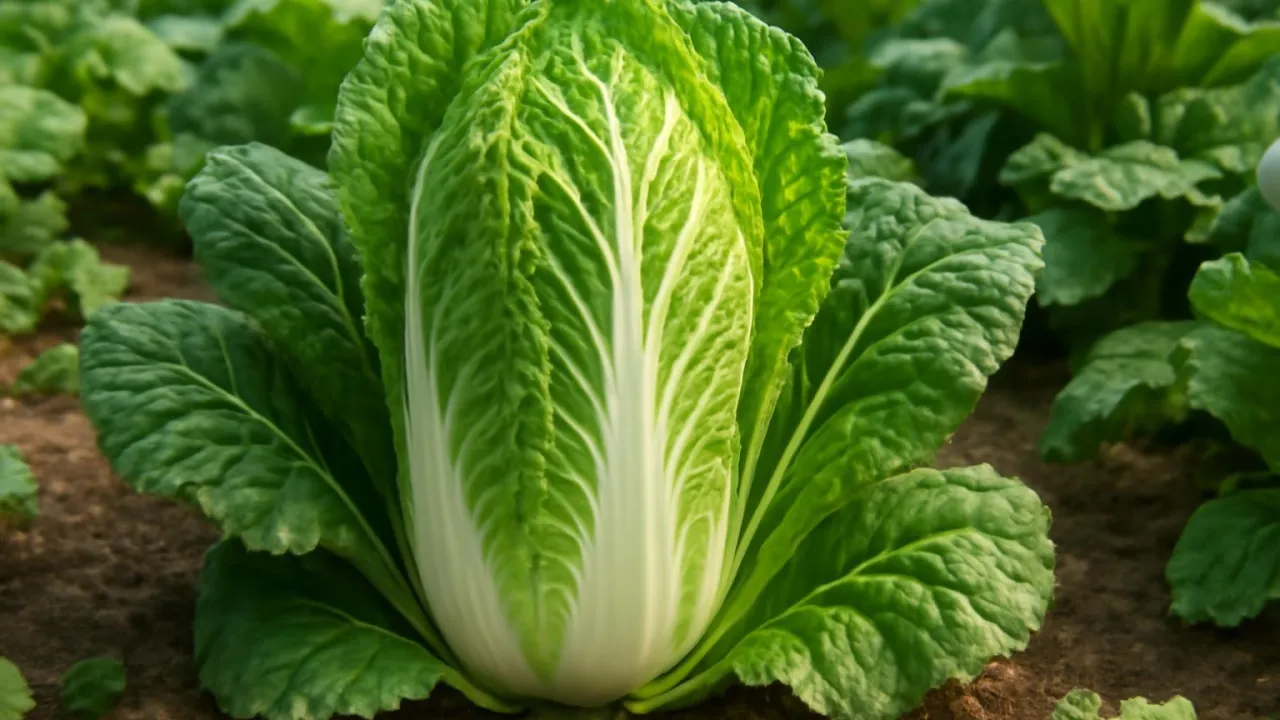
Napa cabbage is a key ingredient in kimchi, a famous Korean fermented dish!
✨ Word Sparks (Grade 2 Glossary)
Tap 🔊 to hear
moist
A little wet, not too dry
vegetable
A plant people eat for food
fermented
Food changed by tiny living things
🪝
Have you ever tasted a crunchy cabbage that grows in cool gardens?
1
Napa Cabbage Leaves
Napa cabbage has long, light green leaves that are soft and crunchy. The leaves grow tightly in a big head. People like to eat these leaves raw or cooked.
2
Where It Grows
This cabbage grows best in cool places with full sun and soil. Farmers plant it in spring or fall when weather is not too hot. It grows well in East Asia and many gardens worldwide.
3
How It Grows
Napa cabbage grows quickly in about two months. It starts as a small seed and grows into a large leafy . The crunchy leaves help protect the plant from cold weather.
Napa cabbage leaves protect the plant by acting like a natural cold shield.
✨ Word Sparks (Grade 3 Glossary)
Tap 🔊 to hear
adaptation
A change that helps plants survive better
harvest
To pick plants when they are ready
nutrients
Good things in food that help us grow
🪝
Did you know Napa cabbage’s crunchy leaves help it survive cold weather?
1
Leaf Structure and Function
Napa cabbage has large, crunchy leaves that form a tight head. These leaves help protect the inner parts from cold and pests. The plant’s leaf structure is an important for survival. The pale green color helps the plant absorb sunlight efficiently.
2
Growth and Life Cycle
Napa cabbage starts from a tiny seed planted in cool soil. It grows quickly during spring and fall seasons. The plant matures in about 60 days and produces many leafy layers. Farmers it before the weather becomes too hot.
3
Habitat and Cultivation
This vegetable thrives in temperate climates with moist, fertile soil. It is commonly grown in East Asia but also in many temperate regions worldwide. Napa cabbage requires full sun and regular watering to grow well. Its ability to grow quickly helps farmers meet food demands.
4
Culinary and Cultural Role
Napa cabbage is a key ingredient in many Asian dishes, especially kimchi. It provides important like vitamin C and fiber. The crunchy texture adds flavor and nutrition to meals. Its cultural importance makes it a staple in many households.
Napa cabbage’s thick leaves help it conserve water and survive cold weather better than many vegetables.
✨ Word Sparks (Grade 4 Glossary)
Tap 🔊 to hear
photosynthesis
How plants use sunlight to make food
sustainability
Using resources without harming nature
probiotics
Good bacteria that help our tummy
🪝
How does Napa cabbage’s crunchy leaf design affect its role in ecosystems and farming?
1
Leaf Design and Survival
Napa cabbage’s large, tightly packed leaves form a protective barrier that reduces water loss and shields the inner plant from cold temperatures. This leaf design is a key adaptation that allows the plant to thrive in temperate climates. The crunchy texture results from thick cell walls that provide strength and durability. These features help the plant resist pests and harsh weather conditions.
2
Ecosystem and Farming Impact
As a leafy vegetable, Napa cabbage plays an important role in food webs by providing nutrients to humans and animals. Farmers cultivate it extensively in East Asia and other temperate regions, impacting local agriculture and economies. Its fast growth cycle allows for multiple harvests per year, supporting food security. However, farming practices must balance water use and soil health to maintain .
3
Geographic Distribution and Growth
Napa cabbage originated in China and Korea but is now grown worldwide in temperate zones. It prefers fertile, moist soils with full sun exposure to maximize . The plant’s ability to grow rapidly in cool conditions helps farmers grow it in spring and fall seasons. Its adaptability to different soils and climates has expanded its global cultivation.
4
Cultural and Culinary Importance
Napa cabbage is essential in many Asian cuisines, especially for making kimchi, a fermented dish rich in . It provides dietary fiber, vitamins, and antioxidants that support human health. The vegetable’s crunchy texture and mild flavor make it versatile in soups, salads, and stir-fries. Its cultural significance promotes traditional farming and cooking practices.
2. How does Napa cabbage farming impact the environment?
🤯 Mind-Blowing Fact • Grade 5
Napa cabbage’s rapid growth and nutrient-rich leaves support millions of people’s diets globally every year.
✨ Word Sparks (Grade 5 Glossary)
Tap 🔊 to hear
cellulose
A strong part of plant cell walls
chlorophyll
Green pigment that helps plants make food
genetic diversity
Many different kinds of genes in plants
🪝
What scientific secrets help Napa cabbage thrive and nourish people worldwide?
1
Scientific Classification and Origins
Napa cabbage, scientifically known as Brassica rapa subsp. pekinensis, belongs to the Brassicaceae family, which includes many important vegetables. It originated in East Asia, especially China and Korea, where it has been cultivated for centuries. This subspecies was selectively bred for its mild flavor and tender, crunchy leaves. Its classification helps scientists understand its genetic relations to other cabbages and vegetables.
2
Physiological Mechanics and Adaptations
The plant’s large, tightly packed leaves contain thick cell walls made of , providing structural support and crunchiness. Its pale green leaves contain , enabling efficient photosynthesis even in cooler temperatures. Napa cabbage’s rapid growth cycle, about 50 to 70 days, is supported by high nutrient uptake from fertile, moist soils. These physiological traits allow it to adapt well to temperate climates and resist environmental stresses.
3
Conservation and Agricultural History
Napa cabbage’s cultivation history reflects human agricultural innovation, with selective breeding improving yield and taste. Conservation efforts focus on preserving heirloom varieties to maintain . Modern farming techniques balance pesticide use and organic practices to protect soil and water quality. Its global spread has made it a staple crop, contributing to food security and cultural cuisines worldwide.
4
Quantitative Growth and Nutritional Comparisons
Napa cabbage plants typically grow 12 to 20 inches tall (30 to 50 centimeters) and can weigh between 1 and 3 pounds (0.5 to 1.4 kilograms). They grow best in temperatures ranging from 55 to 75 degrees Fahrenheit (13 to 24 degrees Celsius). Compared to other cabbages, Napa cabbage matures faster and has higher water content, making it crispier. It provides about 20 calories per 100 grams, with significant vitamin C and fiber.
5
Culinary and Cultural Significance
Napa cabbage is indispensable in East Asian cuisines, especially for kimchi, a fermented food rich in probiotics that support digestive health. Its mild flavor and crunchy texture make it versatile in salads, soups, and stir-fries. The vegetable’s cultural importance has inspired festivals and traditional farming methods. Its nutritional benefits contribute to balanced diets worldwide, highlighting the link between agriculture and human health.