Mustard greens get their spicy taste from special natural oils called glucosinolates!
✨ Word Sparks (Grade 2 Glossary)
Tap 🔊 to hear
curly
Leaves that bend or twist in round shapes
stem
The part that holds up the leaves and flowers
peppery
A spicy taste like pepper in food
🪝
Have you ever tried a leafy green that tastes a little spicy?
1
What Mustard Greens Look Like
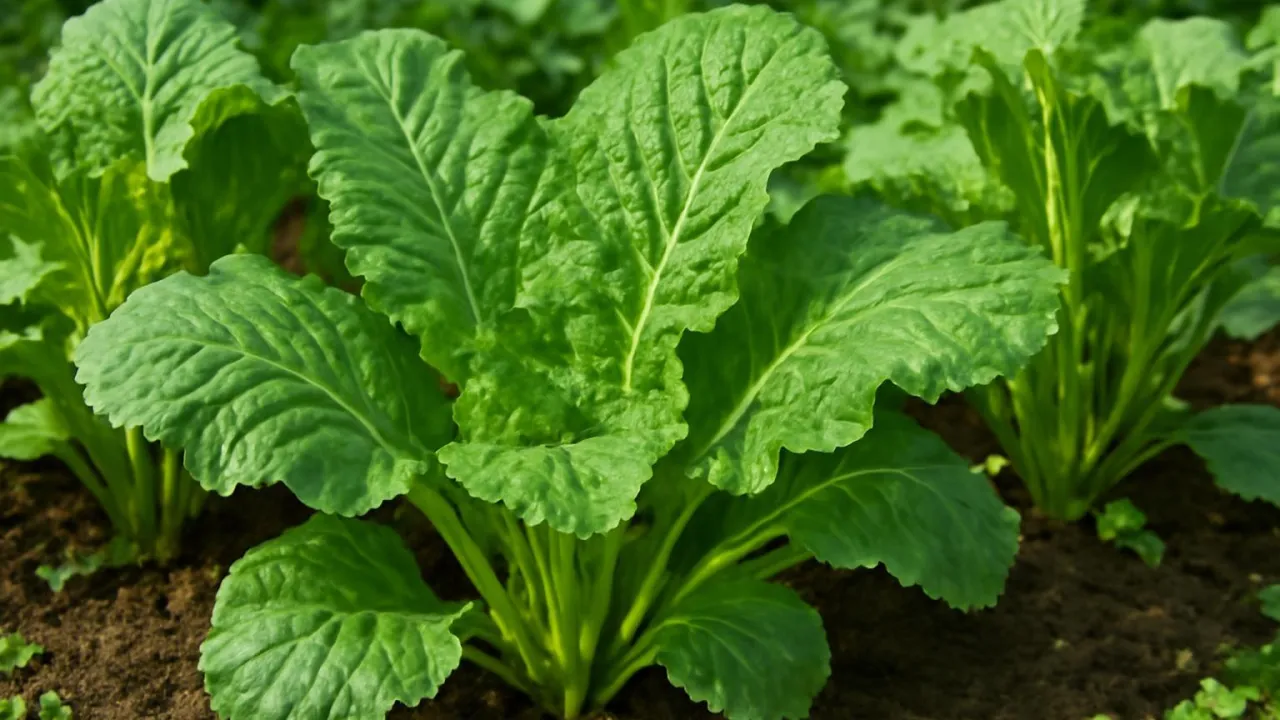
Mustard greens have large, green leaves that grow tall in gardens. They look fresh and bright in the sun. The leaves can be smooth or wrinkled, and they grow from a thick .
2
Where Mustard Greens Grow
These greens grow best in warm places with plenty of sunlight and water. Farmers plant them in soil that drains well. They grow quickly when cared for properly in spring and fall seasons.
3
A Special Peppery Taste
Mustard greens have a spicy, flavor that adds zest to meals. People use them in salads, soups, and cooked dishes. This strong taste comes from natural oils inside the leaves.
The spicy chemicals in mustard greens are a natural defense against hungry insects!
✨ Word Sparks (Grade 3 Glossary)
Tap 🔊 to hear
glucosinolates
Natural chemicals that make plants taste spicy
adaptation
A special trait that helps plants survive
pollinator
An animal that helps plants make seeds
🪝
Did you know mustard greens use their peppery taste to protect themselves?
1
What Mustard Greens Look Like
Mustard greens have large, bright green leaves that often curl or wrinkle. Their thick stems support the leaves as they grow tall in gardens. These leaves help catch sunlight for photosynthesis. The plant’s shape helps it stand strong against wind.
2
Where Mustard Greens Live and Grow
Mustard greens grow in temperate regions where the soil is moist and drains well. They need full sun to get enough energy from light. These plants grow quickly in spring and fall seasons. Their roots absorb nutrients and water from the soil.
3
How Mustard Greens Protect Themselves
Mustard greens contain natural chemicals called that taste spicy and bitter. This spicy flavor helps keep hungry insects and predators away. The peppery taste is a clever for survival. It also makes mustard greens popular in cooking.
4
Why Mustard Greens Are Important
Mustard greens provide nutrients like vitamins A and C for people and animals. They are part of many food webs in gardens and farms. visit mustard flowers to help plants make seeds. This plant helps keep soil healthy and supports other life.
Mustard greens’ spicy chemicals help reduce insect damage and protect the plant naturally.
✨ Word Sparks (Grade 4 Glossary)
Tap 🔊 to hear
herbivore
An animal that eats plants
photosynthesis
How plants turn sunlight into food
ecosystem
A community of living things and their environment
🪝
How do mustard greens’ spicy chemicals affect their ecosystem?
1
Mustard Greens’ Physical Features
Mustard greens have large, curly leaves that capture sunlight efficiently for , helping the plant grow quickly. Their thick stems provide strong support against wind and rain, allowing the plant to thrive in open fields. The peppery taste comes from glucosinolates, which act as natural pesticides to protect the plant from .
2
Where Mustard Greens Grow and Thrive
These plants grow best in temperate climates with moist, well-drained soils and full sun exposure, which promotes healthy leaf development. Mustard greens are often cultivated in gardens and farms worldwide, especially in Asia and North America. Their fast growth cycle allows farmers to harvest them multiple times per year, providing a steady food source.
3
Role in Ecosystems and Food Webs
Mustard greens serve as food for many insects and animals, but their spicy chemicals reduce damage by deterring some . Pollinators like bees visit mustard flowers, aiding in pollination and seed production. These plants also contribute to soil health by preventing erosion and cycling nutrients, supporting other organisms in the .
4
Human Impact and Agricultural Use
Humans cultivate mustard greens for their nutritional value, rich in vitamins and antioxidants that support health. Their peppery flavor makes them a popular ingredient in many cuisines worldwide. Agricultural practices impact mustard green populations, so sustainable farming helps maintain soil quality and plant diversity.
1. What helps mustard greens protect themselves from herbivores?
2. How do mustard greens help soil?
🤯 Mind-Blowing Fact • Grade 5
Mustard greens produce natural chemicals that become spicy when crushed, protecting the plant and flavoring food.
✨ Word Sparks (Grade 5 Glossary)
Tap 🔊 to hear
glucosinolates
Natural plant chemicals that turn spicy when crushed
photosynthesis
Process where plants make food using sunlight
agroecosystem
Farm environment where plants and animals interact
🪝
What scientific secrets make mustard greens a powerful vegetable in nature and nutrition?
1
Scientific Classification and Origins
Mustard greens belong to the Brassicaceae family and are scientifically named Brassica juncea. They originated in Asia and have been cultivated for thousands of years for food and medicinal uses. This species is closely related to other mustard plants and cabbages, sharing many traits. Their genetic diversity allows adaptation to various climates and soils.
2
Physiological Adaptations and Defense Mechanisms
Mustard greens produce , sulfur-containing compounds that break down into pungent isothiocyanates when damaged. These chemicals deter herbivores and pathogens, acting as natural pesticides. Their large, broad leaves maximize efficiency, while deep roots absorb water and nutrients effectively. These adaptations enable rapid growth and survival in diverse environments.
3
Nutritional and Cultural Importance
Rich in vitamins A, C, and K, mustard greens provide essential nutrients that support human health, including antioxidants and fiber. They have been used in traditional medicine to reduce inflammation and improve digestion. Culinary traditions worldwide incorporate mustard greens for their peppery flavor and health benefits. Their cultivation supports food security in many regions.
4
Ecological Roles and Agricultural Impact
Mustard greens contribute to by improving soil structure and preventing erosion through dense root systems. Their flowers attract pollinators, enhancing biodiversity and crop yields. Sustainable farming practices maintain soil fertility and reduce pesticide use, preserving ecosystems. However, overuse of chemicals can harm beneficial insects and reduce plant resilience.
5
Quantitative Comparisons and Growth Characteristics
Mustard green leaves typically grow 6 to 12 inches long and can reach heights of up to 3 feet under ideal conditions. They grow quickly, often ready to harvest within 30 to 40 days after planting. The glucosinolate content varies with temperature, increasing in cooler climates to boost defense. These factors make mustard greens a reliable and nutritious crop worldwide.