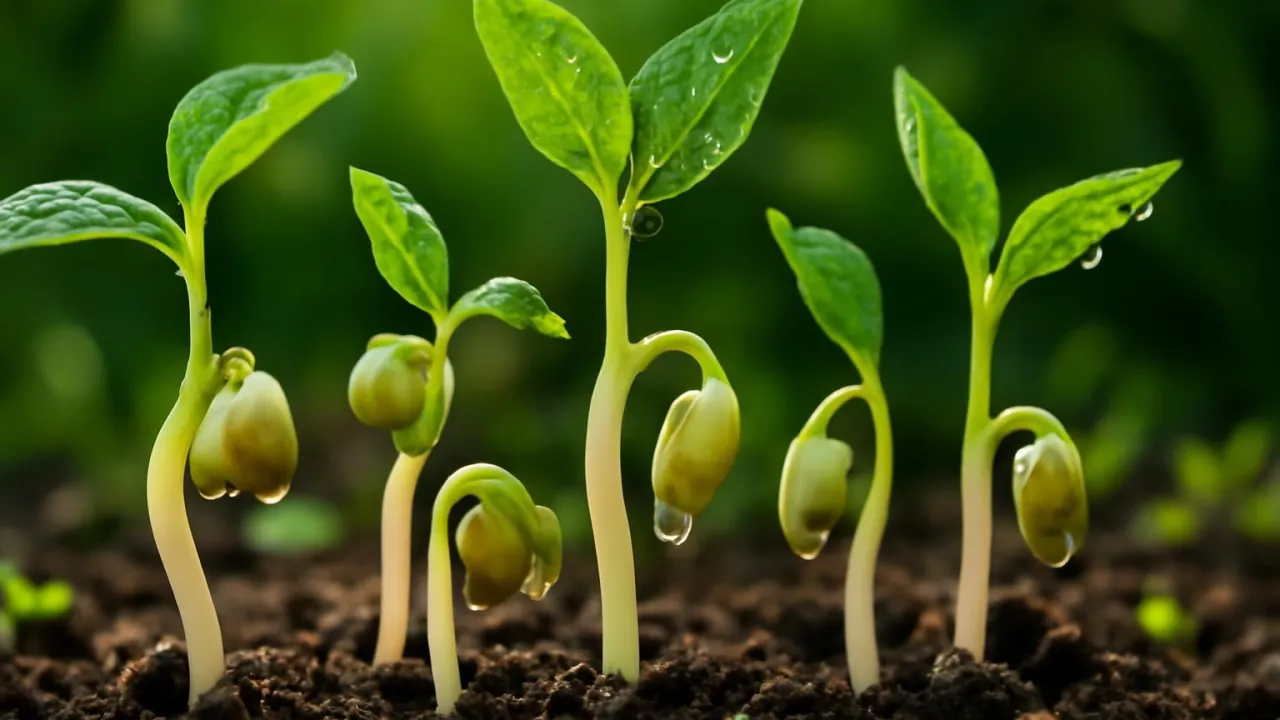
Mung bean sprouts can double their length every day during early growth.
✨ Word Sparks (Grade 2 Glossary)
Tap 🔊 to hear
sprout
A young plant growing from a seed or bean
vitamins
Nutrients that help keep your body strong
texture
How something feels when you touch or eat it
🪝
Have you ever seen tiny green sprouts grow from beans so fast?
1
What Are Mung Bean Sprouts?
Mung bean come from small round beans that are greenish-yellow. They grow quickly when placed in warm water. These sprouts are crunchy and taste fresh in many dishes.
2
How Do Mung Beans Grow?
Mung beans need warmth and water to start sprouting. Within a few days, the beans swell and tiny white shoots appear. The grow longer and turn green as they get sunlight.
3
Why Are Mung Bean Sprouts Useful?
People eat mung bean in salads, soups, and stir-fries. They are full of and help keep the body healthy. Their crunchy makes meals more fun and tasty.
Mung bean sprouts can grow up to two inches in just three days using stored seed nutrients.
✨ Word Sparks (Grade 3 Glossary)
Tap 🔊 to hear
germination
When a seed starts to grow into a plant
photosynthesis
How plants use sunlight to make food
nutrients
Food that helps plants and animals grow strong
🪝
Did you know mung bean sprouts grow fast and help plants survive?
1
What Are Mung Bean Sprouts?
Mung bean sprouts are young shoots that grow from mung beans. They are pale white with green tips and have a crunchy texture. These sprouts are a popular vegetable in many cuisines. Their quick growth makes them a fascinating plant part.
2
How Do Mung Beans Grow?
Mung beans need warmth and moisture to begin sprouting. The seeds absorb water and swell, breaking their seed coat. Then, a tiny shoot emerges and grows rapidly toward the light. This adaptation helps the sprout find sunlight for energy.
3
Why Are Mung Bean Sprouts Important?
Mung bean sprouts provide important like vitamins and minerals. They are low in calories but rich in fiber, helping digestion. Their crunchy texture adds variety to meals and supports healthy eating habits.
4
How Do Sprouts Help Plants Survive?
Sprouts use a process called to grow from seeds. This process allows the plant to start life using stored . As sprouts grow, they adapt by developing green parts for . This helps them survive and grow stronger.
1. What does germination help mung bean sprouts do?
2. Why do mung bean sprouts grow green tips?
🤯 Mind-Blowing Fact • Grade 4
Mung bean sprouts can double their length every 24 hours under ideal warm and moist conditions.
✨ Word Sparks (Grade 4 Glossary)
Tap 🔊 to hear
germination
Seed beginning to grow into a new plant
photosynthesis
Plants making food using sunlight and water
sustainable
Using resources without harming the environment
🪝
How do mung bean sprouts grow so fast and help ecosystems thrive?
1
Rapid Growth and Adaptation
Mung bean sprouts grow rapidly because their seeds store energy to start . This fast growth helps them quickly reach sunlight, which is essential for . Their slender stems and small leaves adapt to capture light efficiently. This adaptation allows sprouts to survive in crowded environments.
2
Role in Food Webs and Human Use
Mung bean sprouts serve as a nutritious food source for humans and some animals. In human diets, they provide vitamins, minerals, and fiber, which support health. They also play a role in agriculture by being easy to grow and harvest quickly. This makes them valuable in food systems around the world.
3
Geographic Distribution and Habitat
Originally from India and Southeast Asia, mung beans thrive in warm, humid climates. They are commonly cultivated in Asia but have spread worldwide due to their nutritional benefits. Mung bean sprouts grow best in moist, warm conditions with indirect sunlight. These conditions support their rapid and growth.
4
Cause and Effect of Growing Conditions
If mung beans do not receive enough water or warmth, their sprouts grow slowly or may not grow at all. Proper moisture triggers enzyme activity needed for . Warm temperatures speed up metabolic processes that fuel growth. Without these ideal conditions, sprouts cannot develop fully or remain healthy.
1. What happens if mung beans don’t get enough water?
2. Why are mung bean sprouts important in food systems?
🤯 Mind-Blowing Fact • Grade 5
Mung bean sprouts can double their length every 24 hours and reach two inches in just three days under ideal conditions.
✨ Word Sparks (Grade 5 Glossary)
Tap 🔊 to hear
enzyme
A helper that speeds up chemical changes in plants
chlorophyll
Green pigment that helps plants make food
nitrogen fixation
How some plants add nitrogen to soil for growth
🪝
What scientific secrets explain mung bean sprouts’ rapid growth and global importance?
1
Taxonomy and Scientific Classification
Mung bean sprouts come from the species Vigna radiata, a legume in the Fabaceae family. This family includes many important beans and peas known for . Their classification helps scientists understand their role in agriculture and ecosystems. The plant’s ability to enrich soil makes it valuable worldwide.
2
Physiological Mechanics of Growth
During germination, mung bean seeds absorb water and activate that break down stored starches into sugars. These sugars provide energy for rapid cell division and elongation in the sprout. The shoot grows upward toward light, while roots develop downward for water absorption. Photosynthesis begins as forms in the green tips.
3
Conservation and Agricultural History
Mung beans have been cultivated for thousands of years in Asia, valued for their fast growth and nutritional content. Modern agriculture promotes mung bean sprouts as sustainable crops due to their low water needs and soil benefits. Conservation efforts focus on preserving genetic diversity to maintain disease resistance and adaptability.
4
Quantitative Growth Comparisons
Under optimal conditions, mung bean sprouts can grow up to two inches (5 centimeters) in just three days. They can double their length approximately every 24 hours during early growth stages. Compared to other sprouts, mung beans have one of the fastest germination rates. This rapid growth supports quick harvesting cycles for farmers.
5
Global Nutritional and Economic Impact
Mung bean sprouts provide essential nutrients such as vitamin C, folate, and dietary fiber, contributing to balanced diets worldwide. Their affordability and ease of cultivation make them important in food security strategies. Economically, mung bean sprouts support small-scale farmers and local markets in many countries. Their global demand continues to rise due to health trends.