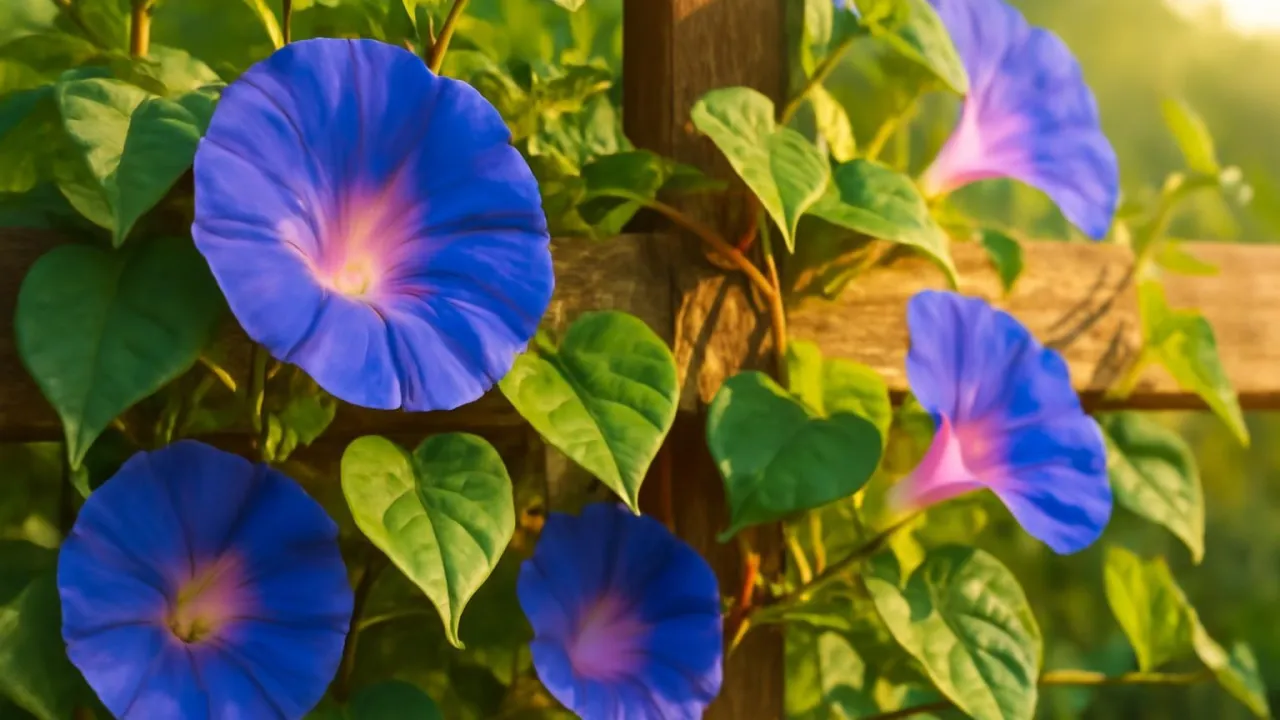
Morning glory flowers open in the morning and close by afternoon every day!
✨ Word Sparks (Grade 2 Glossary)
Tap 🔊 to hear
nectar
Sweet juice inside flowers for bees
vines
Plants that climb by wrapping around things
trellis
A frame for plants to climb on
🪝
Have you ever seen a flower that opens only when the sun shines?
1
Morning Glory Flowers
Morning glory flowers open only in the morning sunlight. They come in colors like blue, purple, and pink. These flowers close again when the sun goes down.
2
Where They Grow
Morning glories grow best in warm places with full sun. They climb on fences, walls, or by wrapping their around supports. Bees and butterflies visit to get from the flowers.
3
How They Grow
The plants grow long green that can reach up to ten feet. Morning glories need regular water but do not like too much wet soil. Their leaves are heart-shaped and help the plant catch sunlight.
Morning glories close their flowers to protect pollen and save energy during hot afternoons.
✨ Word Sparks (Grade 3 Glossary)
Tap 🔊 to hear
pollination
When bees help flowers make seeds
adaptation
A change that helps plants survive
photosynthesis
How plants use sunlight to make food
🪝
Did you know morning glories open their flowers only in bright sunlight to attract pollinators?
1
Morning Glory’s Bright Colors
Morning glories have brilliant blue, purple, and pink flowers that attract pollinators like bees and butterflies. Their colors help them stand out against green leaves. This bright coloring is an to catch attention early in the day. The flowers open wide in the morning light and close in the afternoon.
2
How Morning Glories Grow
These plants grow long, twisting vines that climb fences and trellises by wrapping around supports. The vines can reach lengths of up to ten feet. Their heart-shaped leaves help capture sunlight for , providing nutrients to the plant. Morning glories prefer warm, sunny habitats with well-drained soil.
3
Pollination and Survival
happens when bees and butterflies visit the flowers to collect nectar. This helps the plant produce seeds for new growth. Morning glories close their flowers to protect pollen from rain or predators. This closing is a survival that helps the plant reproduce successfully.
4
Where Morning Glories Live
Morning glories are found in tropical and temperate regions around the world. They thrive in gardens, fields, and near roadsides where sunlight is abundant. Because they grow quickly, they can sometimes crowd out other plants. This fast growth is an to compete for sunlight and space.
1. Why do morning glories close their flowers in the afternoon?
2. What helps morning glory vines climb fences?
🤯 Mind-Blowing Fact • Grade 4
Morning glories can grow up to ten feet long by twisting their vines around supports.
✨ Word Sparks (Grade 4 Glossary)
Tap 🔊 to hear
invasive
A plant that spreads too much and harms others
biodiversity
Many different kinds of plants and animals
pollinators
Animals that help plants make seeds
🪝
Have you ever wondered why morning glory flowers open only in the morning and close by afternoon?
1
Morning Glory’s Unique Flower Cycle
Morning glory flowers open early in the morning when sunlight first appears, attracting like bees and butterflies. This timing helps ensure pollination occurs when insects are most active. By closing in the afternoon, the flowers protect their pollen from harsh sunlight and rain, which could damage it. This daily cycle is a clever cause-and-effect adaptation for survival.
2
Role in Ecosystems
Morning glories provide nectar for many , supporting local food webs and . Their fast-growing vines offer shelter and food for insects and small birds. However, in some areas, they can become , crowding out native plants and altering habitats. Humans often cultivate morning glories in gardens for their beauty and to attract beneficial insects.
3
Geographic Distribution and Growth
Morning glories grow naturally in tropical and temperate climates worldwide, especially in North and South America. They thrive in sunny open spaces like fields, roadsides, and gardens. Their ability to climb and spread quickly allows them to compete successfully for sunlight and space. This wide distribution shows their strong adaptation to many environments.
4
Physical Adaptations
The heart-shaped leaves of morning glories maximize sunlight capture for photosynthesis, providing energy for growth. Their twining vines wrap tightly around supports, enabling vertical growth to reach sunlight. The flowers’ bright colors and morning opening time attract efficiently. These adaptations work together to help morning glories survive and reproduce effectively.
1. Why do morning glory flowers open in the morning?
2. What problem can morning glories cause in some areas?
🤯 Mind-Blowing Fact • Grade 5
Morning glory vines can twist around supports at several centimeters per hour, growing up to 10 feet long each season.
✨ Word Sparks (Grade 5 Glossary)
Tap 🔊 to hear
thigmotropism
Plants growing by touching and wrapping around things
circadian rhythms
Natural daily cycles in living things
pollination
When insects help flowers make seeds
🪝
How do morning glories’ unique flower cycles and climbing vines help them thrive worldwide?
1
Scientific Classification and Origins
Morning glories belong to the genus Ipomoea in the Convolvulaceae family, with over 500 species worldwide. They originated mainly in tropical and subtropical regions but have adapted to temperate zones as well. Their botanical classification helps scientists study their growth patterns, ecological roles, and evolutionary history. Understanding this taxonomy reveals how diverse and widespread morning glories truly are.
2
Physiological Mechanics of Growth
Morning glory vines exhibit , where they respond to touch by twisting around supports for climbing. Their heart-shaped leaves maximize photosynthesis efficiency by capturing sunlight effectively. The flowers open in response to light intensity and temperature, a process regulated by . These physiological mechanisms enable morning glories to optimize energy use and reproduction in various environments.
3
Flower Opening and Pollination Strategy
The flowers open early in the morning to coincide with peak pollinator activity, primarily bees and butterflies, enhancing success. Closing in the afternoon protects pollen from UV damage and moisture loss, conserving reproductive resources. This daily opening and closing cycle is a sophisticated adaptation balancing attraction and protection. Nectar production also varies throughout the day to maximize pollinator visits.
4
Conservation and Botanical History
Morning glories have been cultivated for centuries for ornamental and medicinal purposes across many cultures. Some species are threatened by habitat loss, while others become invasive outside their native ranges. Conservation efforts focus on protecting native populations and managing invasive growth where necessary. Botanical studies continue to explore their genetic diversity and potential uses in horticulture and medicine.
5
Quantitative Comparisons and Environmental Impact
Morning glory vines can grow up to 10 feet (3 meters) in a single growing season, twisting around supports at speeds of several centimeters per hour. Their flowers open within minutes of sunrise and close by early afternoon, typically lasting 6 to 8 hours open. They thrive in temperatures ranging from 60 to 85 degrees Fahrenheit (15 to 29 degrees Celsius). This rapid growth and flower cycle allow them to compete effectively in diverse ecosystems worldwide.