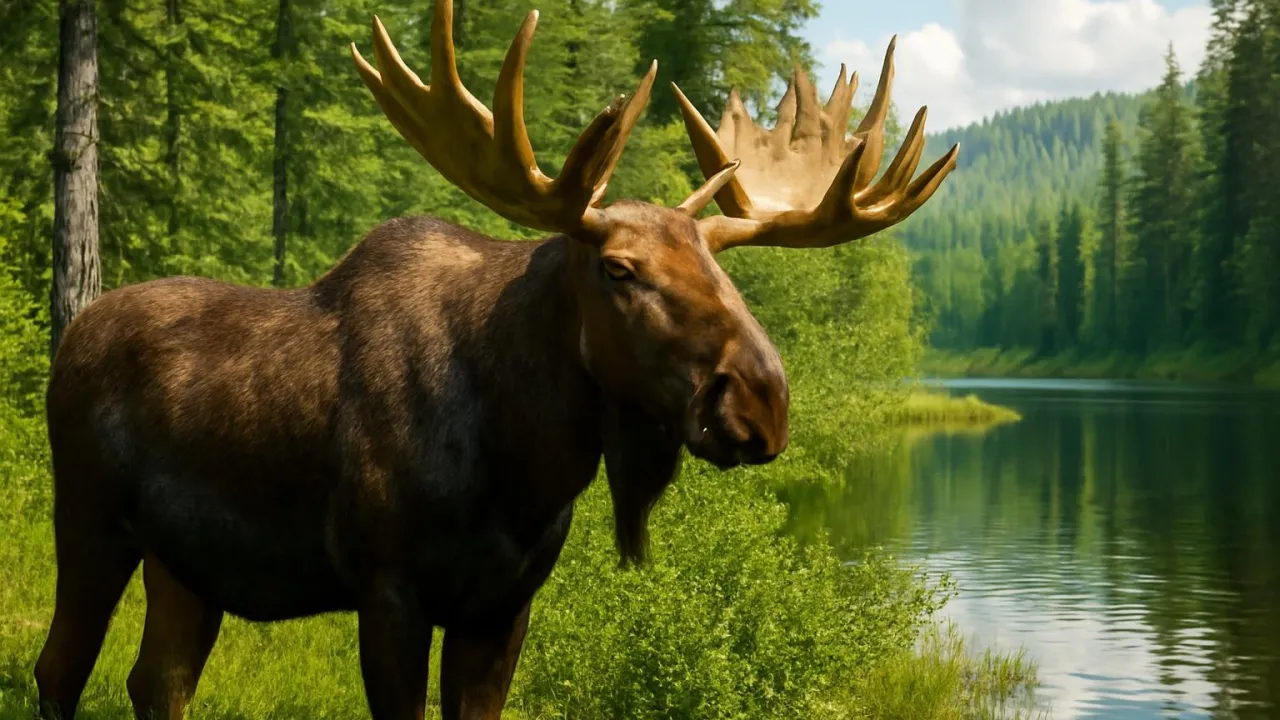
Moose can dive underwater for up to 30 seconds to eat plants.
✨ Word Sparks (Grade 2 Glossary)
Tap 🔊 to hear
antlers
Branched horns that moose males grow each year
habitat
The natural home where an animal lives
dive
To go deep down into water
🪝
Have you ever seen a moose swim across a lake?
1
Moose Size and Fur
Moose are very tall animals and can grow up to seven feet. Their fur is thick and brown, which helps keep them warm. They have long legs that help them walk through snow and water. Moose are strong and heavy animals in the forest.
2
Antlers and Uses
Male moose grow large every year during springtime. These antlers look like big tree branches and can spread wide. Moose use their antlers to fight other males for mates. After the season, the antlers fall off and grow back again.
3
Habitat and Swimming
Moose live in cold northern forests with many lakes and rivers. They like to eat plants both on land and underwater. Moose are excellent swimmers and can to reach food beneath the water surface. They often swim across lakes to find new food.
Moose use their wide hooves to paddle through water while swimming long distances.
✨ Word Sparks (Grade 3 Glossary)
Tap 🔊 to hear
camouflage
Colors or patterns that help animals hide
nutrients
Food parts that help animals grow and stay healthy
predator
An animal that hunts other animals for food
🪝
Did you know moose can use camouflage to hide in forests?
1
Moose Size and Adaptations
Moose are the largest members of the deer family and can grow very tall. Their long legs help them walk through deep snow and swampy areas easily. Their brown fur blends well with trees, which is a form of . This helps moose hide from like wolves.
2
Antlers and Behavior
Male moose grow large antlers each year to attract females and fight rivals. Antlers are shed every winter and regrow in spring. The wide antlers help spread their weight when moving through snow. They also use their antlers to defend themselves from .
3
Habitat and Diet
Moose live in northern forests with cold climates and many lakes. They eat leaves, twigs, and aquatic plants, which provide important . Moose can dive underwater to reach plants that other animals cannot eat. This adaptation helps them survive harsh winters.
4
Swimming and Survival
Moose are excellent swimmers and can swim for miles across lakes or rivers. Swimming helps them escape and find food in new areas. Their large hooves act like paddles in water. This skill is important for survival in their watery habitats.
Moose antlers can grow six feet wide and weigh up to 40 pounds each year.
✨ Word Sparks (Grade 4 Glossary)
Tap 🔊 to hear
symbiotic
Two living things helping each other survive
ecosystem
A community of plants and animals living together
hibernate
To sleep through cold winter months (moose do not hibernate)
🪝
How do moose survive cold northern forests with snow and predators?
1
Physical Adaptations and Habitat
Moose have long legs and wide hooves that help them walk on snow and soft ground without sinking. Their thick brown fur insulates them against freezing temperatures in northern forests. These forests provide the perfect habitat with plenty of lakes and rivers nearby. The moose’s ability to swim across water bodies allows it to access new feeding areas and avoid predators.
2
Role in the Ecosystem
Moose play an important role in forest food webs by eating shrubs, leaves, and aquatic plants. Their feeding helps shape plant growth and provides food for predators like wolves and bears. Moose also have a relationship with insects that feed on their fur, which helps control pests. Human activities such as logging and hunting can impact moose populations and their habitats.
3
Antlers and Seasonal Changes
Male moose grow large antlers each spring that can span up to six feet across. These antlers are used to compete for mates during the breeding season. After winter, moose shed their antlers to conserve energy during harsh months. The cycle of antler growth and loss is tied to changing daylight and hormone levels.
4
Swimming and Survival Strategies
Moose are strong swimmers and can dive underwater to reach aquatic plants that other herbivores cannot access. This ability helps moose survive food shortages during winter. Swimming also allows them to escape predators and travel between different forest areas. Their wide hooves spread out in water, acting like paddles to increase swimming efficiency.
Moose antlers are one of the fastest-growing bones in the animal kingdom, growing up to an inch per day.
✨ Word Sparks (Grade 5 Glossary)
Tap 🔊 to hear
Cervidae
The deer family that includes moose and reindeer
forage
To search for and eat food, like plants
rutting
The mating season when male moose fight for females
🪝
What makes the moose a remarkable giant of northern forests and lakes?
1
Scientific Classification and Physical Traits
The moose, scientifically named Alces alces, is the largest member of the family. Adult moose can reach heights of up to seven feet at the shoulder and weigh over 1,400 pounds. Their distinctive broad, palmate antlers are unique among deer and can span up to six feet wide. These antlers are shed and regrown annually, reflecting complex hormonal cycles.
2
Physiological Adaptations for Cold and Aquatic Life
Moose possess thick insulating fur and a large body mass that reduce heat loss in freezing temperatures. Their long legs and wide, splayed hooves distribute weight to prevent sinking in snow or marshy terrain. Remarkably, moose are adept swimmers, capable of diving underwater for up to 30 seconds to on submerged vegetation. This aquatic foraging provides essential nutrients during winter scarcity.
3
Ecological Role and Conservation Status
Moose are keystone herbivores in boreal and mixed forests, influencing vegetation structure and supporting predator populations like wolves and bears. Human activities such as habitat fragmentation and hunting have led to population declines in some regions. Conservation efforts focus on habitat preservation and sustainable hunting regulations to maintain balanced ecosystems.
4
Behavioral Ecology and Seasonal Cycles
Male moose engage in behavior during autumn, using their large antlers to compete for females. Antler growth is triggered by increasing daylight in spring and is energetically costly. Moose do not hibernate but rely on fat reserves and behavioral adaptations to survive harsh winters. Their ability to swim long distances aids in seasonal migration and predator avoidance.
5
Quantitative Comparisons and Unique Features
Adult moose can weigh up to 1,600 pounds, making them among the heaviest deer species worldwide. They can swim at speeds up to six miles per hour and dive as deep as 20 feet underwater. Their antlers can weigh up to 40 pounds each year, representing one of the fastest-growing bone structures in mammals. These impressive features highlight the moose’s evolutionary success in northern habitats.