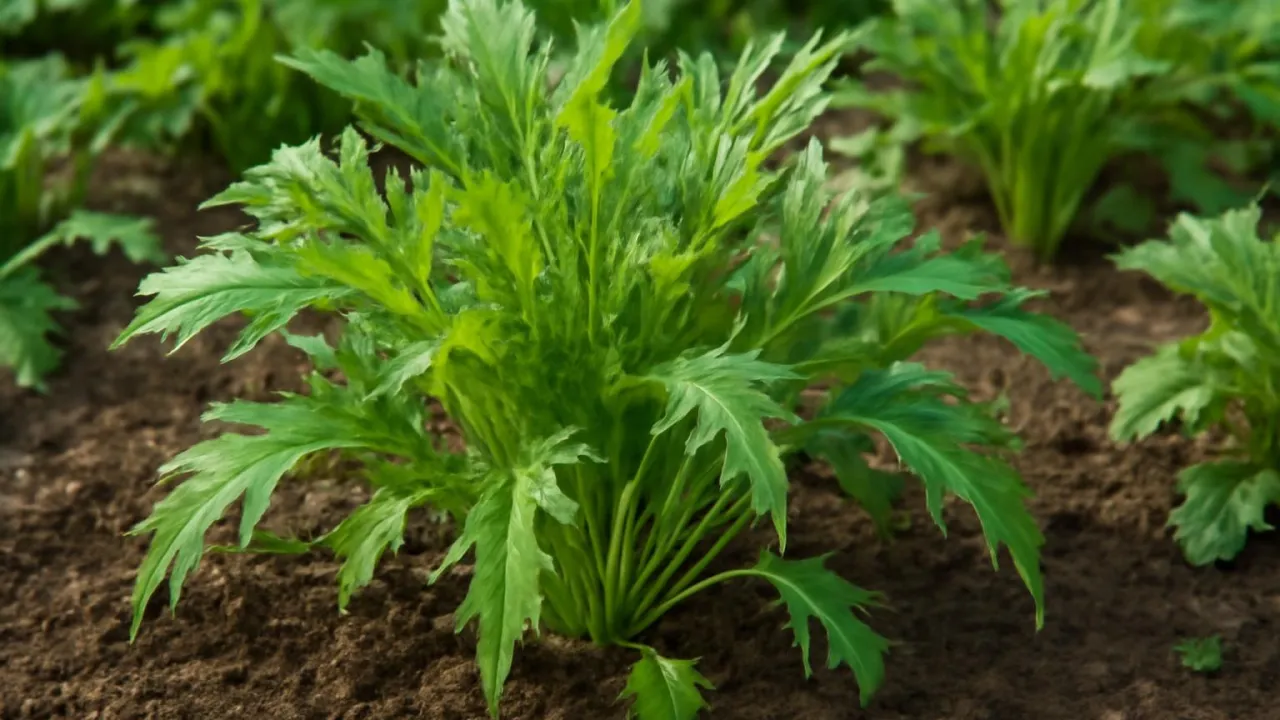
Mizuna is a leafy green that tastes spicy but is gentle on your tongue!
✨ Word Sparks (Grade 2 Glossary)
Tap 🔊 to hear
moist
A little wet, not dry
peppery
A spicy taste like pepper
harvest
To pick plants when they are ready
🪝
Have you ever tried a leafy green that tastes a little spicy?
1
What Does Mizuna Look Like?
Mizuna has bright green leaves that are jagged and soft to touch. It grows in bunches that farmers pick fresh. The stems are thin and white or pale green.
2
Where Does Mizuna Grow Best?
Mizuna grows well in gardens with lots of sun and soil. It likes cooler weather and grows fast in spring or fall. Farmers water it often to keep leaves fresh and crisp.
3
Why Is Mizuna Special?
Mizuna tastes and a little spicy, which makes salads and soups tasty. People enjoy eating it raw or cooked. It adds a fresh, zesty flavor to many dishes.
Mizuna's peppery taste helps protect it from insects and makes it tasty for people!
✨ Word Sparks (Grade 3 Glossary)
Tap 🔊 to hear
photosynthesis
How plants use sunlight to make food
camouflage
How something hides by blending in
nutrients
Good things plants and people need to grow
🪝
Did you know mizuna leaves use their shape to protect themselves?
1
What Does Mizuna Look Like?
Mizuna leaves are bright green and have jagged, serrated edges that help protect them. The leaves grow in loose bunches on thin, pale stems. This shape helps mizuna catch sunlight for .
2
Where Does Mizuna Grow?
Mizuna grows in temperate gardens, usually in cool spring or fall weather. It needs moist soil and plenty of sunlight to grow fast and healthy. This leafy vegetable is common in East Asia and other mild climates.
3
How Does Mizuna Taste and Help People?
Mizuna has a peppery, slightly spicy flavor that adds zest to salads and soups. It is rich in like vitamins A and C, which help keep people healthy. Its taste also helps protect it from some pests.
4
How Does Mizuna Survive?
The jagged leaves of mizuna serve as a form of and protection from predators. Its quick growth cycle helps it avoid being eaten before it matures. These adaptations help mizuna thrive in gardens.
Mizuna’s spicy flavor helps protect it from pests, making it a natural garden defender!
✨ Word Sparks (Grade 4 Glossary)
Tap 🔊 to hear
serrated
Edges that look like tiny teeth
herbivore
An animal that eats plants
biodiversity
Many different living things in one place
🪝
How does mizuna’s peppery flavor affect its place in the garden?
1
Mizuna’s Appearance and Growth
Mizuna has bright green, deeply leaves that grow quickly in cool, moist environments. It thrives in temperate regions such as East Asia and parts of North America. The plant reaches about 12 to 18 inches tall during its growing season. Its rapid growth helps farmers harvest fresh leaves multiple times each season.
2
Ecosystem Role and Benefits
Mizuna plays an important role in garden food webs by providing nutrients to humans and serving as food for some insects. Its peppery flavor acts as a natural defense, reducing damage from . Farmers often grow mizuna as a cool-season crop to diversify their harvests and support soil health.
3
Cause and Effect of Growing Conditions
When mizuna receives adequate sunlight and water, it grows faster and develops more flavorful leaves. Poor soil or hot weather can cause the leaves to become bitter or wilt. Proper care ensures a healthy plant that supports both human nutrition and garden , making it a valuable crop.
4
Geographic Distribution and Human Use
Originally from East Asia, mizuna has spread worldwide and is now popular in many temperate gardens. It is used in salads, stir-fries, and soups for its unique peppery taste. This vegetable’s adaptability makes it a valuable crop in diverse climates and culinary traditions.
Mizuna’s glucosinolates give it a spicy taste and protect it naturally from pests and diseases.
✨ Word Sparks (Grade 5 Glossary)
Tap 🔊 to hear
glucosinolates
Natural chemicals that give spicy taste and protect plants
cultivar
A plant variety made by humans for special traits
photosynthesis
How plants turn sunlight into food energy
🪝
What makes mizuna a unique leafy vegetable in the Brassica family?
1
Taxonomy and Botanical Context
Mizuna, scientifically named Brassica rapa var. nipposinica, belongs to the mustard family Brassicaceae. It is a of turnip greens and closely related to other Asian leafy vegetables such as tatsoi and komatsuna. This taxonomic grouping shares many nutritional and flavor characteristics. Mizuna is botanically classified as a leafy green vegetable with distinctive serrated leaves.
2
Physiological Traits and Growth Mechanics
Mizuna’s deeply serrated leaves increase surface area for efficient , allowing rapid growth in temperate climates. Its peppery flavor comes from , sulfur-containing compounds that deter herbivores and pathogens. The plant completes its life cycle within approximately 40 days under optimal conditions. These traits help mizuna adapt well to a variety of growing environments.
3
Conservation and Agricultural History
Originally cultivated in Japan centuries ago, mizuna has become a staple in East Asian diets and gained global popularity. Sustainable farming practices emphasize crop rotation and organic pest control to maintain soil health and reduce chemical use. Preservation of heirloom varieties supports genetic diversity. These efforts help ensure mizuna remains a resilient and valuable crop.
4
Quantitative Comparisons and Environmental Needs
Mizuna typically grows to 12 to 18 inches tall and requires temperatures between 45 and 75 degrees Fahrenheit for optimal growth. It prefers well-drained, moist soils with a pH of 6.0 to 7.5. Compared to other leafy greens, mizuna matures quickly and tolerates cooler weather better. Its rapid growth cycle allows multiple harvests in a single growing season.
5
Culinary and Nutritional Importance
Mizuna is rich in vitamins A, C, and K, as well as antioxidants that promote health. Its peppery flavor enhances salads, stir-fries, and soups, making it a versatile ingredient. The plant’s rapid growth and nutrient density make it valuable for food security and diverse diets. Mizuna’s unique taste and health benefits contribute to its increasing popularity worldwide.