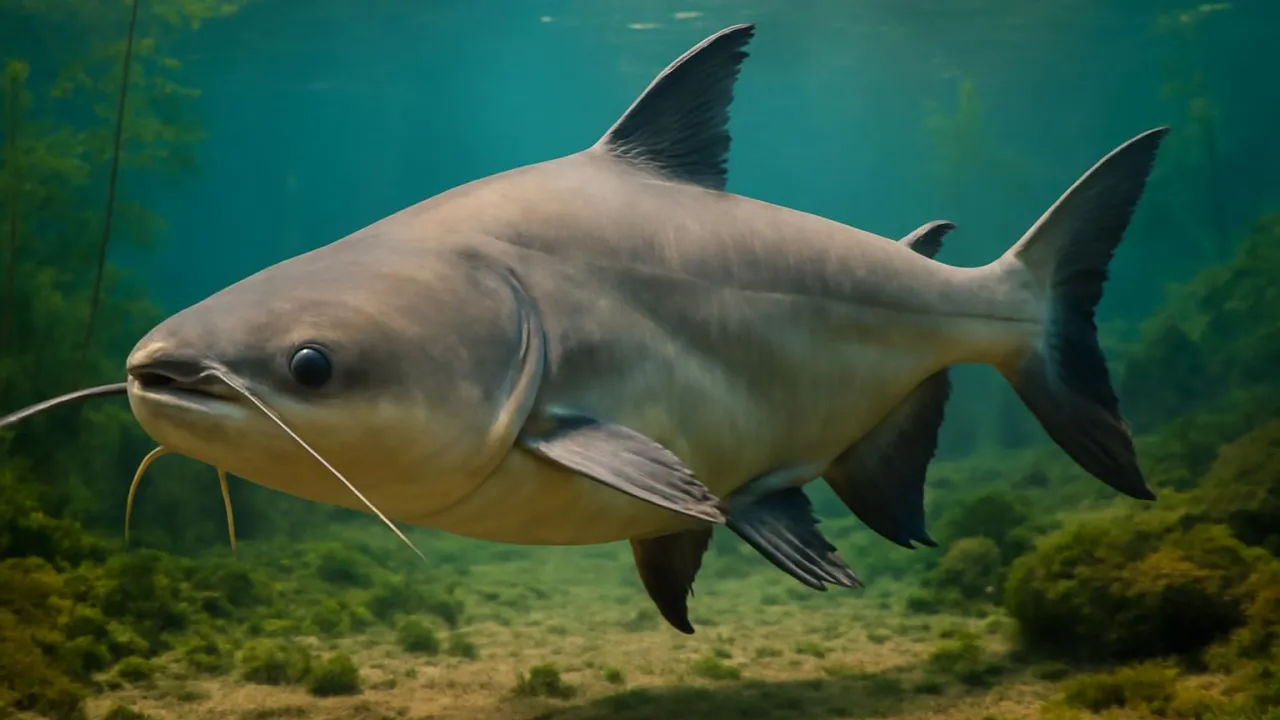
This catfish can weigh more than a small car when fully grown!
✨ Word Sparks (Grade 2 Glossary)
Tap 🔊 to hear
algae
Tiny green plants that grow in water
scaleless
Without scales or fish skin flakes
freshwater
Water from rivers or lakes, not salty
🪝
Have you ever seen a fish as big as a small car swimming in a river?
1
Huge Fish in a Big River
The Mekong Giant Catfish lives in the long Mekong River in Asia. It can grow very big and heavy. This fish has smooth, skin and a flat head. It swims slowly near the river bottom.
2
Plant-Eating Giant
Unlike many fish, it eats only plants and . It uses its wide mouth to suck up river plants. This catfish does not hunt other fish or animals. It spends most of its time eating and resting.
3
River Home and Life
The Mekong River provides fresh water and food for the fish. It can grow up to 10 feet long and weigh over 600 pounds. The fish moves slowly but can live for many years. It is one of the largest fish in the world.
1. What helps the Mekong Giant Catfish eat plants?
2. How does the Mekong Giant Catfish spend most of its time?
🤯 Mind-Blowing Fact • Grade 3
The Mekong Giant Catfish can grow so large it weighs more than a small car!
✨ Word Sparks (Grade 3 Glossary)
Tap 🔊 to hear
herbivore
An animal that only eats plants
camouflage
Color or shape that hides an animal
nutrients
Food parts that help animals grow
🪝
Did you know the Mekong Giant Catfish is one of the largest freshwater fish in the world?
1
Gigantic Fish of the Mekong
The Mekong Giant Catfish lives in the Mekong River in Southeast Asia. It can grow up to ten feet long and weigh over 600 pounds. This fish has smooth, scaleless skin that helps it glide through the water. Its flat head and wide mouth help it eat plants easily.
2
Herbivore with a Special Mouth
Unlike many fish that eat meat, this catfish is a . It feeds on algae and plants that grow on the riverbed. Its wide mouth acts like a vacuum to suck up food from the bottom. This adaptation helps it get enough to grow very large.
3
Camouflage and Survival
The fish’s grayish color helps it blend into the river bottom, a form of . This helps protect it from predators when it is young. As it grows bigger, it has fewer predators because of its size. Its slow swimming helps save energy in the strong river currents.
4
Life Cycle and Habitat
The Mekong Giant Catfish spawns during the rainy season when water levels rise. It migrates upstream to lay eggs in flooded areas. This fish depends on clean, flowing water to survive. Pollution and dams threaten its habitat and survival.
1. How does the Mekong Giant Catfish get its food?
2. What helps the fish hide from predators?
🤯 Mind-Blowing Fact • Grade 4
The Mekong Giant Catfish’s survival depends on river floods and human care.
✨ Word Sparks (Grade 4 Glossary)
Tap 🔊 to hear
ecosystem
A community of plants and animals living together
migration
Moving from one place to another to live or breed
pollution
Dirty or harmful things in the environment
🪝
How does the Mekong Giant Catfish survive as one of the largest freshwater fish in the world?
1
Giant Fish in a Changing River
The Mekong Giant Catfish inhabits the Mekong River, which flows through several Southeast Asian countries. Its enormous size, sometimes reaching over 600 pounds, helps protect it from most predators. However, human activities like dam building disrupt its natural routes and threaten its survival. The fish depends on seasonal floods to reproduce successfully.
2
Role in the Ecosystem
As a large herbivore, the Mekong Giant Catfish plays a crucial role in the river’s food web by controlling plant growth. Its feeding helps maintain a balance between algae and aquatic plants, which supports other animals. The fish also provides food for local communities, linking humans to the river . Protecting this fish helps keep the river healthy.
3
Adaptations for River Life
This catfish has a scaleless, smooth body that reduces water resistance, allowing it to swim efficiently. Its wide mouth is adapted to suck up plants from the riverbed, an important survival trait. The fish’s slow swimming conserves energy in strong river currents, and its gray color provides camouflage against the river bottom. These adaptations help it thrive in a dynamic environment.
4
Geographic Range and Threats
The Mekong Giant Catfish is found only in the Mekong River basin, which spans six countries. , overfishing, and habitat loss from dams threaten its population. Conservation efforts focus on protecting routes and reducing human impacts. Without these efforts, the species faces extinction in the wild.
1. What human activity threatens the fish’s survival?
2. How does the Mekong Giant Catfish help its ecosystem?
🤯 Mind-Blowing Fact • Grade 5
The Mekong Giant Catfish can live over 50 years and grow longer than most cars are wide!
✨ Word Sparks (Grade 5 Glossary)
Tap 🔊 to hear
megafauna
Very large animals living in an ecosystem
barbels
Whisker-like feelers that help fish find food
fragmentation
Breaking habitats into smaller, separated parts
🪝
What makes the Mekong Giant Catfish a remarkable giant among freshwater fish worldwide?
1
Scientific Classification and Size
The Mekong Giant Catfish, scientifically named Pangasianodon gigas, belongs to the Pangasiidae family. It is one of the largest freshwater fish globally, reaching lengths of up to 10 feet and weights exceeding 660 pounds. This enormous size classifies it as a species within river ecosystems. Its size provides advantages against predators but requires abundant food and habitat space.
2
Physiological Adaptations for Survival
This catfish has a scaleless, smooth skin that reduces drag in fast-flowing waters, enabling efficient swimming. Its wide, vacuum-like mouth is specialized for herbivory, allowing it to suck up algae and aquatic plants from riverbeds. The fish’s slow metabolism conserves energy during long migrations in the Mekong River. Its sensory help detect food in murky water, enhancing survival.
3
Conservation Status and Human Impact
The Mekong Giant Catfish is critically endangered due to overfishing, habitat from dam construction, and pollution. Its migratory patterns are disrupted by dams, preventing access to traditional spawning grounds. Conservation programs focus on captive breeding, habitat restoration, and community education to prevent extinction. Protecting this species is vital for maintaining Mekong River biodiversity.
4
Ecological Role and Food Web Connections
As a large herbivore, the Mekong Giant Catfish regulates aquatic plant populations, maintaining ecosystem balance. It influences nutrient cycling by consuming and redistributing plant matter. The fish also serves as prey for larger predators when young, linking multiple food web levels. Its presence supports fisheries and local economies dependent on river resources.
5
Quantitative Comparisons and Habitat Range
The Mekong Giant Catfish can grow up to 10 feet (3 meters) long and weigh as much as 660 pounds (300 kilograms). It inhabits the Mekong River basin, spanning six countries in Southeast Asia. This fish prefers water temperatures between 75 and 85 degrees Fahrenheit (24–29 degrees Celsius). Its long lifespan can exceed 50 years in the wild, making it one of the river’s longest-living species.