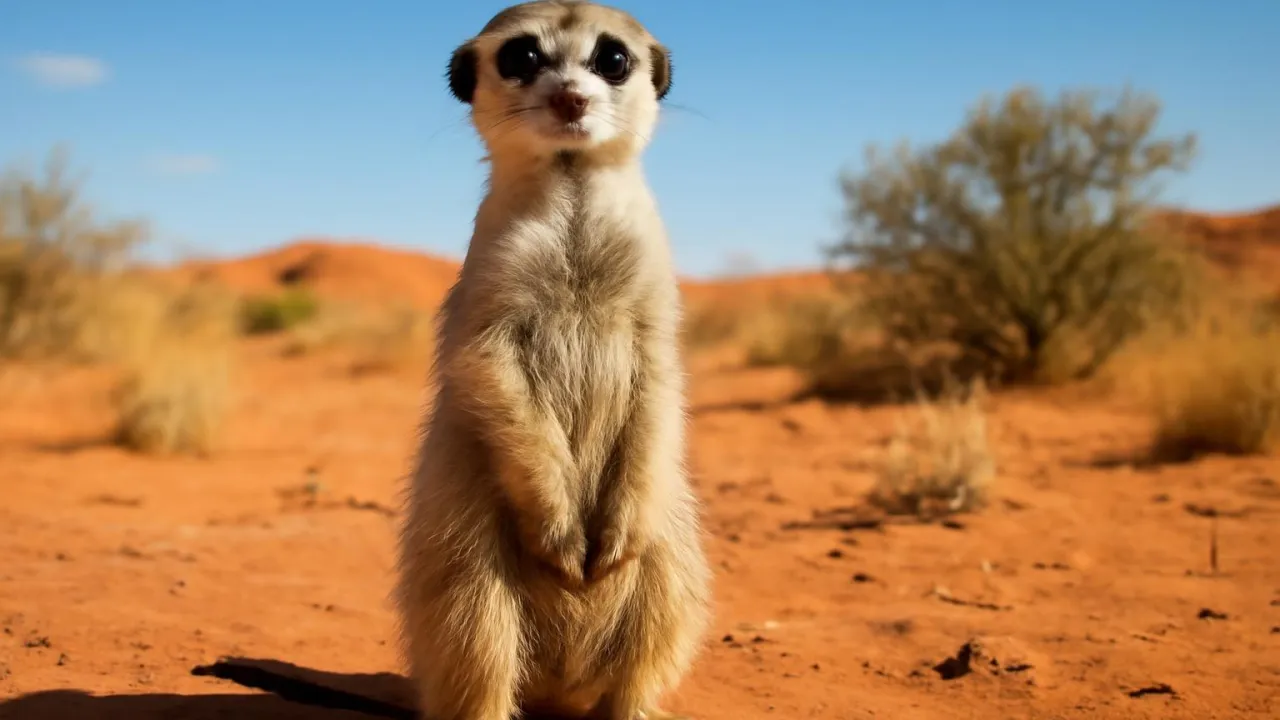
Meerkats use teamwork and special body features to survive desert dangers every day!
✨ Word Sparks (Grade 3 Glossary)
Tap 🔊 to hear
camouflage
Colors that help animals hide in nature
sentry
A guard who watches for danger
nutrients
Food parts that help animals grow strong
🪝
Did you know meerkats use teamwork to survive in the desert?
1
Body and Camouflage
Meerkats have brown fur that helps them blend into the sandy desert. This protects them from predators. Their dark patches around the eyes reduce sun glare. Their long tails help them balance while standing.
2
Living in a Clan
Meerkats live in groups called clans, which can have up to 30 members. They dig complex burrows underground for shelter and safety. Each meerkat takes turns being a to watch for danger. This teamwork helps the clan survive harsh desert conditions.
3
Finding Food
Meerkats eat insects, small reptiles, eggs, and plants for . They use sharp claws to dig for prey hidden underground. Their keen sense of smell helps them locate food. Eating a variety of foods helps them get enough energy.
4
Adaptations for Survival
Meerkats can close their ears to keep sand out while digging. Their eyes have special membranes to protect against dust. They stand upright to spot predators early. These adaptations help meerkats live safely in deserts.
1. Why do meerkats have dark patches around their eyes?
2. What is one way meerkats protect themselves?
🤯 Mind-Blowing Fact • Grade 4
Meerkats’ teamwork and sharp senses help them survive and thrive in tough desert places!
✨ Word Sparks (Grade 4 Glossary)
Tap 🔊 to hear
burrows
Underground homes dug by animals
forager
An animal that searches for food
ecosystem
A community of living things and their home
🪝
How do meerkats’ special skills help them live safely in harsh deserts?
1
Physical Adaptations and Camouflage
Meerkats have light brown fur that blends perfectly with desert sand, which helps camouflage them from predators. Their dark eye patches reduce glare from the bright sun, allowing better vision during the day. They have long, sharp claws that enable them to dig deep quickly. These physical traits are vital for their survival in a hot, dry environment.
2
Social Structure and Roles
Meerkats live in social groups called clans, often containing up to thirty individuals. Each meerkat has a role, such as sentry, babysitter, or , which helps the group function smoothly. The sentry stands upright on a high spot to watch for predators, warning the group with special calls. This cooperative behavior reduces risk and increases survival chances.
3
Ecosystem Role and Food Web
Meerkats are important predators of insects and small animals, helping control their populations in desert . They also serve as prey for larger animals like eagles and jackals, fitting into the food web. Their digging aerates the soil, which benefits plant growth. Humans sometimes impact meerkat habitats through farming and development, which can threaten their survival.
4
Geographic Range and Habitat
Meerkats are native to southern Africa, mainly in the Kalahari and Namib deserts. They prefer open, arid areas with sparse vegetation where they can spot predators easily. Their provide shelter from extreme heat and cold. Seasonal changes affect their behavior, such as more active foraging during cooler parts of the day.
1. What role does the sentry meerkat play in the clan?
2. How do meerkats help the desert plants?
🤯 Mind-Blowing Fact • Grade 5
Meerkats’ cooperative living and physical adaptations let them thrive in deserts with extreme heat and little water.
✨ Word Sparks (Grade 5 Glossary)
Tap 🔊 to hear
cooperative breeding
Helping others raise babies in the group
sentinel
A guard who watches for danger in groups
arid
Very dry with little rain or water
🪝
What makes meerkats one of the most fascinating social mammals in desert ecosystems?
1
Scientific Classification and Evolution
Meerkats belong to the mongoose family, scientifically named Suricata suricatta. They evolved to thrive in environments of southern Africa over millions of years. Their social behavior is highly complex, involving and division of labor. This evolutionary success is linked to their ability to adapt to harsh desert climates.
2
Physiological Adaptations and Behavior
Meerkats have specialized kidneys that conserve water, allowing survival with little drinking water. Their eyes contain a reflective layer that enhances vision in bright sunlight. They close their ears to prevent sand from entering while digging extensive burrows. Meerkats communicate with a variety of vocalizations to coordinate group activities and warn of threats.
3
Social Structure and Cooperative Living
Meerkat clans consist of up to thirty individuals with a dominant breeding pair. Subordinates assist in raising pups by babysitting and feeding them. take turns scanning for predators, ensuring group safety. This cooperative social system increases survival rates and strengthens clan bonds.
4
Conservation Status and Human Impact
Currently, meerkats are not endangered but face habitat loss due to agriculture and urban expansion. Conservation efforts focus on protecting natural habitats and educating the public about their ecological importance. Meerkats are popular in ecotourism, which can help fund conservation but also risks disturbing wild populations.
5
Quantitative Comparisons and Environmental Challenges
Adult meerkats weigh about 1.5 to 2.5 pounds (0.7 to 1.1 kilograms) and stand roughly 10 to 14 inches tall. They can dig tunnels up to 30 feet long to escape predators or extreme temperatures. Meerkats live in desert temperatures ranging from near freezing at night to over 100 degrees Fahrenheit (38 degrees Celsius) during the day. Their ability to adapt to such extremes is remarkable among small mammals.