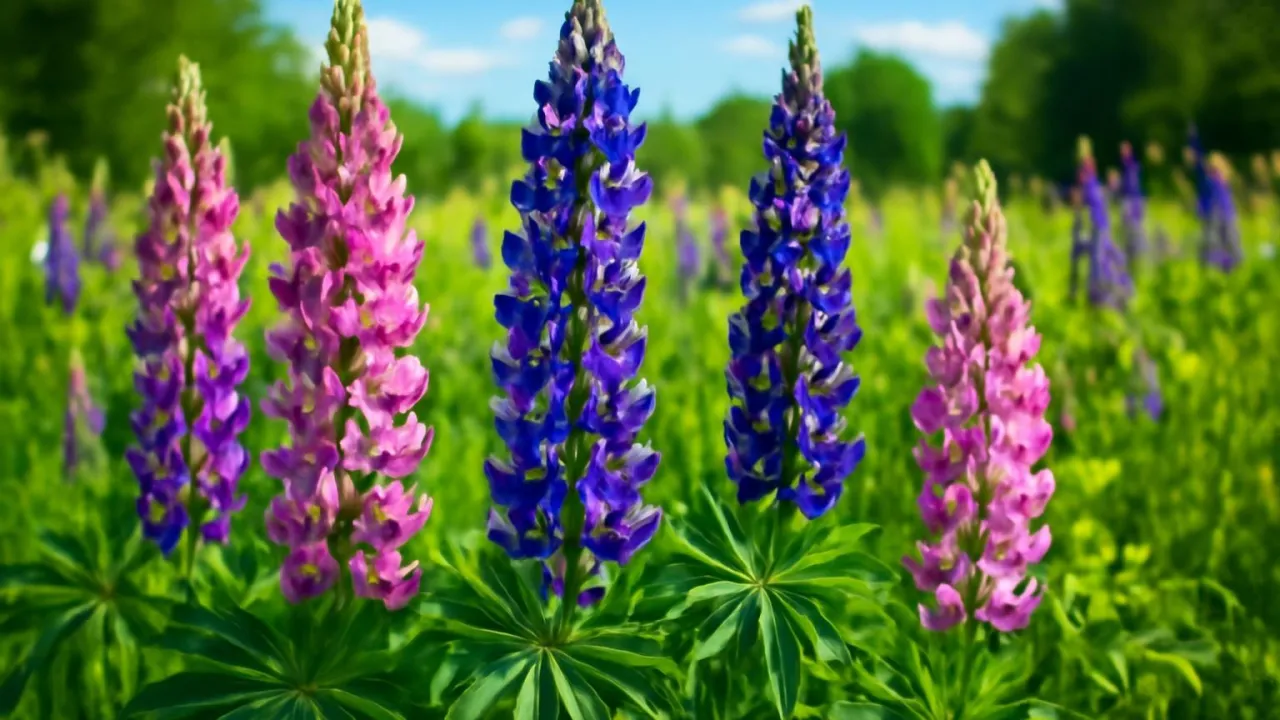
Lupines can fix nitrogen from the air to help plants grow better in poor soil!
✨ Word Sparks (Grade 2 Glossary)
Tap 🔊 to hear
spike
A tall stem with many flowers
nitrogen
A gas plants use to grow strong
roots
Plant parts that grow underground
🪝
Have you ever seen a flower that helps other plants grow?
1
Colors and Shape
Lupines have tall covered with many colorful flowers. They bloom in blue, purple, pink, and white shades. These bright flowers attract bees and butterflies that help with pollination.
2
Where Lupines Grow
These flowers grow best in sunny places with dry, well-drained soil. You can find them in meadows, hills, and open fields. Lupines adapt well to places with little water.
3
How Lupines Help Soil
Lupines have special that add to the soil. This helps other plants grow stronger and healthier. Farmers often plant lupines to improve soil naturally.
Lupine roots work with bacteria to turn air nitrogen into nutrients plants can use!
✨ Word Sparks (Grade 3 Glossary)
Tap 🔊 to hear
pollination
When insects help flowers make seeds
camouflage
How plants hide by blending in
nutrients
Food that helps plants grow strong
🪝
Did you know lupines can help other plants by changing the soil?
1
Lupine’s Bright Flowers
Lupines grow tall spikes covered with colorful flowers that attract many pollinators. Their bright colors include blue, purple, and pink. These flowers help bees and butterflies find food. This process is called .
2
Where Lupines Live
Lupines thrive in sunny, dry habitats like meadows and hillsides. They prefer well-drained soil that does not hold too much water. This helps their roots stay healthy and strong. Their leaves can help protect them by blending with green plants, a kind of .
3
How Lupines Help Soil
Lupines have special roots with tiny nodules that hold bacteria. These bacteria take nitrogen from the air and change it into for the soil. This process helps other plants get the food they need to grow. It is a natural way to improve poor soil.
4
Why Lupines Matter
Lupines are important in ecosystems because they support other plants and animals. By improving soil, they help many plants survive. They also provide food for pollinators like bees. This helps keep nature balanced and healthy.
Lupines help farmers by naturally adding nitrogen to soil, reducing the need for fertilizers.
✨ Word Sparks (Grade 4 Glossary)
Tap 🔊 to hear
symbiosis
A helpful partnership between two living things
erosion
When soil washes or blows away
herbivores
Animals that eat plants
🪝
How do lupines improve their environment and help other living things?
1
Lupine’s Colorful Role
Lupines produce tall flower spikes that bloom in vibrant colors, attracting many pollinators like bees and butterflies. These pollinators help the plants reproduce by spreading pollen between flowers. This cause-and-effect relationship supports the growth of new lupines and other plants nearby. Their bright colors also add beauty to ecosystems across North and South America.
2
Habitat and Adaptations
Lupines grow in sunny, well-drained soils often found in meadows, hillsides, and open forests. Their deep roots allow them to access water in dry conditions, which helps them survive droughts. The leaves’ shape and color provide camouflage that protects them from some . These adaptations increase their chances of survival in diverse environments.
3
Soil Enrichment and Symbiosis
Lupines form a symbiotic relationship with nitrogen-fixing bacteria in root nodules, converting atmospheric nitrogen into usable nutrients. This enriches the soil, allowing many other plants to thrive in areas with poor soil quality. Farmers and gardeners sometimes plant lupines to naturally improve soil health without chemicals. This role is vital in maintaining balanced ecosystems and sustainable agriculture.
4
Geographic Distribution and Impact
Lupines are native to many regions including North America, South America, and the Mediterranean. In some areas, they are used to prevent soil because their roots hold soil firmly. However, in places where they are not native, lupines can sometimes spread aggressively and affect local plants. Understanding their impact helps people manage ecosystems responsibly.
Lupines can fix up to 100 kilograms of nitrogen per hectare each year, enriching soil naturally.
✨ Word Sparks (Grade 5 Glossary)
Tap 🔊 to hear
legume
A plant that helps add nitrogen to soil
symbiotic
A close, helpful relationship between organisms
invasive
A species that spreads and harms local plants
🪝
What makes lupines a vital part of ecosystems and sustainable agriculture?
1
Scientific Classification and Diversity
Lupines belong to the genus Lupinus within the Fabaceae family, which includes known for nitrogen fixation. There are over 200 species of lupines, varying widely in size, flower color, and habitat preferences. These species are native primarily to North and South America, with some found in the Mediterranean region. Their diversity allows them to adapt to many ecological niches.
2
Physiological Mechanisms of Nitrogen Fixation
Lupines form specialized root nodules that house Rhizobium bacteria, which convert atmospheric nitrogen gas into ammonia. This ammonia is then transformed into nitrates and nitrites, essential nutrients for plant growth. This biological nitrogen fixation reduces the need for synthetic fertilizers, promoting sustainable farming practices. The process also improves soil fertility in nutrient-poor environments.
3
Ecological and Agricultural Importance
By enriching soil nitrogen, lupines support diverse plant communities and increase agricultural productivity. They are used in crop rotations and as cover crops to prevent soil erosion and improve soil structure. Their flowers provide nectar for pollinators, supporting biodiversity. Additionally, some lupine species have been cultivated for ornamental use and soil reclamation projects.
4
Conservation and Environmental Impact
While native lupines contribute positively to ecosystems, some introduced species can become , outcompeting local flora. Conservation efforts focus on protecting native lupine habitats and managing invasive populations. Understanding lupine ecology helps balance their benefits with potential environmental risks. Climate change may also affect their distribution and growth patterns.
5
Quantitative Comparisons and Growth
Lupines typically grow between 1 and 5 feet tall (0.3 to 1.5 meters), with flower spikes reaching up to 12 inches (30 centimeters). They thrive in temperatures from 50 to 80 degrees Fahrenheit (10 to 27 degrees Celsius). Their nitrogen fixation can add up to 100 kilograms per hectare annually, significantly improving soil quality. This remarkable capability makes lupines valuable in both natural and agricultural ecosystems.