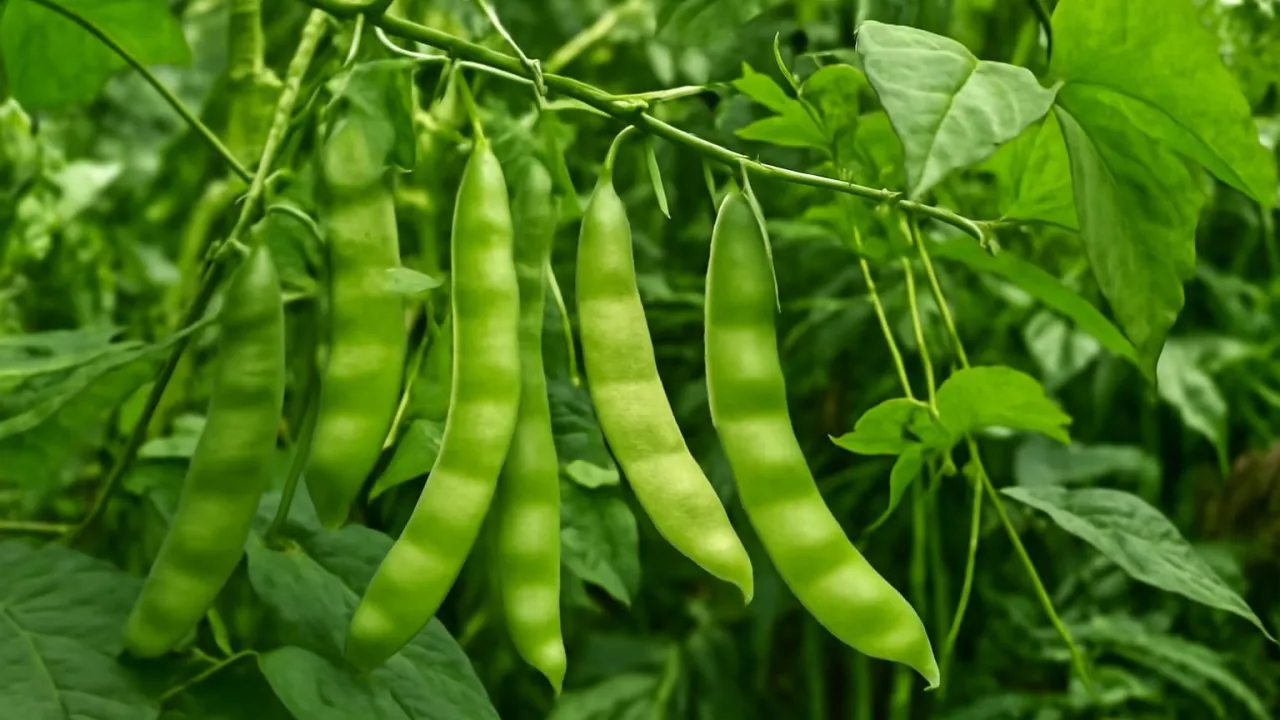
Lima bean vines can grow up to 10 feet tall, climbing high for sunlight!
✨ Word Sparks (Grade 2 Glossary)
Tap 🔊 to hear
protein
A food part that helps build strong muscles
tropical
A warm place near the equator
pods
Long shells that hold beans inside
🪝
Can you imagine beans that grow on tall climbing vines?
1
What Lima Beans Look Like
Lima beans are smooth and green, growing inside long on vines. The pods hang in groups on the plant. When the beans are ripe, the pods turn yellow or green.
2
Where Lima Beans Live
Lima beans grow best in warm places with lots of sun and water. They come from areas like Peru and Central America. Farmers plant them in fields where the soil is rich and soft.
3
Why Lima Beans Are Special
Lima beans taste creamy and buttery when cooked, making them yummy to eat. They are full of that helps people stay strong and healthy. Many people enjoy them in soups and stews.
Lima beans use twining vines to climb, a clever way to reach sunlight safely!
✨ Word Sparks (Grade 3 Glossary)
Tap 🔊 to hear
twining
When a vine wraps around a stick or branch
pollination
When flowers get pollen to make seeds
adaptation
A special trait that helps plants survive
🪝
Did you know lima beans have a special way to climb and grow tall?
1
Lima Bean Appearance and Growth
Lima beans grow inside pods that protect the seeds until they are ready. The vines climb by wrapping around supports, using a natural called . This climbing helps the plant reach sunlight and avoid predators on the ground. The beans inside are creamy and soft when cooked.
2
Habitat and Life Cycle
Lima beans thrive in tropical and subtropical climates with warm temperatures and rich soil. Seeds sprout into seedlings that grow vines up to ten feet long. Flowers bloom on the vines, and helps produce pods full of beans. The plant completes its life cycle in one growing season.
3
Survival and Adaptations
The lima bean’s vines help it climb to sunlight and avoid ground predators. Its pods protect developing seeds from insects and animals. The plant’s leaves provide shade to keep the soil moist and reduce water loss. These help lima beans survive in diverse environments.
4
Human Use and Nutrition
People harvest lima beans for their high protein and fiber content, which supports healthy bodies. Cooking lima beans softens them, making their creamy texture enjoyable. Lima beans also fix nitrogen in the soil, improving soil nutrients for other plants. This makes them important in farming ecosystems.
Lima beans improve soil by working with bacteria to add nitrogen naturally!
✨ Word Sparks (Grade 4 Glossary)
Tap 🔊 to hear
symbiotic
Two living things helping each other
fertility
How good soil is for growing plants
trellis
A frame that helps plants climb up
🪝
How do lima beans grow so tall and help their environment too?
1
Growth and Climbing Mechanism
Lima bean plants grow long twining vines that wrap around nearby supports, enabling them to climb toward sunlight. This climbing adaptation allows the plant to avoid competition for light and reduces damage from ground predators. The pods develop along the vines, protecting the seeds inside until they mature fully.
2
Ecosystem Role and Soil Health
Lima beans contribute to their ecosystem by fixing nitrogen in the soil through root bacteria, which enriches soil . This relationship benefits nearby plants and helps farmers reduce the need for chemical fertilizers. Additionally, lima beans provide food for various insects and animals, playing a role in local food webs.
3
Geographic Distribution and Farming
Originally from tropical regions of Central and South America, lima beans are now cultivated worldwide in warm climates. Farmers grow lima beans in fields that receive full sun and moderate rainfall, often using to support the climbing vines. Their ability to improve soil quality makes them a valuable crop in sustainable agriculture.
4
Human Use and Nutritional Value
Lima beans are harvested for their creamy texture and high protein content, making them a nutritious food source. They are commonly cooked in soups, stews, or purees and are valued for their fiber and vitamins. Their cultivation supports both small-scale farmers and large agricultural systems.
Lima beans fix nitrogen in soil through bacteria, reducing fertilizer needs worldwide!
✨ Word Sparks (Grade 5 Glossary)
Tap 🔊 to hear
Fabaceae
The plant family that includes beans and peas
Rhizobium
Bacteria that help plants get nitrogen
photosynthesis
How plants use sunlight to make food
🪝
What makes lima beans a vital crop for nutrition and sustainable farming worldwide?
1
Scientific Classification and Botanical Features
Lima beans belong to the species Phaseolus lunatus within the family, known for nitrogen-fixing legumes. These climbing vines can reach lengths of up to three meters, producing elongated pods containing multiple seeds. The seeds vary in color from pale green to cream, with a smooth, buttery texture when cooked. Their botanical classification highlights their role in agricultural biodiversity and soil health.
2
Physiological Mechanics of Growth and Nitrogen Fixation
Lima bean plants engage in a symbiotic relationship with bacteria in root nodules, converting atmospheric nitrogen into usable forms. This nitrogen fixation process enriches soil fertility, reducing the need for synthetic fertilizers. The twining growth habit allows the plant to maximize sunlight exposure by climbing supports, while large compound leaves optimize efficiency under tropical conditions.
3
Historical Cultivation and Agricultural Importance
Cultivated for thousands of years in Central and South America, lima beans were a staple food for indigenous peoples. Their ability to improve soil quality and provide high-protein nutrition has made them important in crop rotation systems. Today, lima beans are grown commercially worldwide, with significant production in the United States, Peru, and parts of Africa and Asia.
4
Nutritional Value and Culinary Uses
Lima beans are rich in protein, dietary fiber, and essential minerals such as iron and magnesium, supporting human health. Their creamy texture and mild flavor make them versatile in various culinary dishes, including soups, stews, and purees. Cooking lima beans properly is important to deactivate natural toxins present in raw seeds, ensuring safe consumption.
5
Quantitative Comparisons and Conservation Challenges
Lima bean vines can grow up to 10 feet (3 meters) in length, producing pods containing 3 to 6 seeds each. They thrive in temperatures between 70 to 85 degrees Fahrenheit (21 to 29 degrees Celsius) and require moderate water levels. Conservation efforts focus on preserving genetic diversity amid threats from pests, diseases, and climate change impacts on tropical agriculture.