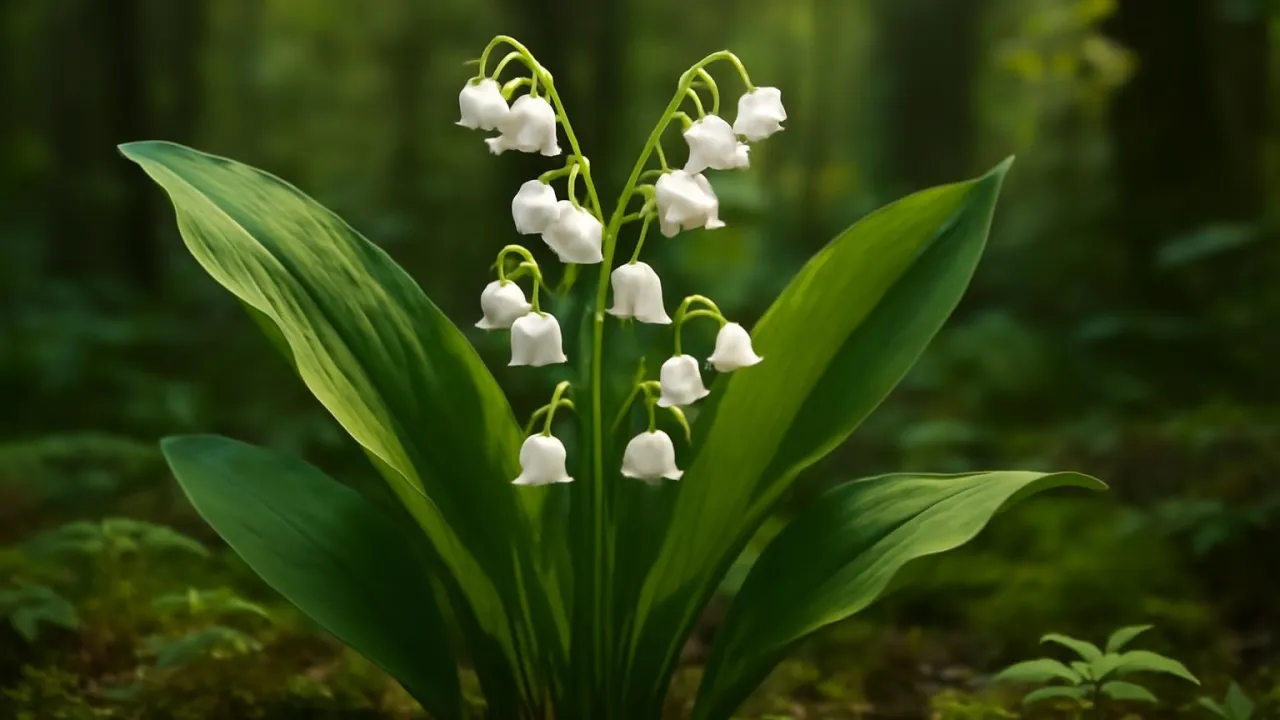
Lily of the valley spreads underground to make many new plants nearby.
✨ Word Sparks (Grade 2 Glossary)
Tap 🔊 to hear
fragrance
A nice smell that flowers make
pollinator
An animal that helps flowers make seeds
rhizome
A stem that grows under the ground to make new plants
🪝
Have you ever smelled a flower that smells like sweet perfume?
1
What Lily of the Valley Looks Like
Lily of the valley has tiny white flowers shaped like bells. These flowers hang on thin green stems. The plant grows low to the ground. It also has bright green leaves that are wide and smooth.
2
Where It Grows and Grows
This flower grows best in shady forests and cool places. It needs moist soil that drains well. The plant spreads by sending out underground stems called . These rhizomes help new plants grow nearby.
3
A Sweet Smell and Special Feature
The flowers give off a very sweet and strong . This smell attracts bees and other . Pollinators help the plant make seeds to grow more flowers. The bell shape helps protect pollen inside the flowers.
Lily of the valley’s bell-shaped flowers protect pollen from rain and wind.
✨ Word Sparks (Grade 3 Glossary)
Tap 🔊 to hear
adaptation
A change that helps a plant or animal survive
pollination
When pollen moves from one flower to another
rhizome
An underground stem that grows new plants
🪝
Did you know lily of the valley’s tiny bells hide a clever secret?
1
Appearance and Adaptation
Lily of the valley has small, bell-shaped white flowers that hang in clusters. These flowers are adapted to protect pollen from rain and wind. The plant’s wide green leaves help catch sunlight in shady forests. This helps it survive where sunlight is limited.
2
Habitat and Growth
This flower grows mainly in temperate forests across Europe and Asia. It prefers cool, moist soil with good drainage. The plant spreads by , which are underground stems that send out new shoots. This helps lily of the valley form large colonies over time.
3
Pollination and Survival
The sweet fragrance of its flowers attracts pollinators like bees and butterflies. These animals help transfer pollen from flower to flower, aiding reproduction. The bell shape protects the pollen inside, ensuring successful . This is important because it helps the plant produce seeds.
4
Interesting Botanical Facts
Though often called a flower, lily of the valley is a perennial plant that returns each year. It is also poisonous if eaten by animals or humans. Despite this, it plays an important role in forest ecosystems by providing nectar. Its presence supports many pollinators and maintains biodiversity.
1. What helps lily of the valley survive in shady forests?
2. Why is the bell shape of the flower important?
🤯 Mind-Blowing Fact • Grade 4
Lily of the valley’s poisonous leaves protect it from animals, helping it survive.
✨ Word Sparks (Grade 4 Glossary)
Tap 🔊 to hear
ecosystem
A community of plants and animals living together
pollinator
An animal that helps plants make seeds
rhizome
An underground stem that grows new plants
🪝
How does lily of the valley’s shape and smell help it survive in forests?
1
Shape and Survival
Lily of the valley’s bell-shaped flowers protect delicate pollen from rain and wind, which increases pollination success. The plant’s wide leaves capture limited sunlight in shaded forest floors, allowing it to perform photosynthesis efficiently. Because it grows low to the ground, it avoids damage from strong winds and animals. These adaptations help it thrive in cool, moist temperate forests.
2
Role in the Ecosystem
This flower plays an important role in forest by providing nectar to like bees, butterflies, and moths. These pollinators help transfer pollen between flowers, supporting plant reproduction and biodiversity. Additionally, lily of the valley’s dense colonies help prevent soil erosion by stabilizing the forest floor. However, its poisonous nature protects it from many herbivores, balancing its place in the food web.
3
Geographic Distribution and Growth
Lily of the valley is native to temperate regions of Europe and Asia but has been introduced to North America. It prefers shaded areas with moist, well-drained soil rich in organic matter. The plant spreads through , creating large patches that can cover forest floors. This growth strategy allows it to compete successfully with other plants for space and nutrients.
4
Human Impact and Uses
Humans have valued lily of the valley for its sweet fragrance and ornamental beauty in gardens worldwide. However, its toxic properties require careful handling to avoid poisoning. In some cultures, it symbolizes purity and happiness and is used in traditional ceremonies. Conservation efforts focus on protecting its natural habitats from deforestation and habitat loss.
1. Why do lily of the valley flowers have a bell shape?
2. What role does lily of the valley play in its ecosystem?
🤯 Mind-Blowing Fact • Grade 5
Lily of the valley produces toxic chemicals that protect it from many animals and help it spread underground.
✨ Word Sparks (Grade 5 Glossary)
Tap 🔊 to hear
perennial
A plant that lives for many years
rhizome
An underground stem that grows new plants
cardiac glycosides
Chemicals that can affect heart health and protect plants
🪝
What makes lily of the valley a fascinating plant in botany and ecology?
1
Taxonomy and Botanical Classification
Lily of the valley, scientifically named Convallaria majalis, belongs to the Asparagaceae family. It is a herbaceous plant that grows from underground. Its classification places it among monocots, characterized by parallel leaf veins and flower parts in multiples of three. This plant’s taxonomic placement helps botanists understand its evolutionary relationships with other flowering plants.
2
Physiological Mechanics and Adaptations
The plant’s bell-shaped flowers have evolved to protect pollen from environmental damage like rain and wind, increasing reproductive success. Its wide, parallel-veined leaves maximize photosynthesis in shaded forest understories by efficiently capturing diffuse light. allow vegetative propagation, enabling rapid colony expansion and survival in competitive habitats. Additionally, its production of makes it toxic to herbivores, providing chemical defense.
3
Conservation and Botanical History
Historically, lily of the valley has been cultivated for ornamental use and traditional medicine, despite its toxicity. Conservation concerns arise from habitat loss due to deforestation and urbanization in its native temperate forests. Efforts to preserve natural populations focus on protecting forest understories and preventing overharvesting. Botanical gardens worldwide maintain genetic diversity through propagation programs.
4
Ecological Role and Quantitative Comparisons
Lily of the valley plays a critical role in temperate forest food webs by providing nectar to various pollinators, including bees and butterflies. Its colonies can cover several square meters, outcompeting smaller plants for nutrients and space. The plant typically grows 15 to 30 centimeters tall and flowers in spring when temperatures range from 10 to 20 degrees Celsius. Its toxicity deters many herbivores, influencing local biodiversity patterns.
5
Human Interaction and Cultural Significance
Culturally, lily of the valley symbolizes purity and happiness in many European traditions, often used in wedding bouquets and festivals. Despite its poisonous nature, extracts have been studied for heart medication due to . Gardeners prize it for its fragrant flowers and ground-covering ability in shaded gardens. Understanding its biology aids in balancing horticultural use with ecological conservation.