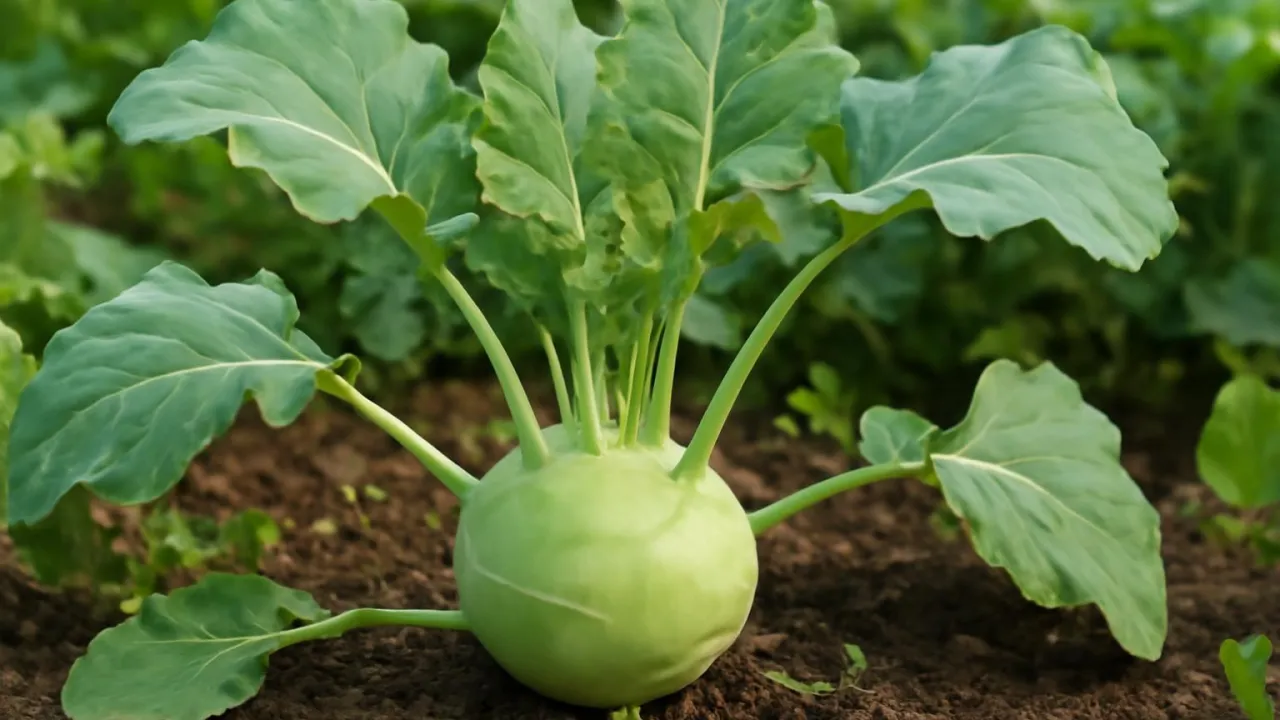
Kohlrabi’s bulb is actually a swollen stem that stores food and water!
✨ Word Sparks (Grade 2 Glossary)
Tap 🔊 to hear
bulb
A round part that stores food or water
nutrients
Good stuff plants and people need to grow
sunlight
Light from the sun that plants need
🪝
Did you know kohlrabi looks like a green alien from space?
1
Kohlrabi’s Strange Shape
Kohlrabi has a round that grows above the ground, with leaves on top. Its color can be green or purple, and it feels firm and crunchy. This strange shape helps it store water and inside its thick stem.
2
Where Kohlrabi Grows
Kohlrabi grows best in cool weather and needs plenty of and water. Farmers plant it in gardens or fields with rich soil. It is popular in Europe and Asia and can grow in many places around the world.
3
Eating Kohlrabi
People eat kohlrabi raw or cooked in many dishes like salads and soups. It tastes a little sweet and crunchy, similar to a mild cabbage or broccoli stem. It is healthy and full of vitamins that help our bodies grow strong.
Kohlrabi’s bulb is a special stem that stores water and nutrients to survive tough weather.
✨ Word Sparks (Grade 3 Glossary)
Tap 🔊 to hear
photosynthesis
How plants use sunlight to make food
adaptation
A change that helps plants survive better
food web
How plants and animals get energy from each other
🪝
Have you ever wondered why kohlrabi looks like a vegetable from another planet?
1
Kohlrabi’s Unique Shape and Color
Kohlrabi has a swollen stem called a bulb that grows above the soil surface. This bulb can be green, purple, or white and feels firm and crunchy when you touch it. Its thick stem stores water and nutrients, helping the plant survive dry spells. The leaves grow from the top and help with , turning sunlight into food.
2
How Kohlrabi Grows and Adapts
Kohlrabi grows best in cool climates and needs plenty of sunlight and water to thrive. Its bulb shape is an that stores nutrients and moisture, allowing it to survive in less-than-perfect conditions. The plant’s roots absorb nutrients from the soil, supporting its growth. Kohlrabi’s thick stem also helps protect it from pests and predators.
3
Kohlrabi’s Role in the Garden
In a garden ecosystem, kohlrabi provides food for humans and some animals like rabbits. It fits into the as a producer that converts sunlight into energy through . Its leaves and stems can also help shade the soil, reducing water loss. Farmers often rotate kohlrabi with other crops to keep the soil healthy and full of nutrients.
4
Eating and Using Kohlrabi
People enjoy eating kohlrabi both raw and cooked because of its sweet, mild flavor and crunchy texture. It is often sliced into salads or cooked in soups and stir-fries. Kohlrabi is rich in vitamins C and B6, which help the body stay healthy and strong. Its unique texture makes it a fun vegetable to try for new tastes and recipes.
2. What role does kohlrabi play in a garden’s food web?
🤯 Mind-Blowing Fact • Grade 4
Kohlrabi’s swollen stem helps it survive droughts and poor soils by storing vital nutrients.
✨ Word Sparks (Grade 4 Glossary)
Tap 🔊 to hear
symbiotic
Living together and helping each other
crop rotation
Planting different crops to keep soil healthy
temperate
Mild weather, not too hot or cold
🪝
What makes kohlrabi’s bulbous stem a clever survival tool in gardens worldwide?
1
The Science Behind Kohlrabi’s Bulb
Kohlrabi’s bulb is a swollen stem that stores water and nutrients, enabling the plant to survive dry spells and nutrient-poor soils. This adaptation helps it thrive in climates across Europe and Asia, where it originated. The thick stem also provides structural support for the leaves, which perform photosynthesis to create energy. Because of this, kohlrabi can grow quickly and produce a tasty crop in just a few months.
2
Kohlrabi’s Role in Ecosystems
As a leafy vegetable, kohlrabi contributes to garden food webs by providing food for herbivores like rabbits and insects. It also supports beneficial insects that pollinate nearby plants, creating relationships. Farmers use with kohlrabi to maintain soil health and reduce pests, which benefits the entire ecosystem. Its presence helps balance nutrients in the soil, making it an important part of sustainable agriculture.
3
Where Kohlrabi Grows Best
Kohlrabi grows best in cool, regions with well-drained, fertile soil and ample sunlight. It is commonly cultivated in Europe, Asia, and North America, where gardeners appreciate its quick growth and nutritional value. The plant’s ability to store water in its bulb helps it survive short dry periods, making it suitable for various garden environments. This adaptability has made kohlrabi a popular vegetable worldwide.
4
Using Kohlrabi in Cooking
Kohlrabi is eaten raw or cooked, often sliced into salads, roasted, or added to soups and stews. Its mild, sweet flavor and crunchy texture make it a versatile ingredient in many cuisines. Rich in vitamin C and fiber, kohlrabi supports human health and digestion. Its unique shape and taste also encourage people to try new vegetables and enjoy diverse diets.
2. Why do farmers use crop rotation with kohlrabi?
🤯 Mind-Blowing Fact • Grade 5
Kohlrabi’s swollen stem evolved as a water and nutrient storage organ, aiding survival in temperate climates.
✨ Word Sparks (Grade 5 Glossary)
Tap 🔊 to hear
morphological
How a plant’s shape helps it survive
parenchyma
Plant cells that store water and food
integrated pest management
Using natural ways to control pests
🪝
How does kohlrabi’s unique swollen stem reflect its evolutionary adaptations and agricultural importance?
1
Taxonomy and Botanical Classification
Kohlrabi belongs to the Brassica oleracea species, specifically the Gongylodes cultivar group, which includes cabbage, broccoli, and cauliflower. Unlike typical root vegetables, kohlrabi’s edible part is a swollen stem called a bulb, botanically distinct from roots. This adaptation evolved to store water and nutrients efficiently, enabling survival in temperate climates with variable moisture availability. Its classification highlights the diversity within the Brassica genus.
2
Physiological Mechanics of Kohlrabi’s Bulb
The bulbous stem of kohlrabi functions as a storage organ, accumulating carbohydrates, water, and essential nutrients during the growing season. Its thickened cortex and cells provide structural support and water retention, allowing the plant to endure short droughts. Additionally, the bulb’s surface is covered by a protective epidermis that reduces water loss and defends against pests. This physiological design optimizes growth efficiency and crop yield.
3
Conservation and Agricultural History
Kohlrabi has been cultivated since at least the Middle Ages in Europe and Asia, valued for its rapid growth and nutritional benefits. Its cultivation spread globally due to its adaptability and ease of growth in various climates. Modern agricultural practices emphasize sustainable farming techniques, such as crop rotation and , to maintain soil health and reduce environmental impact while producing kohlrabi. Conservation of heirloom varieties preserves genetic diversity.
4
Quantitative Comparisons and Growth Parameters
Typically, kohlrabi bulbs measure between 4 to 6 inches (10 to 15 centimeters) in diameter and can weigh up to one pound (450 grams). The plant grows optimally in temperatures ranging from 60 to 75 degrees Fahrenheit (15 to 24 degrees Celsius). Kohlrabi reaches maturity within 55 to 70 days after planting, making it a relatively fast-growing crop. Its water storage capacity helps it survive brief dry periods, unlike many other leafy vegetables.
5
Nutritional and Culinary Significance
Kohlrabi is rich in vitamin C, dietary fiber, and antioxidants, contributing to immune health and digestion. Its crunchy texture and mildly sweet flavor make it popular in raw salads and cooked dishes worldwide. Culinary uses include roasting, steaming, and pickling, demonstrating its versatility. Understanding kohlrabi’s botanical nature as a swollen stem rather than a root helps chefs and gardeners appreciate its unique qualities and cultivation requirements.