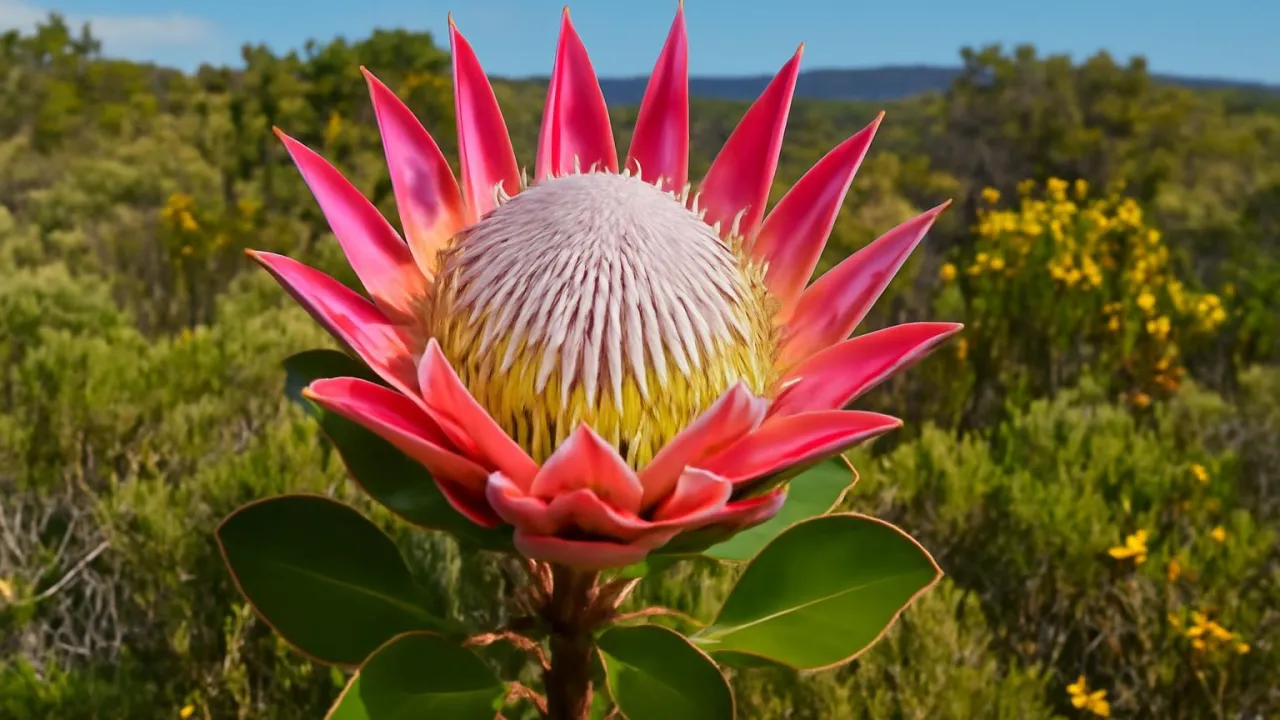
King Protea flowers can grow as wide as a dinner plate, making them very large!
✨ Word Sparks (Grade 2 Glossary)
Tap 🔊 to hear
nectar
Sweet juice inside flowers
pollinators
Animals that help flowers make seeds
fynbos
A type of South African shrubland
🪝
Have you ever seen a flower as big as a plate?
1
Huge Flower Head
The King Protea has a huge flower head that looks like a crown. Its petals are pink and white and very bright. Bees and birds visit this flower to drink . The flower can grow up to twelve inches wide.
2
Sunny Home
This flower grows in South Africa’s , a special kind of shrubland. It likes sunny hills and well-drained soil. The area is dry but the King Protea can survive there. Many animals and insects live near this flower.
3
Strong and Special
The King Protea is strong and can live through dry seasons. It needs full sun to grow well. Its large petals help attract like bees and birds. This flower also smells nice and adds color to the land.
1. What helps the King Protea attract pollinators?
2. Where does the King Protea grow best?
🤯 Mind-Blowing Fact • Grade 3
The King Protea’s flower head can be as wide as a dinner plate, making it the largest in its family!
✨ Word Sparks (Grade 3 Glossary)
Tap 🔊 to hear
adaptation
A change that helps plants survive
pollination
When pollen moves to make seeds
ecosystem
All living things in one place
🪝
Did you know the King Protea has the largest flower head in its family?
1
Amazing Size and Shape
The King Protea’s flower head can grow over twelve inches wide, making it the largest in the protea family. Its colorful petals form a crown-like shape that attracts many pollinators. These petals are tough and help protect the flower’s center. This helps the flower survive harsh weather.
2
Living in Fynbos
This flower grows in the South African fynbos biome, which is a shrubland with dry summers and wet winters. The King Protea is adapted to survive fires common in this . Its thick leaves store nutrients and water, helping it regrow quickly after fires. This is key to its survival.
3
Pollination Helpers
Bees, birds, and small mammals help pollinate the King Protea by visiting its nectar-rich flowers. The flower’s bright petals and sweet nectar attract these pollinators. helps the plant produce seeds to grow new flowers. This process is important for the plant’s life cycle.
4
Strong and Resilient
The King Protea’s tough petals and woody stem protect it from predators and harsh weather. Its deep roots help it find water during dry seasons. This flower’s make it a strong survivor in its environment. It plays an important role in the local .
1. How does the King Protea survive fires in its habitat?
2. What helps pollination for the King Protea?
🤯 Mind-Blowing Fact • Grade 4
The King Protea can regrow quickly after wildfires thanks to underground stems called lignotubers.
✨ Word Sparks (Grade 4 Glossary)
Tap 🔊 to hear
lignotuber
An underground stem that helps plants regrow
nectar
Sweet liquid flowers make to attract animals
conservation
Protecting nature and plants from harm
🪝
How does the King Protea thrive in a land often touched by fire and drought?
1
Surviving Fire and Drought
The King Protea thrives in South Africa’s fire-prone fynbos biome because it has special adaptations. Its thick, leathery leaves store water and nutrients, which help it survive long dry seasons. After wildfires, the plant quickly regrows from underground stems called . This ability allows it to recover and keep growing despite harsh conditions.
2
Role in the Ecosystem
This flower plays an important role in its ecosystem by providing to many pollinators like birds and bees. These pollinators help spread pollen, enabling the King Protea to reproduce. The plant also supports other animals by offering shelter and food. Its presence helps maintain the balance of the fynbos food web.
3
Geographic Distribution
The King Protea is native to the mountainous regions of South Africa, especially in the Western and Eastern Cape provinces. It prefers sunny slopes with well-drained, acidic soils. This flower’s range is limited to this unique biome, where it has evolved to survive local climate challenges. Its distribution is a key part of South Africa’s natural heritage.
4
Human Impact and Conservation
Humans value the King Protea for its striking beauty and use it in floral arrangements worldwide. However, habitat loss and climate change threaten its natural populations. efforts focus on protecting fynbos habitats and promoting sustainable harvesting. These actions help ensure the King Protea continues to thrive in the wild.
2. Why is the King Protea important in its ecosystem?
🤯 Mind-Blowing Fact • Grade 5
The King Protea’s flower head can be as large as a dinner plate, measuring up to 30 centimeters wide!
✨ Word Sparks (Grade 5 Glossary)
Tap 🔊 to hear
bracts
Leaf-like parts that look like flower petals
lignotuber
Underground stem that helps plants regrow after fire
Proteaceae
The plant family that includes proteas and relatives
🪝
What makes the King Protea a botanical giant and a symbol of South Africa’s unique flora?
1
Taxonomy and Scientific Context
The King Protea, scientifically named Protea cynaroides, belongs to the family . It is the national flower of South Africa and represents the unique biodiversity of the Cape Floristic Region. This species is notable for having the largest flower head among proteas, measuring up to thirty centimeters in diameter. Its genus name, Protea, honors the Greek god Proteus, symbolizing its diverse forms.
2
Physiological Mechanics and Adaptations
The King Protea’s large flower head is composed of hundreds of small flowers called florets, surrounded by colorful that look like petals. These bracts protect the florets and attract pollinators such as sunbirds and bees. The plant’s thick, leathery leaves reduce water loss, and its deep root system allows access to underground moisture during dry seasons. Additionally, enable the plant to resprout after fires, a vital adaptation in its fire-prone habitat.
3
Conservation and Botanical History
Historically, the King Protea has been cultivated and admired for centuries, both locally and internationally. However, habitat destruction and climate change pose threats to wild populations. Conservation programs focus on protecting the fynbos biome and promoting sustainable harvesting practices. Botanical gardens worldwide cultivate the King Protea to preserve its genetic diversity and educate the public about its ecological importance.
4
Ecological Role and Human Impact
Within the fynbos ecosystem, the King Protea provides essential nectar resources to specialized pollinators, including sunbirds and honeybees, facilitating cross-pollination. Its presence supports a complex food web and contributes to biodiversity. Human activities such as agriculture and urban development have reduced its natural habitat, but sustainable flower farming offers economic benefits while encouraging conservation. Awareness campaigns help balance human use with ecological preservation.
5
Quantitative Comparisons and Interesting Metrics
The King Protea’s flower head can reach diameters of up to twelve inches (thirty centimeters), making it the largest among proteas. It thrives in temperatures ranging from 50 to 86 degrees Fahrenheit (10 to 30 degrees Celsius) and can survive drought periods lasting several months. Its root system can extend over three feet (one meter) deep to access water. These measurable traits highlight its remarkable adaptations to a challenging environment.