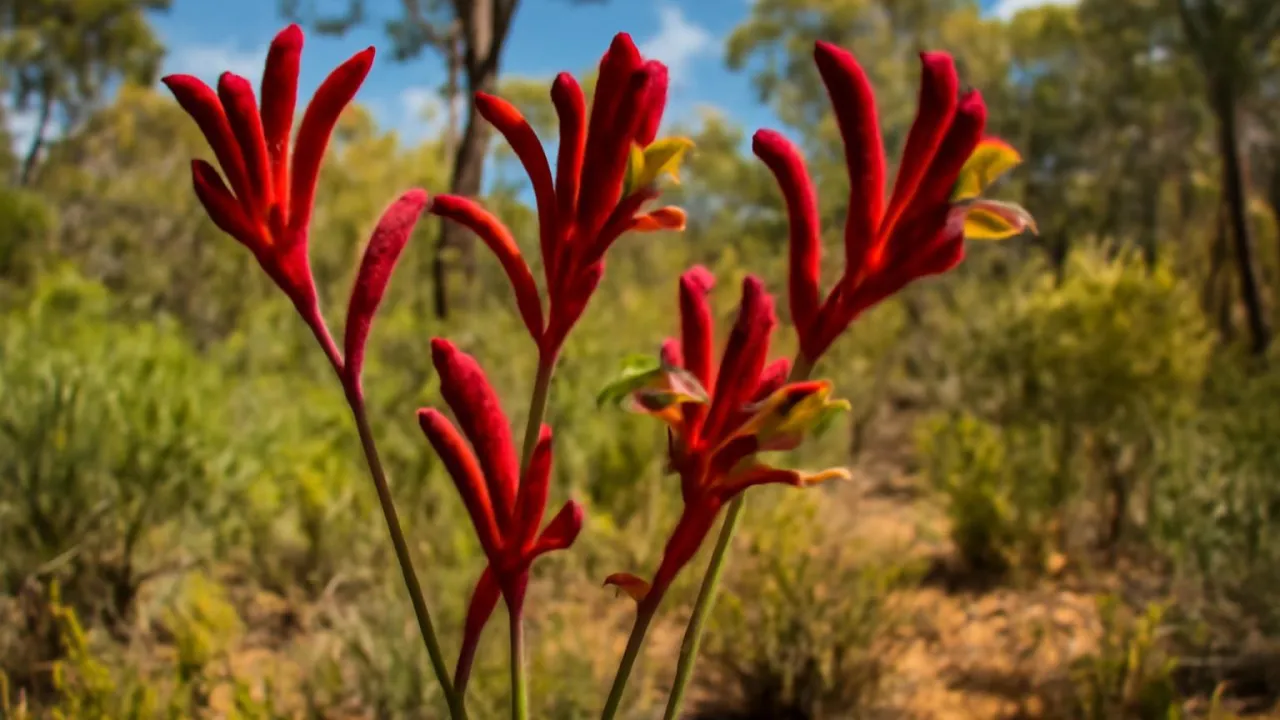
Kangaroo paw flowers use their bright colors and fuzzy shape to attract birds for pollination.
✨ Word Sparks (Grade 2 Glossary)
Tap 🔊 to hear
pollinate
When bees or birds help flowers make seeds
nectar
Sweet juice inside flowers that birds and bees drink
bulb
A round plant part underground that helps plants grow
🪝
Have you ever seen a flower shaped like a kangaroo’s paw?
1
Unique Flower Shape
Kangaroo paw flowers have bright red and yellow colors that attract birds. Their fuzzy petals look like a kangaroo’s paw. These flowers grow tall on strong green stems.
2
Where They Grow
They grow mostly in southwestern Australia where the climate is hot and dry. Kangaroo paws like full sun and need only moderate water. Birds and bees visit these flowers to drink .
3
How They Grow and Spread
These plants grow from underground that store nutrients. Bees help the flowers so seeds can form. The seeds then spread to grow new kangaroo paw plants.
Kangaroo paws use their furry petals both to attract birds and to protect themselves from drying out.
✨ Word Sparks (Grade 3 Glossary)
Tap 🔊 to hear
pollination
Moving pollen to help flowers make seeds
adaptation
A change that helps plants or animals survive
camouflage
Colors or shapes that help hide from predators
🪝
Did you know kangaroo paws have furry flowers that help them survive?
1
Furry Flowers and Adaptation
Kangaroo paw flowers have fuzzy petals shaped like animal paws. This furry texture helps protect the flower from drying out in hot weather. Their bright red and yellow colors attract birds, which help with . Pollination is when pollen moves from one flower to another to make seeds.
2
Habitat and Growth
These flowers grow in southwestern Australia’s dry, sunny climate. They are adapted to survive with little water by storing nutrients in underground bulbs. The bulbs help the plant grow back each year after dry seasons. Kangaroo paws also have long stems to keep flowers above other plants.
3
Pollination and Seed Spread
Birds and bees visit the flowers to drink sweet nectar, which provides energy. While feeding, they carry pollen to other flowers, helping plants reproduce. This process is important for the plant’s survival and spreading seeds. The seeds then grow into new kangaroo paw plants.
4
Camouflage and Protection
The fuzzy petals also help kangaroo paws blend with dry grasses and bushes, which protects them from some predators. This is an that helps the plant survive in its natural environment. The flowers’ shape and texture make them unique and interesting to study.
2. What do birds do when they visit kangaroo paw flowers?
🤯 Mind-Blowing Fact • Grade 4
Kangaroo paws’ furry flowers reduce water loss and attract birds, helping them survive dry climates.
✨ Word Sparks (Grade 4 Glossary)
Tap 🔊 to hear
symbiotic
Two living things helping each other
pollinator
An animal that helps flowers make seeds
evaporation
When water changes to gas and leaves plants
🪝
How do kangaroo paws survive and thrive in Australia’s dry lands?
1
Adaptations for Dry Climates
Kangaroo paws have furry, tubular flowers that reduce water loss by trapping moisture. Their bright colors attract nectar-feeding birds, which are essential in their ecosystem. The plants grow from underground bulbs that store water and nutrients to survive dry seasons. These adaptations allow kangaroo paws to thrive in southwestern Australia’s hot, arid environment.
2
Role in the Ecosystem
Kangaroo paws provide nectar for birds and insects, forming an important part of the local food web. Birds like honeyeaters rely on these flowers for energy, while pollination helps maintain plant diversity. The flowers’ unique shape also supports relationships by offering shelter to small insects. Human cultivation of kangaroo paws has increased their range beyond native habitats.
3
Geographic Distribution and Human Impact
Native to southwestern Australia, kangaroo paws have been introduced worldwide as ornamental plants. Gardeners value them for their bright colors and drought resistance. However, habitat loss and climate change threaten wild populations. Conservation efforts focus on protecting natural habitats and promoting sustainable cultivation practices.
4
Cause and Effect of Flower Features
The fuzzy flower petals cause reduced , which helps the plant conserve water. Bright colors cause more bird visits, increasing pollination success. Underground bulbs cause resilience during droughts by storing resources. These cause-and-effect relationships are key to kangaroo paws’ survival in challenging environments.
Kangaroo paws’ hairy flowers reduce water loss and attract birds, helping them survive Australia’s dry, hot climate.
✨ Word Sparks (Grade 5 Glossary)
Tap 🔊 to hear
morphology
The shape and structure of a plant or animal
transpiration
Water loss from plants through tiny leaf pores
mutualism
A relationship where both living things benefit
🪝
What makes kangaroo paws a fascinating example of plant adaptation and survival?
1
Scientific Classification and Taxonomy
Kangaroo paws belong to the genus Anigozanthos in the Haemodoraceae family, native to southwestern Australia. There are about 11 species within this genus, each with unique flower colors and shapes. Their name comes from the flower’s resemblance to a kangaroo’s paw, a distinctive morphological trait. This genus is closely related to other Australian native plants adapted to arid environments.
2
Physiological Mechanics and Adaptations
The tubular flowers have dense hairs that reduce by trapping humid air near the petals, minimizing water loss. Their bright red and yellow pigments attract nectar-feeding birds such as honeyeaters, which are vital pollinators. Underground bulbs store carbohydrates and water, enabling regrowth after drought or fire events common in their native habitat. Long flowering stems elevate flowers above competing vegetation to maximize pollinator visits.
3
Ecological Role and Conservation
Kangaroo paws play a crucial role in southwestern Australian ecosystems by supporting nectarivorous birds and insects, thus maintaining biodiversity. They engage in mutualistic relationships where birds gain food and plants receive pollination services. Habitat destruction and climate change threaten wild populations, prompting conservation programs to protect native habitats and encourage sustainable horticulture. Their drought tolerance makes them valuable for xeriscaping in water-scarce regions.
4
Botanical History and Human Use
First described scientifically in the 19th century, kangaroo paws have become popular ornamental plants worldwide due to their unique flowers and drought resistance. Indigenous Australians used parts of the plant for traditional purposes, including fiber and medicine. Modern horticulture has developed hybrids with varied colors and improved growth traits. Their cultivation outside Australia requires careful management to prevent invasive spread.
5
Quantitative Comparisons and Environmental Limits
Kangaroo paw plants typically grow between 30 and 90 centimeters tall, with flowers measuring 3 to 5 centimeters long. They thrive in temperatures ranging from 50 to 95 degrees Fahrenheit (10 to 35 degrees Celsius). Their bulbs can survive dry periods lasting several months by conserving moisture. Compared to other Australian native plants, kangaroo paws have moderate growth rates but high drought tolerance, making them uniquely suited to arid landscapes.