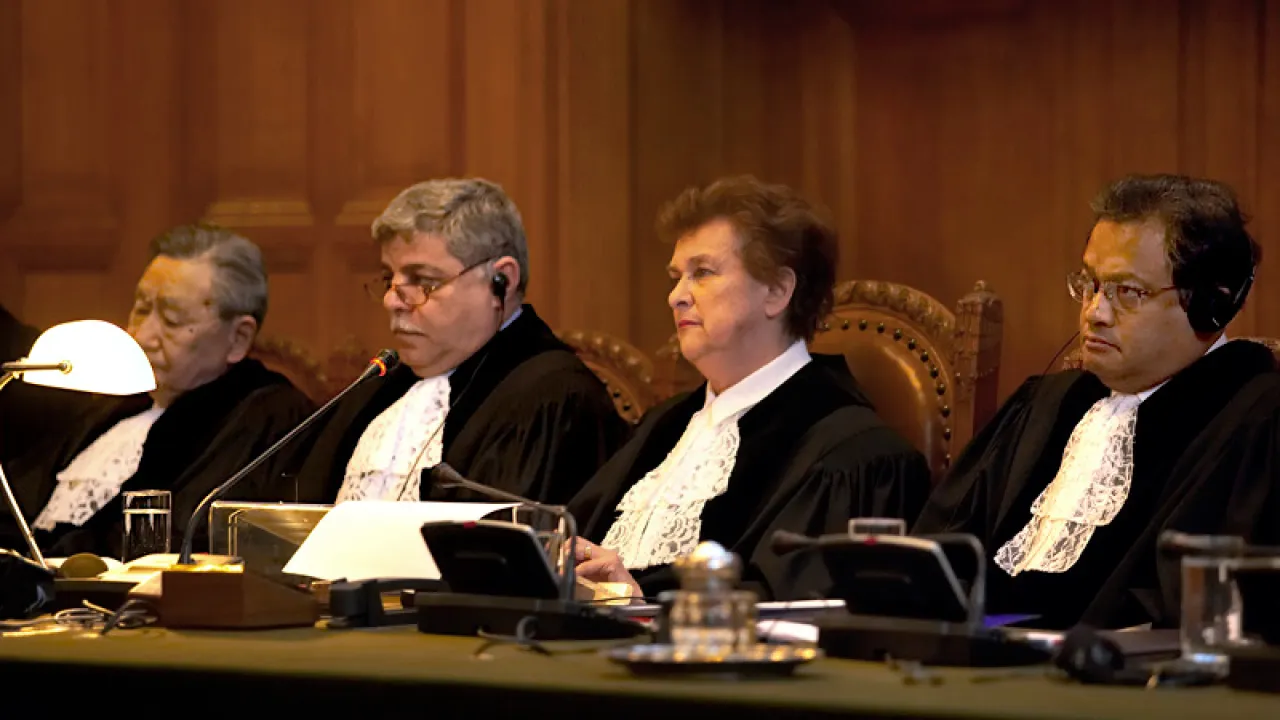
1. Why does a judge wear a black robe and listen to both sides?
2. What tool does a judge tap to bring quiet to a courtroom?
🤯 Mind-Blowing Fact • Grade 2
Justices on the United States Supreme Court actually shake hands with every single teammate before each meeting as a reminder to stay friendly even when they disagree!
✨ Word Sparks (Grade 2 Glossary)
Tap 🔊 to hear
courtroom
A special room where legal cases happen
jury
A group of citizens who hear evidence
respect
Showing care for people and fair rules
🪝
How does a courtroom stay fair when two people disagree about the rules?
1
Order in the Court!
Imagine walking into a bright room with tall wooden benches and flags at the front. When the judge steps up to the high desk, everyone stands up to show for the law. With a gentle tap of the gavel, the work begins.
2
A Referee for Community Laws
Soccer games need referees, and communities need judges. When neighbors or businesses disagree, lawyers bring facts into the . The judge listens carefully and makes sure nobody breaks the speaking rules.
3
Reading and Deciding
Sometimes a group of citizens called a decides the case, and sometimes the judge decides alone. Behind the scenes, judges spend hours in quiet offices reading laws so every choice is fair.
1. Where does a judge spend quiet hours studying laws outside the courtroom?
2. How is a judge similar to a referee in a soccer game?
🤯 Mind-Blowing Fact • Grade 3
Early American leader John Adams wrote that a nation of freedom must have a 'government of laws, and not of men,' which is the core mission of every judge!
✨ Word Sparks (Grade 3 Glossary)
Tap 🔊 to hear
bench
The raised desk where a judge sits
evidence
Facts and objects that help prove truth
chambers
A judge's private office for legal research
🪝
Why do judges wear plain black robes instead of colorful uniforms?
1
Stepping Behind the Bench
Step inside a county courthouse and look toward the front of the room. The tall wooden desk where the judge sits is called the . Wearing a plain black robe reminds everyone that the judge sets aside personal opinions to serve the law equally.
2
Guarding Fair Trials
During a trial, two sides present such as photographs, contracts, and witness stories. If a lawyer asks an unfair question, the judge steps in right away. The judge explains the exact laws to the jury so citizens can understand their duty.
3
Work Inside Chambers
Much of a judge's day happens outside the public courtroom in a private office called . There, judges research past cases, review written arguments from both teams, and write clear, careful explanations for their rulings so citizens understand every step.
4
How Someone Becomes a Judge
Most judges first attend college and law school, then work for many years as courtroom lawyers. Depending on the state or court level, voters elect them, lawmakers select them, or leaders appoint them to serve the public fairly.
1. What does a judge's plain black robe symbolize in the courtroom?
2. What is the special name for the private office where a judge researches cases?
🤯 Mind-Blowing Fact • Grade 4
Virginia native John Marshall served as Chief Justice of the United States for 34 years, the longest tenure in history, and helped establish the judicial branch as an equal partner in government!
✨ Word Sparks (Grade 4 Glossary)
Tap 🔊 to hear
impartial
Fair and not favoring any single side
judicial
Relating to courts, judges, and interpreting laws
appellate
Having power to review earlier court decisions
🪝
How does the judicial branch balance the power of lawmakers and presidents?
1
The Third Branch of Government
Picture a sturdy three-legged stool holding up American constitutional democracy. While legislators write new statutes and executives carry them out, judges lead the branch, which interprets what those written laws actually mean in real-life disagreements. In Virginia's courts and across the nation, judges check that every local ordinance and state statute respects both state constitutions and the U.S. Constitution.
2
Umpires of Evidence and Procedure
Inside a busy trial court, emotions can run high when neighbors dispute a property boundary, businesses argue over a contract, or a citizen faces a criminal accusation. Because our legal system guarantees due process, a judge acts as a calm, guardian of courtroom procedure. Judges decide which physical clues or documents are reliable enough for a jury to examine and ensure every witness is questioned respectfully.
3
Trial Courts Versus Appellate Courts
Not every judge hears live witnesses or taps a wooden gavel. Trial judges oversee one case at a time with citizen juries and spoken testimony. If either side believes a legal error happened during that trial, a panel of three or more judges reviews the written transcript and legal briefs to verify whether the law was applied accurately.
4
Patience, Research, and Civic Trust
Strong judges combine detective-level reading skills with steady patience and humility. By publishing reasoned written opinions that explain step by step why a ruling was reached, judges show the entire community that American justice relies on logic and constitutional principles rather than personal guesswork.
1. What is the main responsibility of the judicial branch in American government?
2. How does an appellate court differ from a trial court?
🤯 Mind-Blowing Fact • Grade 5
Although wooden gavels are famous symbols of trial courts, the Justices of the U.S. Supreme Court do not use gavels at all during oral arguments, relying instead on small signal lights on the lectern!
✨ Word Sparks (Grade 5 Glossary)
Tap 🔊 to hear
precedent
An earlier court ruling guiding future cases
docket
The official schedule of cases awaiting court
statute
A formal written law passed by legislators
🪝
What happens when a newly passed law conflicts with the United States Constitution?
1
Guardians of Constitutional Order
Silence settles over the wood-paneled courtroom at exactly ten o'clock in the morning as nine black-robed justices take their seats behind a raised mahogany bench. Unlike legislators who debate future policies or governors who manage state agencies, judges anchor the rule of law—the foundational civic principle that every private citizen and powerful official is equally accountable to publicly enacted legal standards. From municipal traffic courts and Virginia circuit courts to the nine-member Supreme Court of the United States, judges safeguard constitutional rights.
2
Precedent and Legal Reasoning
When resolving a complex dispute over free speech, patent ownership, or clean-water rules, a judge never invents an answer from thin air. Instead, judges analyze the exact wording of statutory text alongside judicial —reasoned decisions reached by higher or earlier courts in comparable cases. Following the Latin doctrine of stare decisis, meaning 'to stand by things decided,' keeps the legal system stable and predictable so families, inventors, and communities know their rights long before stepping into a courthouse.
3
Managing the Trial Docket
A busy state circuit judge or federal district judge may manage a yearly of more than four hundred active civil and criminal cases. Long before twelve citizens enter the jury box, the judge presides over pretrial scheduling conferences, evaluates motions on whether forensic lab data or digital records meet strict scientific reliability standards, rules on courtroom objections in seconds, and delivers plain-language legal instructions to guide jury deliberations.
4
Judicial Review and Separation of Powers
Since Chief Justice John Marshall authored the landmark 1803 opinion in Marbury v. Madison, American courts have exercised judicial review—the constitutional duty to invalidate executive actions or legislative that conflict with the Constitution. Federal judges appointed under Article III are nominated by the President and confirmed by the U.S. Senate for life tenure during good behavior, deliberately insulating their legal judgment from short-term political pressure.
5
Pathway to the Bench
Becoming a judge typically requires completing a four-year bachelor's degree, three years of law school earning a Juris Doctor (J.D.), passing a rigorous state bar examination, and building at least ten to fifteen years of distinguished trial, appellate, or public-service legal experience supported by judicial law clerks.