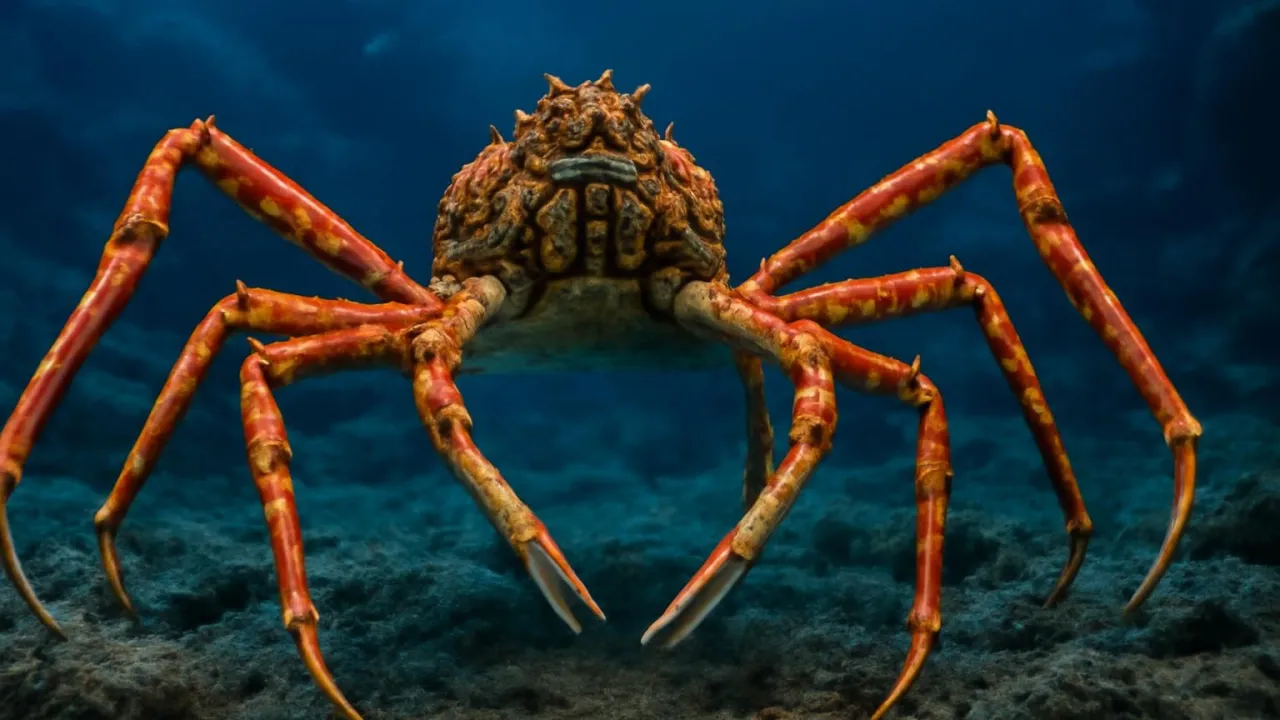
The Japanese Spider Crab’s leg span can reach up to 12 feet, longer than most people are tall!
✨ Word Sparks (Grade 2 Glossary)
Tap 🔊 to hear
predator
An animal that hunts other animals
claws
Sharp pincers used for grabbing food
habitat
The place where an animal lives
🪝
Have you ever seen a crab with legs longer than your bed?
1
Huge Legs for Walking
The Japanese Spider Crab has legs that can grow very long and strong. It uses these legs to walk slowly along the ocean floor. Its big legs help it reach food and move over rocks easily.
2
Deep Ocean Home
This crab lives deep underwater near Japan where the water is cold and dark. It hides under rocks and coral to stay safe from . The crab prefers deep sea where few animals live.
3
What It Likes to Eat
It feeds mostly on dead animals and plants that fall to the ocean floor. This crab helps clean the sea by eating leftovers. It uses its to pick up food and bring it to its mouth.
The Japanese Spider Crab’s leg span is the longest of any crab, reaching up to 12 feet across!
✨ Word Sparks (Grade 3 Glossary)
Tap 🔊 to hear
camouflage
Colors or shapes that help hide an animal
scavenger
An animal that eats dead plants or animals
molts
When an animal sheds its old shell or skin
🪝
Did you know the Japanese Spider Crab has the longest legs of any crab species?
1
Amazing Long Legs
The Japanese Spider Crab has legs that can span up to 12 feet across. These long legs help it walk slowly on the ocean floor and avoid predators. Its legs are covered with spines that provide among rocks and seaweed. This adaptation helps the crab blend into its environment to stay safe.
2
Deep Sea Habitat
This crab lives in the deep Pacific Ocean near Japan, often at depths of 150 to 300 meters. The cold, dark water provides a quiet place to find food and hide from predators. It uses rocks and coral as shelter to protect itself during the day. Its habitat is a unique ecosystem full of other deep-sea creatures.
3
Diet and Role
The Japanese Spider Crab is a that feeds on dead animals and plants on the ocean floor. It helps recycle nutrients by cleaning up leftover food and debris. This role is important in the food web because it keeps the ocean floor healthy. The crab uses its strong claws to break apart food before eating.
4
Life Cycle and Growth
The crab starts life as a tiny larva that floats in the ocean currents. As it grows, it its shell many times to increase in size. Adult crabs can live up to 100 years, making them long-lived creatures. Their slow growth helps them survive in the deep ocean environment.
The Japanese Spider Crab’s leg span can reach 12 feet, making it the largest crab by leg length in the world!
✨ Word Sparks (Grade 4 Glossary)
Tap 🔊 to hear
adaptation
A body change that helps animals survive
ecosystem
All living things and their home together
molting
Shedding old shell to grow a new one
🪝
How does the Japanese Spider Crab’s giant legs help it survive in the deep ocean?
1
Legs That Help Survival
The Japanese Spider Crab’s extremely long legs allow it to move slowly and carefully over rocky ocean floors, which helps it avoid predators. These legs also enable the crab to reach food in hard-to-access places, increasing its chances of finding meals. Because the ocean floor is uneven, the crab’s long legs provide balance and stability as it walks. This physical is vital for survival in its deep-sea habitat.
2
Role in the Ecosystem
As a scavenger, this crab plays an important role in the ocean’s food web by cleaning up dead plants and animals. This recycling of nutrients supports other sea creatures and helps maintain a healthy . The crab’s presence benefits the ocean environment by preventing decay buildup. Humans sometimes catch these crabs, but overfishing could threaten their populations in the future.
3
Where It Lives
The Japanese Spider Crab is found mainly around Japan’s Pacific coast, living at depths between 150 and 300 meters. The cold, dark waters provide a safe refuge from many predators and harsh surface conditions. Its habitat includes rocky areas and coral reefs where it can hide during the day. This geographic distribution is limited but crucial to the crab’s life cycle.
4
Growth and Longevity
These crabs grow slowly and molt their shells multiple times over many years to reach full size. They can live up to 100 years, which is unusually long for crustaceans. Their slow growth rate and long lifespan help them adapt to the deep ocean’s stable but challenging conditions. Understanding their life cycle helps scientists protect this unique species.
2. What could happen if too many crabs are caught by humans?
🤯 Mind-Blowing Fact • Grade 5
The Japanese Spider Crab’s legs can stretch over 12 feet, making it the largest legged crab on Earth!
✨ Word Sparks (Grade 5 Glossary)
Tap 🔊 to hear
exoskeleton
A hard outer shell that protects animals
planktonic
Tiny creatures that float in water
metabolism
How animals use energy to live
🪝
What unique features make the Japanese Spider Crab the largest legged crab on Earth?
1
Scientific Classification and Size
The Japanese Spider Crab, scientifically named Macrocheira kaempferi, belongs to the family Inachidae. It is the largest crab species by leg span, reaching up to 12 feet or 3.7 meters across. This remarkable size allows it to dominate its deep-sea habitat near Japan. Its body length, excluding legs, can reach up to 15 inches or 38 centimeters.
2
Physiological Adaptations
This crab’s long legs are jointed and covered with spines that provide camouflage against rocky ocean floors. Its is thick and strong, protecting it from predators and harsh underwater conditions. The crab’s claws are powerful enough to grasp and break apart tough food sources. Its slow suits the cold, deep-sea environment where food is scarce.
3
Ecological Role and Conservation
As a scavenger, the Japanese Spider Crab recycles nutrients by feeding on dead animals and plants, supporting deep-sea ecosystems. It plays a vital role in maintaining ocean floor health and biodiversity. However, overfishing for food and souvenirs threatens its populations. Conservation efforts focus on sustainable fishing and habitat protection to preserve this unique species.
4
Life Cycle and Longevity
The crab begins life as larvae that drift with ocean currents before settling on the sea floor. It molts its multiple times over decades to grow to adult size. Adults can live up to 100 years, a lifespan that is unusually long for crustaceans. This slow growth and longevity reflect adaptations to the stable but resource-limited deep ocean environment.
5
Quantitative Comparisons
The Japanese Spider Crab’s leg span is about four times longer than its body length, a ratio unmatched by other crabs. Its leg span exceeds the height of most adults and can cover the length of a small car. It lives at depths between 500 and 1000 feet (150 to 300 meters), where temperatures range from 41 to 50 degrees Fahrenheit (5 to 10 degrees Celsius). These conditions shape its unique physiology.