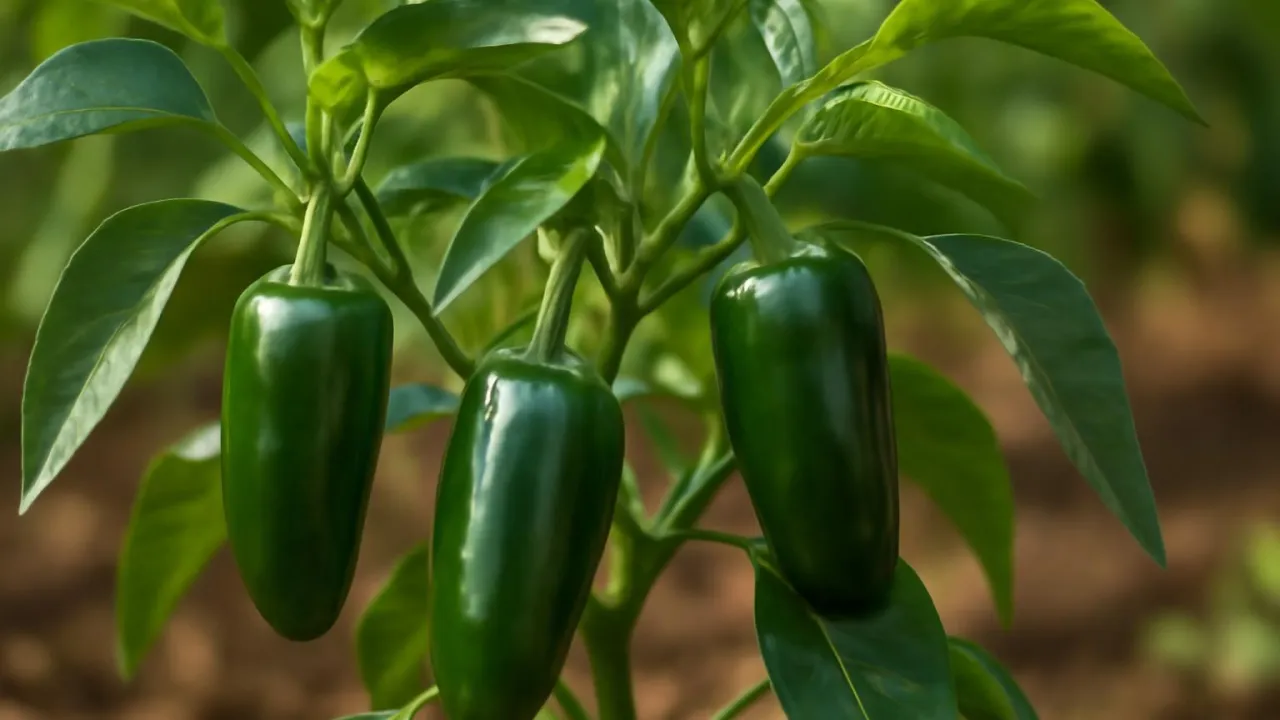
Jalapeños get their spicy heat from capsaicin, which helps protect the plant from animals.
✨ Word Sparks (Grade 2 Glossary)
Tap 🔊 to hear
capsaicin
A spicy chemical inside peppers that makes them hot
ripe
When fruit or vegetables are ready to eat
sunlight
Light from the sun that plants need to grow
🪝
Have you ever tasted a pepper that makes your tongue tingle?
1
What Jalapeños Look Like
Jalapeño peppers are small and green with a shiny skin. They grow on short plants in warm weather. When , they can turn red but are mostly eaten green.
2
Where They Grow
These peppers grow best in warm places like Mexico and the southern United States. They need plenty of and regular watering to grow healthy and strong.
3
Why They Are Special
Jalapeños have a spicy flavor that can make your mouth feel hot. This heat comes from a chemical called inside the pepper.
Capsaicin in jalapeños not only causes heat but also helps attract pollinators that can tolerate spice.
✨ Word Sparks (Grade 3 Glossary)
Tap 🔊 to hear
capsaicin
A chemical that makes peppers spicy and hot
pollination
When insects help plants make seeds by moving pollen
adaptation
A change that helps plants or animals survive better
🪝
Did you know jalapeño peppers use heat to protect themselves?
1
Jalapeño Appearance
Jalapeño peppers are small, green, and shiny with smooth skin. They usually grow two to three inches long. When ripe, they turn red but are mostly eaten green. Their smooth shape helps them grow easily on plants.
2
Growing Environment
These peppers thrive in warm climates like Mexico and the southern United States. They need full sunlight and regular watering for healthy growth. The plant’s leaves provide shade to protect the peppers from too much sun. This helps the peppers stay fresh and firm.
3
Spicy Defense
Jalapeños contain , a chemical that causes a spicy heat sensation. This heat helps protect the plant from predators like insects and animals. Capsaicin also encourages by attracting certain insects that can handle the heat. This clever defense helps the pepper survive and reproduce.
4
Using Jalapeños
People use jalapeños in cooking to add spicy flavor to many dishes. They can be eaten fresh, cooked, or pickled. The heat level is medium, so many people enjoy their spicy kick without too much burning. Jalapeños also add color and texture to meals.
Jalapeños rank between 3,500 and 8,000 on the Scoville heat scale, making them moderately spicy.
✨ Word Sparks (Grade 4 Glossary)
Tap 🔊 to hear
capsaicin
A spicy chemical that protects peppers from animals
pollinators
Animals like bees that help plants make seeds
Scoville scale
A way to measure how spicy peppers are
🪝
Why do jalapeño peppers grow spicy, and how does this affect their environment?
1
Spicy Chemistry and Plant Defense
Jalapeño peppers produce , a chemical that causes their spicy heat, as a natural defense. This spicy compound deters many herbivores and insects from eating the peppers, helping the plant survive in its environment. Capsaicin’s heat level is moderate, making jalapeños less spicy than some other chili peppers but still effective. This chemical defense allows the plant to protect its seeds for reproduction.
2
Role in Ecosystems and Food Webs
Jalapeños contribute to food webs by feeding certain animals that tolerate their heat, such as some birds. These birds help spread the seeds after eating the peppers, aiding plant reproduction. The peppers also attract like bees that are adapted to their spicy flowers. Humans cultivate jalapeños widely, impacting agriculture and cuisine globally.
3
Growing Conditions and Geographic Range
Jalapeño plants thrive in warm climates with full sun and well-drained soil, primarily in Mexico and the southern United States. Their growth depends on consistent watering and temperatures between 70 and 85 degrees Fahrenheit. The plants are sensitive to frost and require a long growing season to mature fully. Agricultural practices have expanded their range worldwide.
4
Human Uses and Cultural Impact
Jalapeños are popular in many cuisines for their medium heat and flavor, used fresh, smoked, or pickled. They play a role in cultural dishes from Mexico to the United States and beyond. The pepper’s heat level is measured on the , averaging 3,500 to 8,000 units. Jalapeños also contribute to local economies through farming and food industries.
Jalapeños are fruits botanically but are used as vegetables in cooking worldwide.
✨ Word Sparks (Grade 5 Glossary)
Tap 🔊 to hear
placental tissue
Plant part inside fruit where spicy chemicals form
Scoville Heat Units
A scale that measures how hot a pepper is
heirloom
Old plant variety kept for special traits
🪝
How do jalapeño peppers’ biology and chemistry shape their role in agriculture and ecosystems?
1
Scientific Classification and Botanical Features
The jalapeño pepper, scientifically named Capsicum annuum, belongs to the Solanaceae family, which includes tomatoes and potatoes. It is a fruit botanically, although commonly treated as a vegetable in cooking. The plant produces medium-sized, smooth, green fruits typically two to three inches long. These fruits contain seeds and develop from the flowering part of the plant, classifying them as berries in botanical terms.
2
Physiological Mechanisms of Spiciness
Jalapeños produce capsaicin in specialized glands called inside the fruit. Capsaicin binds to receptors in nerve cells, causing a burning sensation perceived as heat. This chemical defense discourages many mammals from eating the fruit, while birds, which lack these receptors, can consume and disperse the seeds. The concentration of capsaicin varies with growing conditions and ripeness, influencing the pepper’s heat level.
3
Agricultural History and Conservation
Originating in Mexico, jalapeños have been cultivated for centuries and are now grown worldwide. Selective breeding has enhanced traits like size, flavor, and heat consistency. Conservation of varieties helps maintain genetic diversity important for disease resistance and climate adaptation. Sustainable farming practices promote soil health and reduce pesticide use, supporting long-term jalapeño production.
4
Quantitative Comparisons and Environmental Needs
Jalapeño plants grow best at temperatures between 70 and 85 degrees Fahrenheit (21 to 29 degrees Celsius). The peppers measure about 2 to 3 inches (5 to 7.5 cm) in length and rank between 3,500 and 8,000 . They require full sun exposure and consistent watering but are sensitive to frost. Compared to hotter peppers like habaneros, jalapeños have moderate heat, making them popular worldwide.
5
Ecological and Culinary Importance
Jalapeños play a vital role in ecosystems by providing food for heat-tolerant birds that disperse seeds, supporting plant reproduction. Their moderate spiciness influences human culinary traditions globally, adding flavor and heat to diverse dishes. The pepper’s chemical properties have also inspired research into pain relief and metabolism. Jalapeños exemplify the intersection of plant biology, ecology, and human culture.