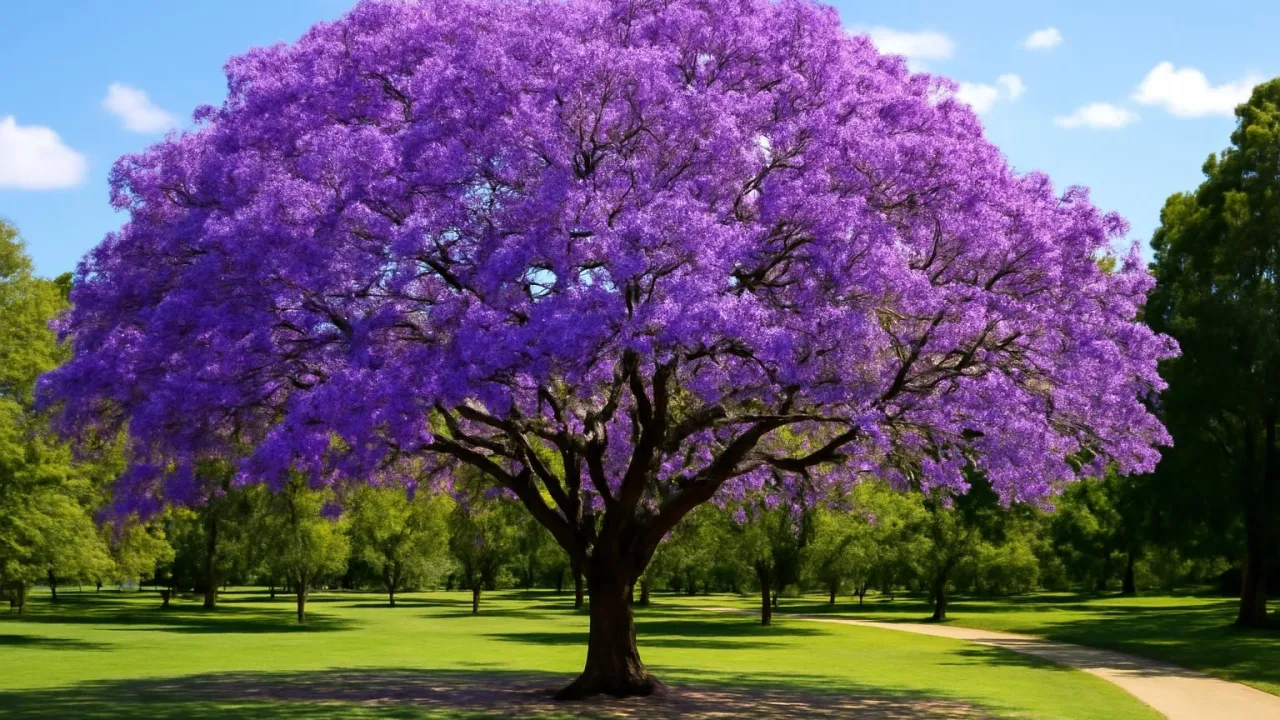
Jacaranda flowers can bloom so thick that they make the ground look purple!
✨ Word Sparks (Grade 2 Glossary)
Tap 🔊 to hear
bloom
When a flower opens up and grows
carpet
A soft cover that spreads on the floor
feathery
Soft and light like a bird’s feather
🪝
Did you know jacaranda trees bloom with purple flowers in spring?
1
Purple Flowers in Spring
Jacaranda trees many purple flowers in springtime. The flowers look like small trumpets and smell sweet. When they fall, they cover the ground like a purple .
2
Where Jacarandas Live
These trees grow mostly in warm, sunny places like South America. They like full sun and need moderate water to grow well. People plant them in parks and gardens because they look beautiful.
3
Big Tree with Soft Leaves
Jacarandas can grow up to 50 feet tall with green leaves. The leaves help the tree catch sunlight for making food. Birds often rest on the branches and enjoy the shade.
Jacaranda flowers attract many pollinators that help plants grow new seeds.
✨ Word Sparks (Grade 3 Glossary)
Tap 🔊 to hear
pollination
When bees help flowers make seeds
adaptation
A special trait that helps survival
nectar
Sweet juice inside flowers for insects
🪝
Have you ever seen a jacaranda tree’s purple flowers light up a whole street?
1
Amazing Purple Blooms
Jacaranda trees produce bright purple flowers that bloom in spring and early summer. These trumpet-shaped flowers attract pollinators like bees and butterflies. When flowers fall, they create a colorful carpet on the ground. This beautiful bloom helps the tree reproduce by spreading seeds.
2
Leaves and Adaptations
The jacaranda’s feathery leaves help reduce water loss during hot weather. This helps the tree survive in warm climates. The leaves also provide shade for animals and people below. Their shape allows sunlight to filter through gently.
3
Where Jacarandas Live
Jacarandas are native to South America, especially Argentina and Brazil, but they grow in many warm regions worldwide. They thrive in sunny environments with well-drained soil. These trees are often planted in cities to beautify streets and parks.
4
Role in the Ecosystem
Jacarandas support many animals by offering for and shade for shelter. They are part of local food webs, helping insects and birds survive. People also enjoy their beauty, which encourages care and conservation.
Jacarandas help cities by providing shade and supporting many pollinators each year.
✨ Word Sparks (Grade 4 Glossary)
Tap 🔊 to hear
ecosystem
All plants and animals living together
evaporation
Water turning into vapor and rising up
pollinator
An animal that helps flowers make seeds
🪝
Did you know jacaranda trees can transform entire neighborhoods with their purple blossoms?
1
Stunning Purple Flower Displays
Jacaranda trees bloom vibrant purple flowers in spring, which can cover streets and parks in a colorful carpet. These flowers attract many , such as bees and butterflies, which are essential for the tree’s reproduction and the health of nearby plants. The abundance of flowers also provides food and shelter for local wildlife.
2
Adaptations for Warm Climates
The jacaranda’s feathery leaves reduce water loss by limiting during hot, dry weather. This adaptation allows the tree to thrive in warm regions with seasonal droughts. Additionally, the tree’s root system helps it absorb water efficiently from the soil, supporting its growth and survival.
3
Ecological Role and Human Impact
Jacaranda trees play a vital role in urban by providing shade, improving air quality, and supporting . People often plant jacarandas along streets and in parks to beautify cities and create pleasant environments. However, in some areas, jacarandas can spread beyond gardens and affect native plants, showing how human planting choices impact ecosystems.
4
Geographic Distribution
Originally from South America, jacarandas now grow in many warm parts of the world, including Australia, South Africa, and southern United States. Their ability to adapt to different soils and climates has helped them spread widely. These trees prefer sunny locations and well-drained soils, which support their growth and flowering cycles.
1. How do jacaranda leaves help the tree in hot weather?
2. Why do people plant jacarandas in cities?
🤯 Mind-Blowing Fact • Grade 5
Jacaranda trees can live up to 70 years, blooming bright purple flowers every spring.
✨ Word Sparks (Grade 5 Glossary)
Tap 🔊 to hear
transpiration
Water loss from leaves as vapor into air
cross-pollination
When pollen moves between different flowers
biodiversity
Many different kinds of living things
🪝
What makes the jacaranda tree’s purple blooms a marvel of nature and science?
1
Scientific Classification and Origins
Jacaranda mimosifolia belongs to the Bignoniaceae family and is native to subtropical regions of South America, especially Argentina and Brazil. This species is widely cultivated worldwide for its ornamental beauty and ecological benefits. Its classification helps botanists understand its relationships with other flowering trees and their evolutionary history.
2
Physiological Adaptations and Flowering Mechanisms
The jacaranda’s compound, bipinnate leaves reduce , conserving water during dry seasons. Its trumpet-shaped flowers contain nectar that attracts specialized pollinators, facilitating . Flowering is triggered by temperature and daylight changes, ensuring reproduction during optimal conditions. This timing maximizes seed production and survival rates.
3
Ecological and Conservation Importance
Jacarandas contribute to urban by supporting pollinators and providing shade that lowers city temperatures. While not endangered, their widespread planting requires monitoring to prevent invasive spread in non-native habitats. Conservation efforts focus on maintaining genetic diversity and promoting sustainable urban forestry practices to protect native ecosystems.
4
Cultural and Botanical History
Jacarandas have been celebrated in art and festivals, symbolizing beauty and renewal in many cultures. Introduced globally during the 19th century, they have become iconic in cities like Pretoria, South Africa, known as the 'Jacaranda City.' Their botanical history reveals how human activity influences plant distribution and urban landscapes.
5
Quantitative Comparisons and Growth Data
Jacaranda trees can reach heights of up to 50 feet and live for 50 to 70 years under ideal conditions. Their flowers bloom in spring, lasting several weeks, and temperatures between 68°F and 86°F favor flowering. The tree’s rapid growth rate of about 2 feet per year makes it a popular choice for urban landscaping and reforestation projects.