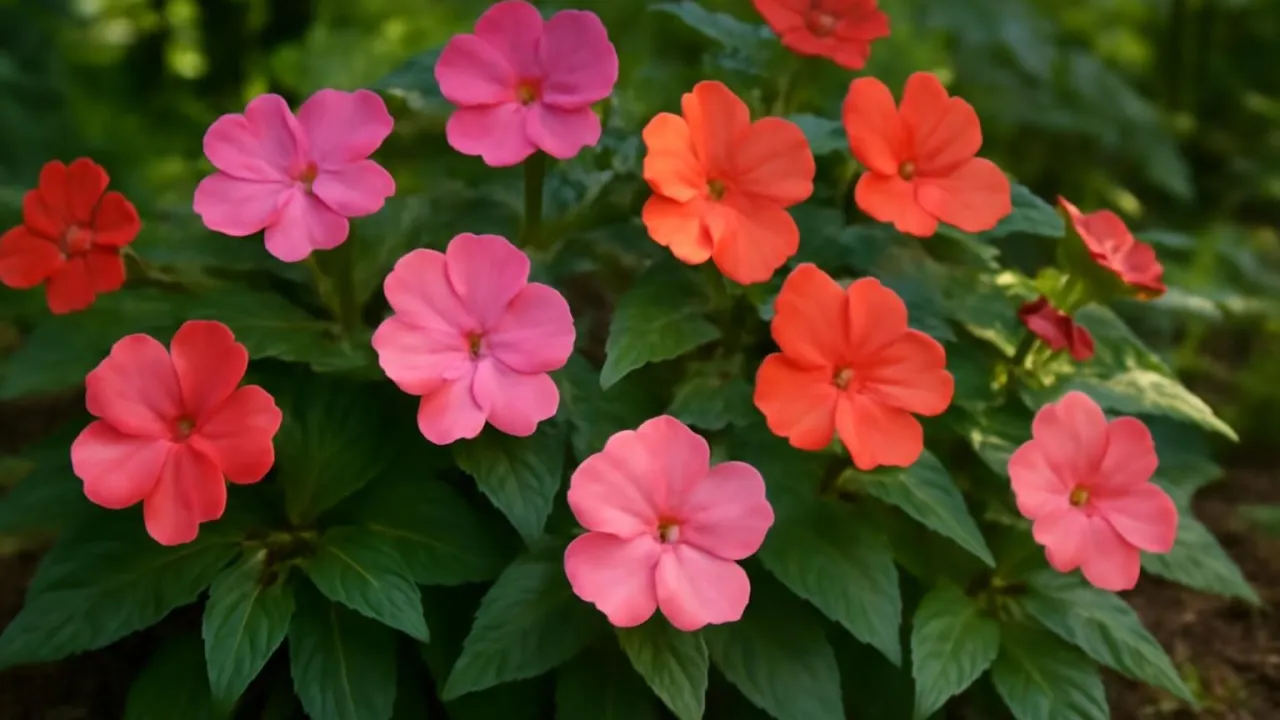
Impatiens seed pods can shoot seeds up to 10 feet away to spread new plants.
✨ Word Sparks (Grade 2 Glossary)
Tap 🔊 to hear
bloom
When flowers open and grow
moist
A little wet, not too dry
pollinate
When bees help flowers make seeds
🪝
Have you ever seen a flower that can shoot its seeds like a tiny cannon?
1
Colors and Flowers
Impatiens flowers come in many colors like red, pink, and white. They all summer long. Bees and butterflies visit these flowers often to drink nectar.
2
Where They Live
Impatiens grow best in shady places with soil. They are common in gardens and forests. They need water to stay healthy and bright all season.
3
Amazing Seed Pods
The seed pods of impatiens burst open when ripe. This shoots seeds far away from the plant. This helps new impatiens grow in new places and spread quickly.
Impatiens use explosive seed dispersal to shoot seeds up to 10 feet away from the plant.
✨ Word Sparks (Grade 3 Glossary)
Tap 🔊 to hear
pollination
Bees help flowers make seeds by moving pollen
habitat
The natural home where plants or animals live
dispersal
The way seeds spread to new places
🪝
Did you know impatiens have a special way to spread their seeds far from the parent plant?
1
Bright Colors and Pollination
Impatiens flowers come in bright colors like red, pink, and white that attract pollinators. Bees and butterflies visit these flowers to collect nectar. helps the plant make seeds for new growth. This is an important adaptation for survival.
2
Shade-Loving Habitat
Impatiens grow best in shaded areas where sunlight is filtered. They prefer moist, well-drained soil rich in nutrients. This protects them from harsh sun and helps them stay healthy. Their leaves are adapted to capture limited light efficiently.
3
Exploding Seed Pods
One amazing adaptation is their seed pods that burst open when ripe. This process is called seed by explosive dehiscence. The pods shoot seeds several feet away, reducing competition with the parent plant. This helps impatiens colonize new areas effectively.
4
Survival and Growth
Impatiens plants grow quickly during warm months and produce many flowers. Their bright colors attract pollinators, ensuring seed production. The seeds then spread by the popping pods to new soil. This cycle helps impatiens thrive in their ecosystem.
Impatiens’ explosive seed pods can shoot seeds up to 10 feet, helping plants spread widely in dense forests.
✨ Word Sparks (Grade 4 Glossary)
Tap 🔊 to hear
mutualism
A helpful relationship between two living things
dehiscence
When seed pods burst open to release seeds
invasive
A plant that spreads too much and harms others
🪝
How does the impatiens flower’s exploding seed pods help it survive in shady forests and gardens?
1
Colorful Attraction and Pollination
Impatiens flowers display bright colors such as red, pink, and white, which attract pollinators like bees and butterflies. These pollinators transfer pollen from flower to flower, enabling fertilization and seed production. This mutualistic relationship benefits both plants and pollinators in the ecosystem. Without pollination, impatiens could not reproduce effectively.
2
Shade-Loving Habitat and Adaptations
Impatiens thrive in shaded environments with moist, nutrient-rich soil, often found in temperate forests and gardens worldwide. Their broad leaves capture filtered sunlight efficiently, an adaptation to low-light conditions. This habitat preference reduces competition with sun-loving plants and protects them from drying out. The plants’ water needs are met by frequent rainfall or garden watering.
3
Explosive Seed Dispersal Mechanism
The impatiens’ seed pods use a mechanism called explosive to eject seeds several feet away from the parent plant. This adaptation reduces competition for nutrients and space among seedlings. By dispersing seeds farther, impatiens increases its chances of colonizing new areas within its habitat. This method is an effective survival strategy in dense plant communities.
4
Role in Ecosystems and Human Gardens
Impatiens contribute to food webs by providing nectar to pollinators and habitat for small insects. They are popular ornamental plants in human gardens, valued for their bright colors and shade tolerance. However, some species can become outside their native ranges, affecting local biodiversity. Gardeners must manage impatiens responsibly to balance beauty and ecological health.
The genus name Impatiens means “impatient” because their seed pods burst open quickly to spread seeds far.
✨ Word Sparks (Grade 5 Glossary)
Tap 🔊 to hear
turgor pressure
Water pressure that helps plants pop seed pods open
genetic diversity
Different traits in plants that help survival
cultivar
A plant variety made by humans for gardens
🪝
What unique biological and ecological traits allow impatiens to thrive in shaded environments worldwide?
1
Taxonomy and Scientific Classification
Impatiens belong to the family Balsaminaceae and include over 1,000 species worldwide. They are classified under the genus Impatiens, which means “impatient” in Latin, referring to their seed dispersal method. These flowering plants are native primarily to tropical and temperate regions, with species adapted to diverse climates. Their classification reflects evolutionary adaptations to shaded and moist habitats.
2
Physiological Adaptations and Mechanics
Impatiens exhibit physiological adaptations such as broad, thin leaves that maximize photosynthesis in low-light conditions. Their stems are succulent, storing water to survive dry spells. The explosive seed pods use to suddenly burst open, propelling seeds up to three meters away. This mechanical seed dispersal reduces intraspecific competition and promotes within populations.
3
Ecological Roles and Conservation Status
Impatiens play vital roles in ecosystems by providing nectar to pollinators like bees, butterflies, and hummingbirds, supporting food webs. Some species have become invasive outside their native ranges, threatening local biodiversity by outcompeting native plants. Conservation efforts focus on protecting native species and controlling invasive populations through habitat management and public education.
4
Botanical History and Human Uses
Historically, impatiens have been cultivated as ornamental plants for their vibrant flowers and shade tolerance. They have cultural significance in many regions, symbolizing motherly love and protection. Modern horticulture has developed numerous hybrids and with varied colors and improved disease resistance. Their ease of growth makes them popular in home gardens and public landscapes worldwide.
5
Quantitative Comparisons and Growth Metrics
Impatiens plants typically grow between 15 and 60 centimeters tall, with flowers ranging from 1 to 3 centimeters wide. Seed pods can explosively release seeds up to three meters (about 10 feet) away. They thrive in temperatures between 50 and 75 degrees Fahrenheit (10 to 24 degrees Celsius) and require consistent moisture. Compared to sun-loving flowers, impatiens have a slower growth rate but excel in shaded environments.