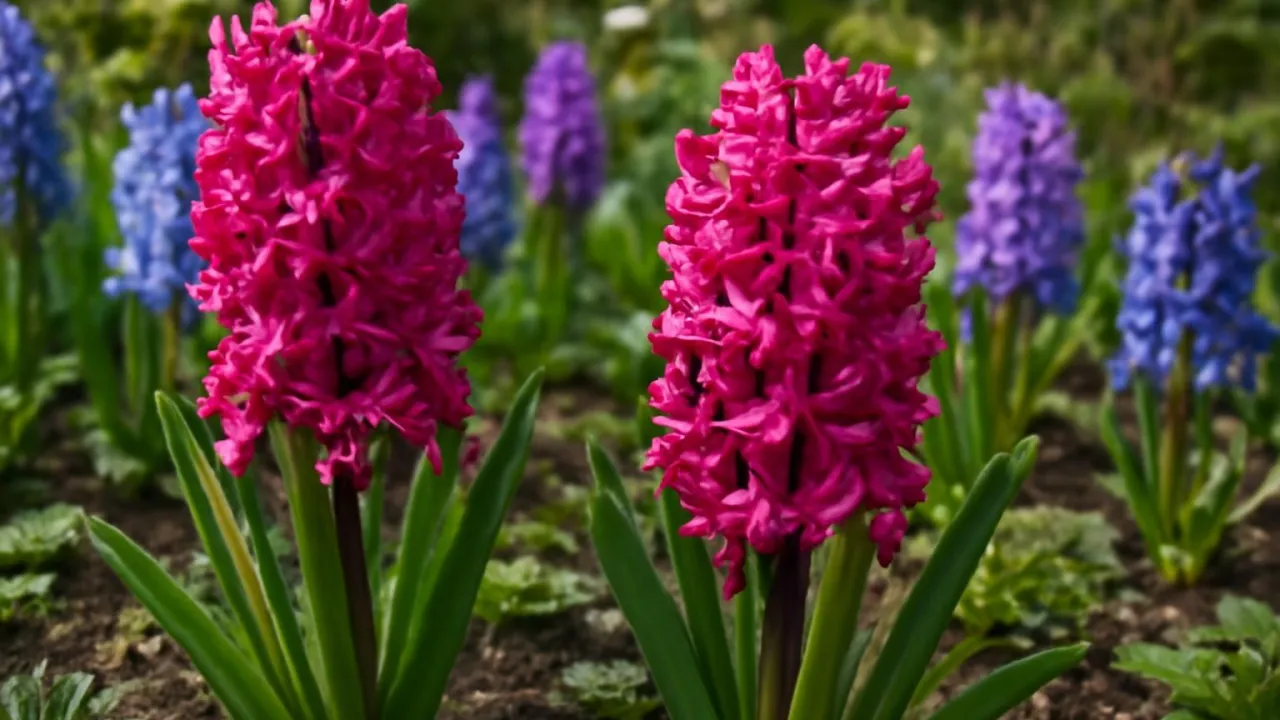
Hyacinths can fill a whole garden with their strong, sweet fragrance in just a few days!
✨ Word Sparks (Grade 2 Glossary)
Tap 🔊 to hear
pollinated
When bees help flowers make seeds
bulb
A round part under the ground that grows plants
fragrance
A nice smell from flowers or plants
🪝
Have you ever smelled a flower that smells like candy?
1
Colorful Flowers
Hyacinths have many bright colors like pink, blue, and purple. They grow in thick flower spikes that look like little towers. People plant them in gardens to make the space look pretty and colorful.
2
Sweet Scent
The flowers give off a strong sweet smell that many bees and butterflies love. This scent helps the plants get so they can grow new flowers. The smell fills the air around gardens in springtime.
3
Growing Needs
Hyacinths grow best in places with full sun and soft, well-drained soil. They start as planted in fall and bloom in spring. Gardeners care for them by watering and giving them space to grow tall.
Hyacinths’ bulbs store enough nutrients to survive cold winters and bloom beautifully in spring!
✨ Word Sparks (Grade 3 Glossary)
Tap 🔊 to hear
pollination
When pollen moves to help plants make seeds
adaptation
A change that helps plants survive better
nutrients
Food that plants need to grow strong
🪝
Did you know hyacinths use their strong scent to attract helpful pollinators?
1
Bright Colors and Shapes
Hyacinths grow in thick flower clusters called spikes, which stand tall above their leaves. Their colors range from deep purple to pink, white, and blue, helping them stand out to pollinators. This colorful display is an to attract insects that help with .
2
Scent and Pollination
The sweet fragrance of hyacinths acts like a signal to bees and butterflies, guiding them to the flowers. This scent helps the plant attract pollinators that transfer pollen, which is necessary for the plant to produce seeds and reproduce. This process is called .
3
Growth from Bulbs
Hyacinths grow from underground bulbs that store during winter. These bulbs allow the plant to survive cold weather and quickly sprout in spring. The bulbs are an important for surviving in their native Mediterranean climate.
4
Where They Live
Hyacinths naturally grow in the Eastern Mediterranean region but are widely grown in gardens worldwide. They prefer sunny locations with well-drained soil to prevent bulb rot. Their ability to adapt to different garden environments helps them thrive globally.
Hyacinths support pollinators and brighten gardens worldwide thanks to their strong scent and colorful flowers!
✨ Word Sparks (Grade 4 Glossary)
Tap 🔊 to hear
ecosystem
A community of plants and animals living together
nectar
Sweet liquid flowers make to feed insects
cultivate
To grow plants carefully for use or beauty
🪝
How does the hyacinth’s scent help it survive in gardens worldwide?
1
Color and Fragrance Work Together
Hyacinths produce bright, colorful flower spikes that visually attract pollinators, while their strong fragrance acts as an olfactory signal guiding bees and butterflies to the flowers. This combination increases the chances of successful pollination and reproduction. The flowers’ colors and scents work together to ensure survival in many environments.
2
Role in Ecosystems and Gardens
In garden , hyacinths provide for pollinators, supporting local biodiversity. Their bulbs allow them to survive cold winters, making them reliable spring bloomers. Humans hyacinths for their beauty and fragrance, which also supports agricultural pollinator populations. This relationship benefits both plants and insects.
3
Geographic Distribution and Growth
Native to the Eastern Mediterranean, hyacinths have spread worldwide through cultivation. They thrive best in temperate climates with full sun and well-drained soil. Poor drainage can cause bulb rot, so gardeners must manage soil moisture carefully. This adaptability helps hyacinths grow in many different garden settings.
4
Cause and Effect of Growing Conditions
When hyacinths receive enough sunlight and water, their bulbs store nutrients effectively, leading to vibrant blooms. However, too much water or shade can weaken bulbs and reduce flower quality, showing how environment directly affects plant health. Gardeners must balance care to keep the plants healthy and blooming.
Hyacinth bulbs store enough energy to bloom up to 40 flowers in one spike, attracting many pollinators from afar!
✨ Word Sparks (Grade 5 Glossary)
Tap 🔊 to hear
volatile organic compounds
Chemicals flowers release to make strong scents
dormancy
A resting period when plants slow growth
horticulture
The art and science of growing plants
🪝
How do hyacinths’ unique bulbs and fragrance help them thrive worldwide?
1
Scientific Classification and Origins
Hyacinthus orientalis belongs to the Asparagaceae family and originates from the Eastern Mediterranean region. This species has been cultivated for centuries due to its fragrant and colorful flower spikes. Its taxonomy places it among bulbous perennial plants that survive seasonal changes. These plants have evolved to bloom early in spring, taking advantage of cooler temperatures.
2
Physiological Adaptations and Mechanics
The hyacinth’s underground bulb stores carbohydrates and essential nutrients that support rapid growth after winter . Its tubular flowers emit , producing a strong scent that attracts specific pollinators like bees and butterflies. The dense flower spike arrangement maximizes pollination efficiency by providing easy access to many flowers at once.
3
Conservation and Botanical History
Historically, hyacinths have been prized in and hold cultural significance in many regions, including ancient Persia and Europe. Although not endangered, wild populations face habitat loss due to urbanization and agriculture. Conservation efforts focus on preserving native habitats and promoting sustainable cultivation practices to maintain genetic diversity.
4
Quantitative Comparisons and Growth
Hyacinths typically grow between 6 and 12 inches tall, with flower spikes containing up to 40 individual flowers. Their fragrance can travel several meters, efficiently attracting pollinators from a distance. Bulbs require well-drained soil and temperatures between 40 and 60 degrees Fahrenheit for optimal growth and bloom quality.
5
Ecological and Agricultural Roles
Hyacinths contribute to early spring food webs by providing nectar to pollinators emerging from winter . Their cultivation supports biodiversity in urban gardens and agricultural landscapes. Additionally, their strong fragrance has inspired breeding programs to develop new ornamental varieties with enhanced colors and scents.