🏢 WorkplaceRooftop air handlers, home attics, hospital cleanrooms, and supermarket coolers
⚡ Everyday Impact SparkMoves heat energy and filters indoor air so schools, hospitals, and homes stay safe in any weather
🤯 Mind-Blowing Fact • Grade 1
Air conditioners do not actually 'make cold'—instead, they scoop heat out of indoor air and carry that heat outside!
✨ Word Sparks (Grade 1 Glossary)
Tap 🔊 to hear
Vent
A slotted opening letting fresh air into rooms
Duct
A hidden metal tunnel carrying warm or cool air
Thermostat
A wall dial or screen controlling room temperature
🪝
Who keeps your classroom cozy when snow falls outside?
1
Warm in Winter, Cool in Summer
Whoosh! A gentle, quiet breeze whispers out of a ceiling . Outside, hot summer sun bakes the playground sidewalk, yet your classroom feels cool and fresh. Thank a skilled HVAC technician!
2
Four Big Letters
HVAC stands for Heating, Ventilation, and Air Conditioning. These friendly helpers install and fix furnaces, air conditioners, and hidden metal air tubes called .
3
Clean Air to Breathe
They also slide clean pleated filters inside to catch dust and pollen so every student breathes easy!
2. What do clean air filters inside HVAC vents trap?
🤯 Mind-Blowing Fact • Grade 2
Modern movie theaters, airplanes, and skyscrapers could never have been comfortable in summer before Willis Carrier invented modern air conditioning in 1902—originally to stop paper from wrinkling in a printing plant!
✨ Word Sparks (Grade 2 Glossary)
Tap 🔊 to hear
Heat Pump
A machine that moves heat indoors or outdoors
Ventilation
Bringing fresh air in and pushing stale air out
Humidity
Invisible water vapor floating in the air
🪝
How can one smart machine both cool a house in July and heat it in January?
1
Masters of Moving Heat
Hold your hand near the back of a kitchen refrigerator, and you will feel gentle warm air! Cooling machines work by pulling heat out from inside a closed box or room and sending it outside. HVAC technicians install and fix the clever machines that control indoor weather.
2
Heat Pumps That Reverse
Many modern homes and schools use an all-electric '.' In hot summer months, it moves indoor heat outdoors. When winter arrives, an HVAC technician sets a special valve to reverse—pulling hidden warmth from outdoor air and pumping it inside!
3
Protecting Food and Medicine
Many skilled technicians also care for giant grocery-store freezers, ice rinks, and hospital coolers that keep fresh food and lifesaving medicines cold.
1. Why did Willis Carrier invent the first modern air conditioner in 1902?
2. What makes a heat pump special compared to a regular furnace?
🤯 Mind-Blowing Fact • Grade 3
Evaporation cools so effectively that your own body uses the same science—sweating—that an HVAC evaporator coil uses inside an air conditioner!
✨ Word Sparks (Grade 3 Glossary)
Tap 🔊 to hear
Refrigerant
Special fluid inside coils that absorbs and moves heat
Evaporate
Change from a liquid into a gas, absorbing heat
HEPA Filter
A pleated filter trapping microscopic dust and germs
🪝
Why does an HVAC technician have to understand electricity, plumbing, airflow, and chemistry all at once?
1
Four Trades in One
Climb a safety ladder onto the flat roof of a school, library, or shopping center, and you will spot rows of silver metal cabinets humming quietly. Inside those rooftop units, electric motors, copper pipes, fan blowers, and computer circuit boards work together. HVAC technicians study multiple sciences so they can troubleshoot every part.
2
The Magic of Refrigerant
Inside sealed copper coils flows a special heat-carrying fluid called . As that fluid from cold liquid into vapor, it soaks up heat from indoor air—just like water evaporating off your skin cools you down after hopping out of a swimming pool!
3
Smart Thermostats and Sensors
Technicians wire programmable smart thermostats and wireless airflow sensors that adjust temperature room by room so zero energy gets wasted heating or cooling empty hallways.
4
Hospital Cleanrooms
Inside surgical hospitals and computer-chip laboratories, HVAC pros install ultra-fine HEPA air filters that capture 99.97 percent of microscopic dust, smoke, and germs.
1. What happens when liquid refrigerant evaporates into gas inside an indoor cooling coil?
2. Where would an HVAC technician install ultra-clean HEPA air filtration?
🤯 Mind-Blowing Fact • Grade 4
Because heat pumps move existing heat instead of creating heat from scratch, they can deliver three to four units of warm indoor energy for every single unit of electricity they use!
✨ Word Sparks (Grade 4 Glossary)
Tap 🔊 to hear
Thermodynamics
Science of how heat, energy, and temperature behave
Compressor
A pump squeezing refrigerant gas to raise pressure
Anemometer
A spinning or digital tool measuring air speed
🪝
How can an electric heat pump pull cozy warmth out of chilly outdoor winter air?
1
Thermodynamics in Every Season
Step outside on a frosty 32-degree January morning in Virginia—the air feels brisk on your cheeks, yet scientifically that outdoor air still holds abundant thermal energy compared to ultra-cold refrigerant! HVAC technicians apply —the physics of heat, pressure, and temperature—to capture that outdoor warmth and concentrate it to a cozy 70 degrees indoors.
2
The Four-Part Refrigeration Cycle
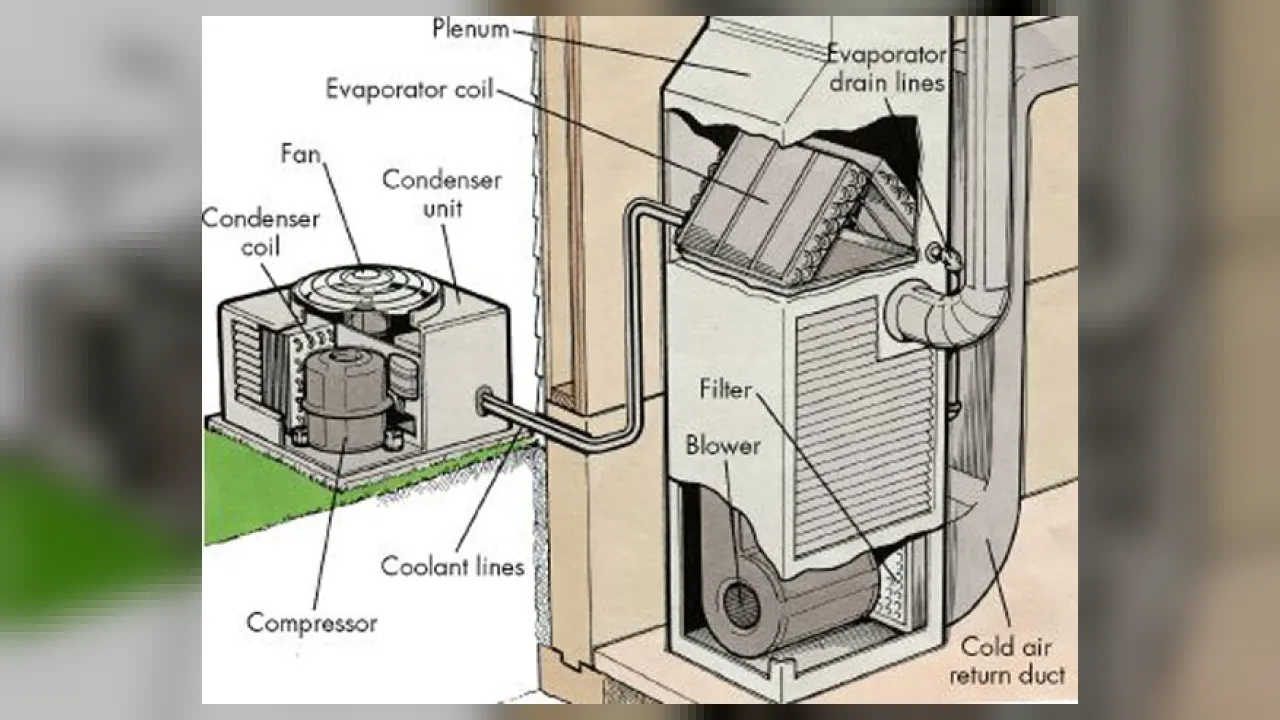
Every air conditioner, supermarket freezer, and heat pump circulates fluid through four connected components: a , a condenser coil, an expansion valve, and an evaporator coil. Squeezing refrigerant gas inside the compressor crowds its molecules tightly together, raising its temperature so outdoor fans can blow heat away. Passing that liquid through a tiny expansion nozzle suddenly drops its pressure, chilling it icy cold so indoor coils can absorb room heat all over again.
3
Balancing Airflow and Humidity
True indoor comfort depends on far more than a wall thermometer reading. Using spinning wind gauges called and infrared thermal cameras, HVAC technicians adjust hidden duct dampers, seal leaky attic seams with mastic tape, and wring muggy summer humidity out of indoor air.
4
Protecting Earth's Atmosphere
Certified under federal Environmental Protection Agency (EPA) rules, technicians connect sealed recovery cylinders and vacuum pumps during repairs so refrigerants are recycled cleanly and never vented into the sky.
1. What happens to refrigerant gas when the compressor squeezes it to high pressure?
2. Why do HVAC technicians earn EPA certification to recover refrigerant into sealed tanks?
🤯 Mind-Blowing Fact • Grade 5
Engineers still measure air-conditioning power in 'tons'—one ton of cooling equals 12,000 BTUs per hour, the exact cooling power delivered in the 1800s by melting a 2,000-pound block of river ice in one day!
✨ Word Sparks (Grade 5 Glossary)
Tap 🔊 to hear
BTU
Heat needed to warm one pound of water 1°F
Latent Heat
Energy absorbed or released during liquid-gas phase changes
Geothermal
Using steady underground Earth temperatures for heating and cooling
🪝
How do HVACR technicians combine latent-heat physics, psychrometrics, and automated building controls to keep modern cities habitable and data centers cool?
1
Life-Critical Thermal Engineering
Without precision climate and refrigeration engineering, modern urban life would stall within hours: hospital surgical suites would lose sterile positive air pressure, vaccine cold-storage vaults would warm, supermarket food chains would spoil, and massive cloud-computing server halls would overheat and shut down. HVACR (Heating, Ventilation, Air Conditioning, and Refrigeration) technicians commission, diagnose, and optimize these indispensable thermal lifelines.
2
Sensible vs. Latent Heat Transfer
Master technicians size equipment in British Thermal Units () and 'tons' of refrigeration—a benchmark originating from the 288,000 BTUs absorbed when one 2,000-pound ton of solid ice melts over 24 hours (12,000 BTUs per hour). Using psychrometric charts, they balance 'sensible heat' (dry-bulb temperature changes felt on a thermometer) against '' (the massive hidden energy absorbed when liquid refrigerant boils into vapor or excess humidity condenses as water droplets off cold evaporator fins).
3
Superheat, Subcooling, and Geothermal Loops
Attaching Bluetooth digital manifold gauges and pipe-clamp thermistors, technicians calculate exact degrees of 'superheat' and 'subcooling'—guaranteeing every drop of refrigerant boils into vapor before entering the compressor so incompressible liquid never damages valves. High-efficiency installations tap Earth's steady 55°F underground temperature through deep heat-exchange wells, slashing winter heating and summer cooling electricity demand by up to half.
4
Building Automation and Data Center Cooling
Across modern university campuses, skyscrapers, and Northern Virginia's megawatt data centers, technicians program Building Automation Systems (BAS) that link carbon-dioxide occupancy sensors, variable-frequency fan drives, and chilled-water loops to deliver fresh ventilation air with minimal wasted power.
5
Training, EPA Certification, and Careers
Combining technical college diplomas or multi-year trade apprenticeships with mandatory federal EPA Section 608 refrigerant certification and North American Technician Excellence (NATE) credentials, skilled HVACR specialists enjoy resilient, high-tech careers keeping communities comfortable nationwide.