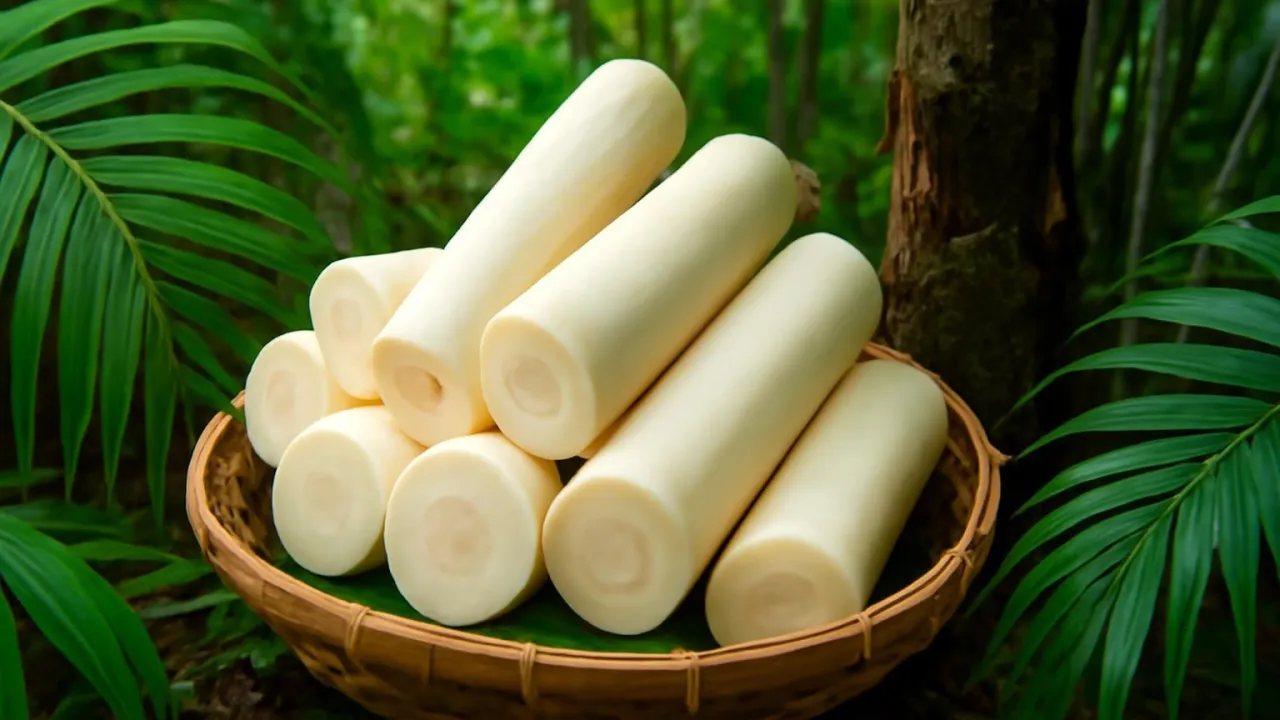
Harvesting hearts of palm can sometimes harm the palm tree because the core is inside the trunk.
✨ Word Sparks (Grade 2 Glossary)
Tap 🔊 to hear
core
The middle part inside something
tropical
Warm places near the equator
harvest
To gather food from plants
🪝
Have you ever tried a crunchy treat from inside a tall palm tree?
1
What Are Hearts of Palm?
Hearts of palm are the soft, edible inside palm trees. People often eat them in salads or sandwiches. They have a mild, fresh flavor that many enjoy.
2
Where Do They Grow?
Palm trees grow in warm, places with plenty of sunlight and water. The hearts grow deep inside the tree trunk. Farmers carefully them by cutting the tree.
3
Why Are They Special?
Hearts of palm have a crunchy texture that is different from other vegetables. They are tender and slightly sweet. This makes them a unique and tasty food.
Hearts of palm are a rare vegetable because harvesting their core can kill the palm tree.
✨ Word Sparks (Grade 3 Glossary)
Tap 🔊 to hear
core
The soft middle part inside a tree
adaptation
A change that helps living things survive
nutrients
Food parts that help plants and animals grow
🪝
Did you know that hearts of palm come from the inner core of palm trees?
1
What Are Hearts of Palm?
Hearts of palm are the edible found inside certain palm trees. This core is soft yet crunchy, making it a unique vegetable. People often use them in salads or as a healthy snack.
2
Where and How Do They Grow?
Palm trees grow in tropical rainforests where sunlight and water are plentiful. The grows inside the tree trunk and must be carefully harvested. This harvesting can harm the tree if not done properly.
3
How Do Hearts of Palm Help Survival?
The palm tree’s tough outer trunk protects the soft inside from predators. This helps the tree survive in its environment. The core stores that the tree uses to grow.
4
Why Are They Important to People?
Hearts of palm are a nutritious food rich in fiber and vitamins. They support healthy diets and are part of many traditional dishes. Their unique texture and mild flavor make them popular worldwide.
1. Why must hearts of palm be harvested carefully?
2. What protects the soft core inside the palm tree?
🤯 Mind-Blowing Fact • Grade 4
Sustainable harvesting of hearts of palm helps protect tropical rainforests and their wildlife.
✨ Word Sparks (Grade 4 Glossary)
Tap 🔊 to hear
adaptation
A change that helps plants or animals survive
ecosystem
A community of living things and their environment
sustainable
Using resources without harming nature
🪝
Have you ever wondered how a palm tree’s crunchy heart becomes a tasty treat?
1
The Science Behind Hearts of Palm
Hearts of palm come from the inner core of palm trees, mainly Euterpe oleracea. This core is soft and tender because it stores nutrients essential for the tree’s growth. The tough outer trunk protects this core from damage and predators. This natural protection is a key for survival in tropical rainforests.
2
Harvesting and Its Effects
Harvesting hearts of palm involves cutting down the tree or removing the central shoot, which can kill the palm. Because of this, harvesting methods are important to protect wild populations. Overharvesting can disrupt where these palms provide food and shelter for animals. Protecting these trees helps maintain rainforest balance.
3
Ecosystem Role and Human Impact
Palm trees contribute to tropical food webs by providing fruits and shelter to many animals. Humans use hearts of palm as a nutritious vegetable, influencing agriculture and local economies. Responsible farming helps balance human needs with health. This helps preserve biodiversity and natural habitats.
4
Where Are They Found?
Hearts of palm grow mainly in Central and South America’s tropical rainforests. These regions have warm temperatures and high rainfall, ideal for palm growth. Their geographic distribution affects how people harvest and use this vegetable globally. This makes hearts of palm a valuable tropical resource.
1. Why is sustainable harvesting important for hearts of palm?
2. Where do hearts of palm mainly grow?
🤯 Mind-Blowing Fact • Grade 5
Harvesting one heart of palm removes the tree’s growing tip, stopping its vertical growth forever.
✨ Word Sparks (Grade 5 Glossary)
Tap 🔊 to hear
apical meristem
The growing tip where new plant cells form
lignified
Hardened plant parts that protect the inside
overexploitation
Using too much of a resource without saving it
🪝
Did you know that hearts of palm come from the edible inner core of tropical palm trees?
1
Taxonomy and Botanical Context
Hearts of palm are harvested from several species of palm trees, primarily Euterpe oleracea. These palms belong to the Arecaceae family, which includes many tropical palms. Botanically, hearts of palm are the inner core of the , the growing tip of the palm. This growing tip contains actively dividing cells essential for the tree’s height increase.
2
Physiological Mechanics and Growth
The produces new cells that enable the palm to grow taller over many years. The heart, or core, is tender because it contains young, nutrient-rich cells. The outer trunk is and tough, protecting the softer inner core from mechanical damage and herbivores. This structural design helps the palm survive in challenging tropical environments.
3
Conservation and Sustainable Use
Harvesting hearts of palm often kills the palm tree, making wild populations vulnerable to . Sustainable farming practices include harvesting only certain palms or using species that can regrow shoots. Conservation efforts focus on balancing human consumption with rainforest ecosystem preservation. These efforts help maintain biodiversity and prevent habitat loss.
4
Cultural and Economic Importance
Hearts of palm are a delicacy in many countries, especially in Central and South America. They contribute to local economies through agriculture and export markets. Their mild flavor and crunchy texture make them popular in gourmet cuisine worldwide. This demand encourages both traditional and innovative farming methods.
5
Quantitative Comparisons and Facts
Palm trees producing hearts of palm can grow up to 60 feet (18 meters) tall and live for decades. The edible core is typically 6 to 12 inches (15 to 30 centimeters) long and about 1 to 2 inches (2.5 to 5 centimeters) wide. Harvesting one heart removes the growing tip, preventing further height growth. The optimal temperature for palm growth ranges between 75 and 95 degrees Fahrenheit (24 to 35 degrees Celsius), and palms require abundant rainfall for healthy development.