👷 CAREERS
💼 Maritime Navigation • Port Pilotage, Hydrodynamics & Tug Coordination
VA Economics, Civics & Career Readiness SOL K.8, 1.8, 2.8, 3.9
Harbor Pilot
Local Waterway Experts Guiding Giant Ships Safely to Dock
Grade 1 • Early Reader • 71 words
🧭 Career FieldPort Operations, Coastal Navigation & Maritime Safety
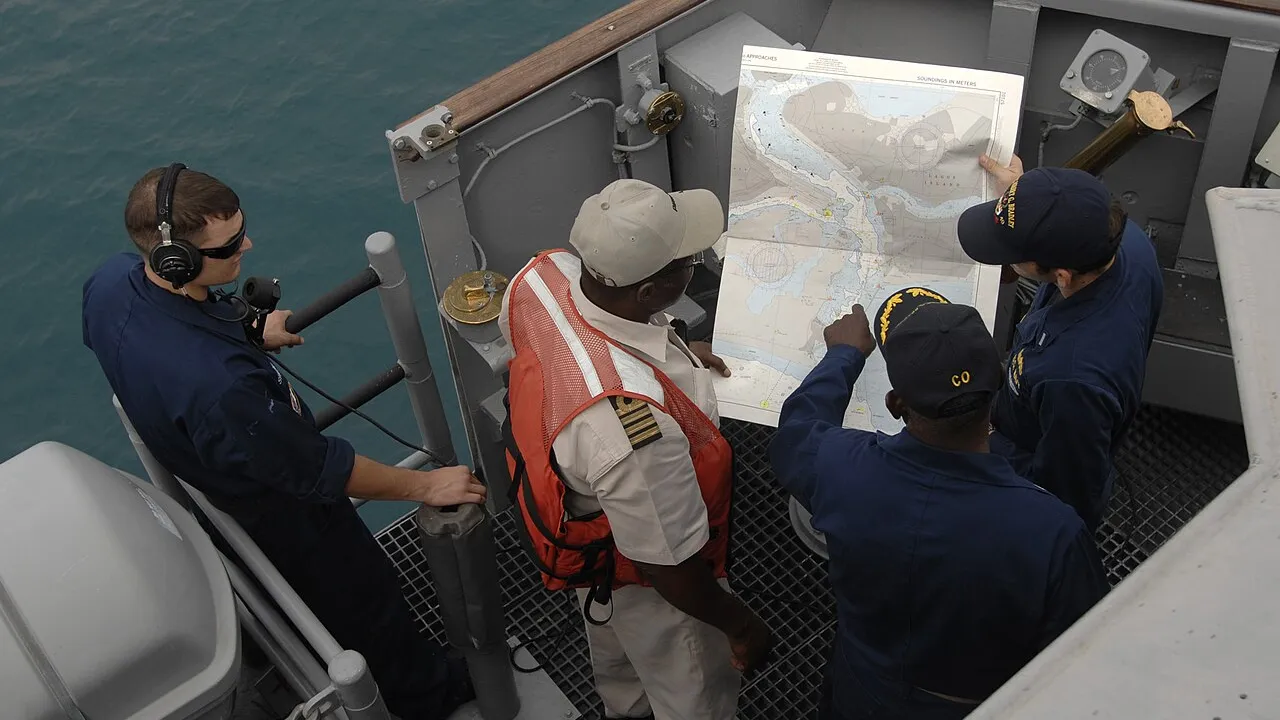
🛠️ Key Tools & SkillsPortable Pilot Unit GPS tablet, VHF marine radios, rope ladders, and tugboats
🏢 WorkplaceFast pilot boats, towering cargo ship bridges, bay channels, and busy docks
⚡ Everyday Impact SparkClimbs swaying rope ladders at sea to steer giant visiting ships past hidden sandbars and bridges
🤯 Mind-Blowing Fact • Grade 1
To board a towering container ship out on rolling waves, a harbor pilot climbs up to 30 feet straight up a wooden-stepped 'Jacob's ladder' while both boats are still moving!
✨ Word Sparks (Grade 1 Glossary)
Tap 🔊 to hear
Harbor
Sheltered coastal water where ships dock safely
Tugboat
Small, super-strong boat pushing giant ships into docks
Sandbar
Shallow underwater ridge of sand that traps ships
🪝
Why does a special local guide climb onto big ships right outside a harbor?
1
Up the Rope Ladder!
Splash! A fast little pilot boat zooms alongside a giant ocean ship. Holding tight, a brave pilot climbs a rope ladder up the tall steel side!
2
Knowing Every Sandbar
Ocean captains sail all over the world, so they cannot memorize every shallow bay. The pilot knows every hidden rock, bridge, and by heart.
3
Teamwork With Tugboats
Calling strong little on a radio, the pilot parks the huge ship gently against the dock!
1. Why do visiting ocean ships welcome a local harbor pilot aboard near shore?
2. Which small, mighty boats help a harbor pilot push and nudge a huge ship into its parking spot?
🤯 Mind-Blowing Fact • Grade 2
America's oldest state harbor pilot group—the Virginia Pilot Association—has been guiding ships safely into the Chesapeake Bay since 1607, the year Jamestown was founded!
✨ Word Sparks (Grade 2 Glossary)
Tap 🔊 to hear
Channel
Deep underwater lane dug safe for big ships
Tide
Daily rising and falling of ocean water levels
Pier
Sturdy dock platform jutting out for loading ships
🪝
How do you parallel-park a ship longer than three football fields with no brakes?
1
Boarding on Open Waves
Imagine stepping from a bouncing yellow launch boat onto a wooden rung ladder hanging down a 30-foot steel ship wall! Once safely at the top, the harbor pilot hurries up to the glass bridge, shakes hands with the visiting ship captain, and takes over steering commands.
2
Currents, Tides, and Bridges
Every coastal harbor hides tricky underwater secrets. Fast push sideways, river mud shifts after big rainstorms, and highway bridges leave barely feet to spare above tall ship masts. Harbor pilots spend years memorizing one single bay or river.
3
Slow and Steady Docking
Whispering calm radio directions to two or three strong tugboats, the pilot eases the massive ship against rubber dock bumpers as gently as touching an eggshell!
1. How do harbor pilots board giant ships before entering the bay?
2. Since what historic year have harbor pilots guided ships into Virginia's Chesapeake Bay?
🤯 Mind-Blowing Fact • Grade 3
When a giant container ship glides into Norfolk Harbor, cars and buses on the Chesapeake Bay Bridge-Tunnel actually drive right underneath the ship's keel inside submerged tubes!
✨ Word Sparks (Grade 3 Glossary)
Tap 🔊 to hear
Shoal
Shallow sandy spot dangerous to deep ship hulls
Keel
Lowest bottom backbone running along a ship's hull
Pilot Boat
Fast, rugged launch carrying pilots out to ships
🪝
Why does a harbor pilot have to draw an entire harbor map completely from memory to pass the test?
1
Drawing Every Buoy by Heart
Before earning an official harbor pilot license, trainees face an astonishing exam: sitting down with a huge blank sheet of paper and drawing their entire bay or river completely from memory! Every single buoy number, compass angle, underwater cable crossing, and channel depth must be spot-on.
2
Portable Pilot Units
Even with that incredible mental map, modern harbor pilots carry a rugged waterproof tablet called a Portable Pilot Unit (PPU). Plugging into twin satellite receivers, it displays the ship's exact sideways drift and turning speed down to one centimeter per second!
3
Sailing Over Underwater Tunnels
At the wide mouth of the Chesapeake Bay in Virginia, harbor pilots steer 150,000-ton cargo vessels right across the top of submerged highway tunnels while cars and buses drive dry beneath the seabed!
4
All Weather, Day and Night
Through winter snowsqualls, thick midnight sea fog, or gusting crosswinds, harbor pilots climb rope ladders round the clock so food, fuel, and everyday goods reach port safely.
1. What remarkable memory test must apprentice harbor pilots pass before getting licensed?
2. What does a harbor pilot's Portable Pilot Unit (PPU) tablet measure?
🤯 Mind-Blowing Fact • Grade 4
As a wide cargo ship glides close beside an underwater channel bank, asymmetric water pressure called 'bank cushion and suction' can push its bow away while sucking its stern toward the mud unless a skilled harbor pilot counters it early!
✨ Word Sparks (Grade 4 Glossary)
Tap 🔊 to hear
Ship Squat
Deeper hull settling caused by fast shallow-water flow
Turning Basin
Widened harbor area where long ships spin around
Rudder
Underwater hinged fin at the stern steering ships
🪝
Why does a giant ship actually sink slightly deeper into the water when it speeds up in a shallow channel?
1
The Physics of 'Ship Squat'
Picture steering a heavily loaded container ship drawing 47 feet of water down a 50-foot-deep dredged channel in the Chesapeake Bay. Surprisingly, if that ship speeds up in shallow water, fast-squeezing currents underneath the hull lower water pressure and pull the entire ship downward by several extra feet—a fluid-physics effect called ''! Harbor pilots time incoming high tides and throttle speeds down carefully so the steel keel never touches mud.
2
Pivot Points and Tractor Tugs
Unlike a family car whose front tires steer sharply around corners, a 1,200-foot ship swings around an invisible pivot point while its stern sweeps hundreds of feet sideways! Inside tight harbor , pilots coordinate specialized 'tractor tugs' whose 360-degree underwater propeller pods can pull or push with 90 tons of muscle in any direction.
3
Captain and Pilot Partnership
While the ocean ship captain always keeps overall legal command of the vessel and crew, compulsory state pilotage laws require a licensed local harbor pilot aboard to direct every angle, engine speed, and tugboat line inside port waters.
4
Years of Local Apprenticeship
Even experienced ocean officers must complete an additional three-to-seven-year local apprenticeship—riding thousands of ships of every size—before earning a full state harbor pilot license.
1. What happens because of hydrodynamic 'ship squat' if a deep ship speeds up in a shallow channel?
2. Why are harbor pilots required by state law for large foreign and cargo vessels entering busy ports?
🤯 Mind-Blowing Fact • Grade 5
On scorching summer afternoons, steel highway suspension bridges expand in the sun's heat and sag several feet lower at mid-span—so harbor pilots check live laser 'air-draft' sensors before sliding towering megaships underneath!
✨ Word Sparks (Grade 5 Glossary)
Tap 🔊 to hear
Air Draft
Vertical height from waterline to ship's highest mast
Azimuth Thruster
Propeller pod rotating 360 degrees for omnidirectional push
Under-Keel Clearance
Safe vertical gap between hull bottom and seabed
🪝
How do harbor pilots master Bernoulli hydrodynamics, air-draft clearance math, and multi-tug vector forces inside confined estuaries?
1
Precision Hydrodynamics With Zero Margin for Error
Stand out on the open bridge wing of an Ultra Large Container Vessel threading a 1,000-foot dredged shipping channel in brisk crosswinds, and you witness why harbor piloting ranks among the world's most demanding maritime professions. With eight-story stacks of steel containers catching lateral gusts like a three-acre sail, even a two-degree heading drift widens a 1,300-foot ship's swept path dramatically across narrow channel buoys.
2
Bernoulli Effects: Squat, Bank Suction, and Air Draft
Confined-water shiphandling obeys markedly different fluid mechanics than open-ocean steaming. Water forced to squeeze through the narrow gap beneath and beside a deep hull accelerates in velocity, dropping static pressure according to Daniel Bernoulli's equation. Pilots continuously balance dynamic ''—factoring in astronomical tide height, wave heave, and velocity-squared squat—alongside overhead '.' Before passing beneath major highway spans, pilots check real-time laser air-gap sensors because summer heat actually expands steel bridge cables, causing mid-spans to sag lower!
3
Vector Mechanics With Azimuth Tractor Tugs
Once vessel speed slows below four knots near the pier, minimal water flows across the stern rudder, robbing the ship of self-steering leverage. Harbor pilots choreograph two to four Z-drive azimuth tractor tugs tethered with high-modulus synthetic lines—computing rotational torque vectors to spin 160,000-ton hulls 180 degrees inside tight turning basins and settle them onto rubber dock fenders at gentler than 0.1 knots.
4
Historic Governance and Modern RTK-GNSS
Ever since the First United States Congress enacted the Lighthouse Act of 1789 entrusting harbor pilotage regulation to coastal states, state boards have overseen multi-year pilot apprenticeships—enhanced today by dual-antenna RTK-GNSS Portable Pilot Units and full-mission hydrodynamic bridge simulators.
5
Safeguarding Global Gateways
Uniting Unlimited Coast Guard licensure, encyclopedic local estuary memory, and calm decisiveness on swaying rope ladders in winter gales, harbor pilots protect coastal habitats, naval fleets, and global commerce every day of the year.