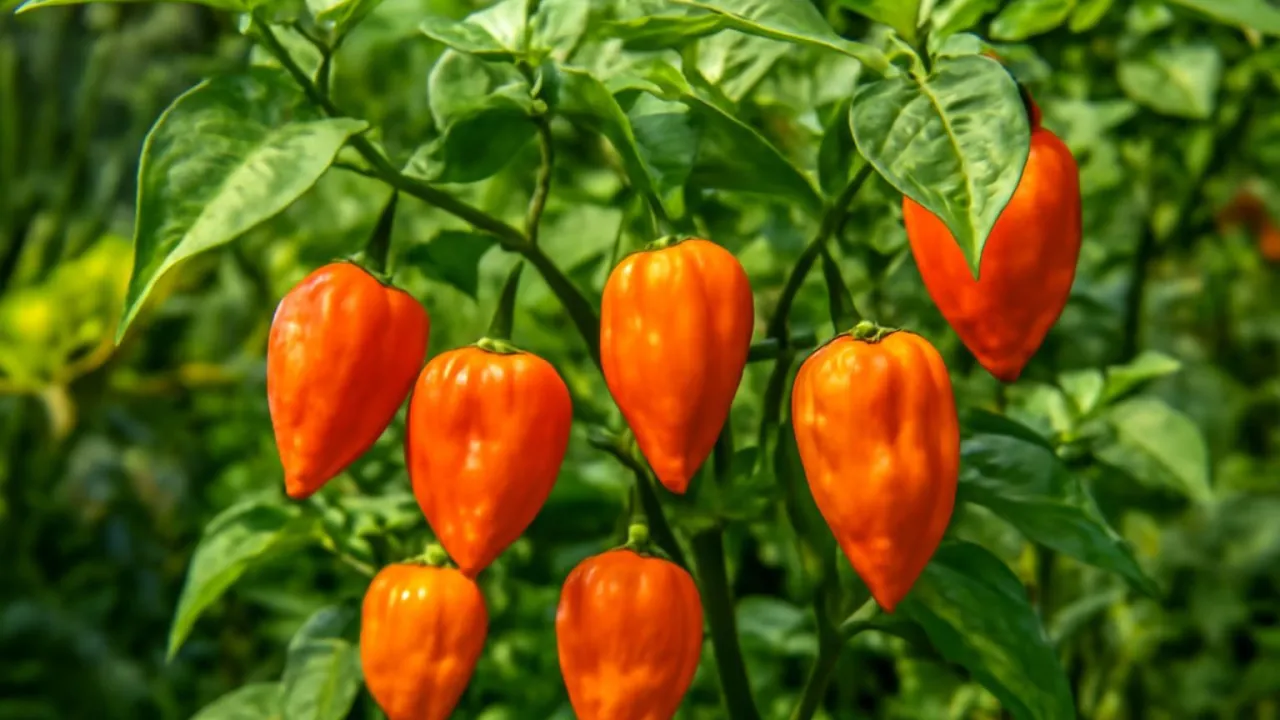
Habanero peppers can be 100 times hotter than a jalapeño pepper!
✨ Word Sparks (Grade 2 Glossary)
Tap 🔊 to hear
capsaicin
A chemical that makes peppers spicy
ripe
When fruit is ready to eat
soil
The dirt where plants grow
🪝
Have you ever wondered why some peppers taste very spicy and others don’t?
1
Where They Grow
Habanero peppers grow in warm, sunny places like the Yucatán Peninsula. They need full sun and good to grow well. Farmers water them regularly to keep the plants healthy.
2
Growing Up
These peppers start green and slowly turn bright orange or red. They grow on small bushes that can reach two feet tall. The peppers are about one to two inches long when .
3
Super Hot Peppers
Habaneros are very spicy because they have a chemical called . This makes your mouth feel hot and burning. People use them to add heat to sauces and dishes.
Capsaicin in habanero peppers can cause a burning feeling stronger than many other peppers!
✨ Word Sparks (Grade 3 Glossary)
Tap 🔊 to hear
capsaicin
A chemical that makes peppers spicy and hot
predator
An animal that eats other animals or plants
ripen
When fruit changes color and is ready to eat
🪝
Did you know the habanero pepper uses its heat to protect itself from animals?
1
Tropical Origins
Habanero peppers come from the tropical Americas, especially Mexico’s Yucatán Peninsula. They thrive in warm climates with plenty of sunlight. These peppers grow on small, bushy plants that can reach about two feet tall. Their bright orange color helps attract certain animals for seed spreading.
2
Heat as Defense
The pepper’s heat comes from , which deters many animals from eating it. This spicy chemical acts like a natural defense against . However, some birds are not affected and help spread the seeds. This adaptation helps the plant survive and reproduce.
3
Growing and Ripening
Habaneros start green and slowly to orange or red. This color change signals the fruit is ready for animals to eat. The plants need well-drained soil and full sun to grow strong. Water and nutrients from the soil help the peppers develop their spicy flavor.
4
Using Habaneros
People use habaneros to add heat to many dishes around the world. They are popular in hot sauces and spicy foods. The peppers also play a role in local food cultures and economies. Their intense heat makes them a favorite for those who love spicy flavors.
Habanero peppers’ heat can reach over 350,000 Scoville Heat Units, making them extremely spicy!
✨ Word Sparks (Grade 4 Glossary)
Tap 🔊 to hear
capsaicin
Chemical that makes peppers hot and spicy
ecosystem
A community of living things and their environment
cultivation
Growing plants for food or use
🪝
How does the habanero pepper’s spiciness affect its role in ecosystems and human culture?
1
Tropical Habitat and Growth
Habanero peppers grow best in tropical climates with warm temperatures and full sunlight, mostly in Central America. Their plants require well-drained soil and consistent watering to thrive, which affects how farmers cultivate them. The peppers’ bright colors help attract birds that eat the fruit and disperse seeds, promoting the plant’s spread in its .
2
Capsaicin’s Role in Nature
, the chemical responsible for the pepper’s heat, deters many mammalian predators but does not affect birds, which helps seed dispersal. This selective defense mechanism allows the habanero to protect itself while encouraging animals that aid reproduction. This cause-and-effect relationship between plant and animal helps maintain balance in tropical food webs.
3
Cultural and Economic Impact
Habanero peppers are highly valued in many cultures, especially in Mexican cuisine where they add intense heat to dishes and sauces. Their supports local economies, providing income for farmers. However, over-farming and habitat loss can threaten wild populations, highlighting the need for sustainable agriculture practices.
4
Global Spread and Use
Today, habanero peppers are grown worldwide in warm regions and used in spicy food products globally. Their unique heat level influences food preferences and culinary traditions. This global distribution shows how human activity affects plant ecology and agricultural diversity.
1. Why don’t birds get hurt by habanero pepper’s heat?
2. What is one reason habanero peppers are important to people?
🤯 Mind-Blowing Fact • Grade 5
Habanero peppers can reach over 350,000 Scoville Heat Units, making them one of the hottest peppers known!
✨ Word Sparks (Grade 5 Glossary)
Tap 🔊 to hear
capsaicin
Chemical causing the pepper’s heat and burning feeling
TRPV1 receptor
Protein that senses heat and pain in mammals
monoculture
Growing only one type of plant in one area
🪝
What scientific features make the habanero pepper one of the hottest and most fascinating vegetables?
1
Scientific Classification and Origins
The habanero pepper, scientifically named Capsicum chinense, belongs to the Solanaceae family, which includes tomatoes and potatoes. It originates from the tropical regions of the Americas, particularly Mexico’s Yucatán Peninsula, where it has been cultivated for centuries. Its classification helps scientists understand its genetic relations and breeding potential. This pepper’s unique traits distinguish it from other chili varieties.
2
Physiological Mechanisms of Heat
The intense heat of habanero peppers comes from capsaicinoids, mainly , which bind to pain receptors in mammals. This chemical causes a burning sensation by activating the , a protein that senses heat and pain. The plant produces capsaicin as a defense mechanism against herbivores while allowing birds to consume the fruit without discomfort. This selective deterrent promotes seed dispersal by birds.
3
Conservation and Agricultural History
Habanero peppers have a long history of cultivation by indigenous peoples, influencing regional cuisines and economies. Modern agriculture has expanded their cultivation globally, but habitat loss and farming pose risks to genetic diversity. Conservation efforts focus on preserving wild varieties and promoting sustainable farming to maintain this species’ resilience and cultural importance.
4
Quantitative Comparisons and Uses
Habanero peppers measure between one and two and a half inches long and can reach over 350,000 Scoville Heat Units, making them significantly hotter than jalapeños, which average around 5,000 SHU. They require full sun and well-drained soil with temperatures between 70 and 85 degrees Fahrenheit for optimal growth. Their intense heat makes them popular in hot sauces, spicy dishes, and even medicinal uses.
5
Ecological and Economic Impact
The habanero pepper plays a vital role in tropical ecosystems by providing food for birds that disperse its seeds, maintaining biodiversity. Economically, it supports farmers and food industries worldwide, contributing to global spice markets. Sustainable cultivation practices are essential to balance economic benefits with environmental conservation and cultural heritage preservation.