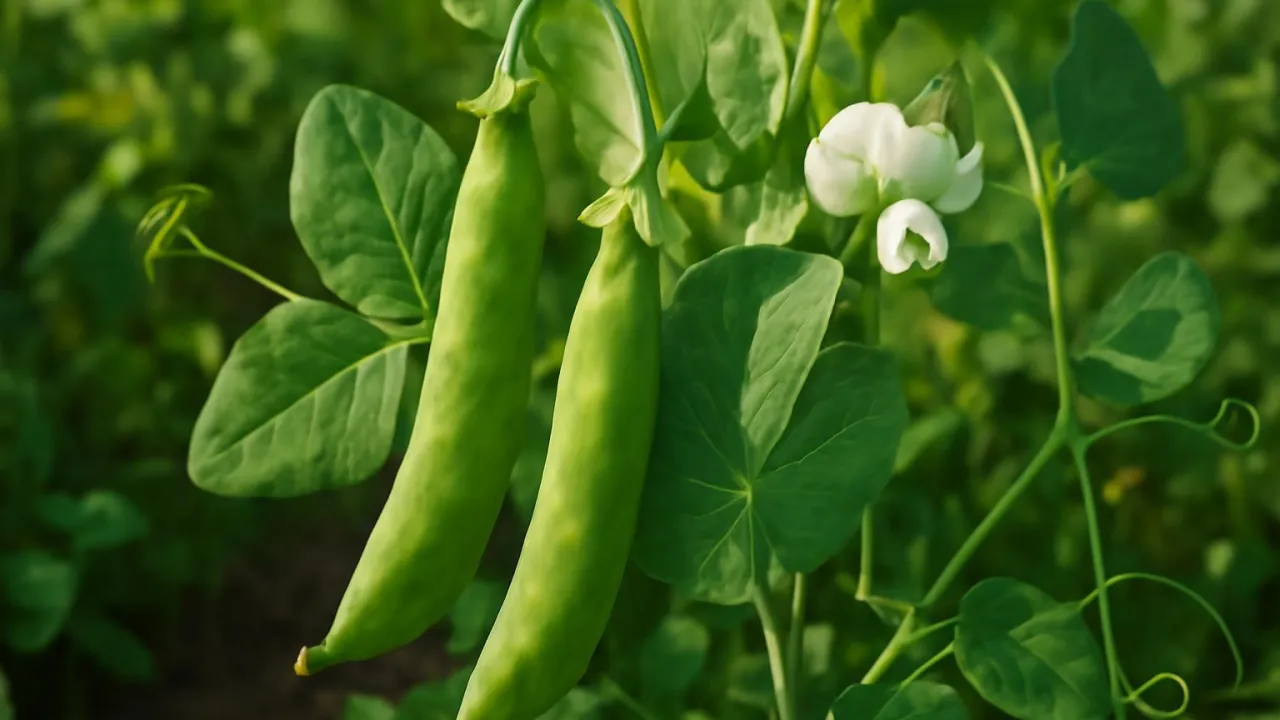
Green peas have tiny seeds that grow inside pods that open like a treasure chest!
✨ Word Sparks (Grade 2 Glossary)
Tap 🔊 to hear
pod
A green shell that holds peas inside
vitamins
Healthy things in food that help you grow
trellis
A frame that plants climb to reach sunlight
🪝
Have you ever seen how tiny peas grow inside green pods?
1
Peas Grow in Green Pods
Green peas grow inside that are soft and smooth. The pods protect the peas as they grow. When peas are ripe, the pods open easily.
2
Where Peas Live and Grow
Pea plants grow best in cool places with full sunlight. They climb on sticks or to reach the sun. Farmers water them often to help them grow strong.
3
Peas Are Healthy and Sweet
Peas taste sweet and fresh when cooked or eaten raw. They have and fiber that help your body stay healthy. People enjoy peas in many meals around the world.
Pea plants use tiny tendrils to climb and reach sunlight for food-making!
✨ Word Sparks (Grade 3 Glossary)
Tap 🔊 to hear
tendrils
Thin plant parts that wrap to help climbing
nutrients
Food parts plants and animals need to grow
photosynthesis
How plants use sunlight to make food
🪝
Did you know pea plants use pods to protect their seeds from predators?
1
Pea Pods Protect Seeds
Peas grow inside pods that protect the seeds from animals and weather. These pods are smooth and green and help keep the peas safe. When the peas mature, the pods dry and open to release seeds. This process helps peas spread and grow new plants.
2
How Pea Plants Climb and Grow
Pea plants have that wrap around supports to climb higher. This climbing helps them reach sunlight for . The leaves capture sunlight and make food for the plant. Climbing also helps peas avoid ground predators and get better air flow.
3
Peas Help People and Ecosystems
Peas are rich in like vitamins, fiber, and protein. They help people stay healthy and strong. Pea plants also add nitrogen to the soil, helping other plants grow better. This makes peas important in farming and natural ecosystems.
4
Growing Peas Around the World
Peas grow best in cool, temperate climates with good soil. They are farmed worldwide in places like Europe, Asia, and North America. Farmers plant peas in early spring to avoid hot weather. Peas have been grown by humans for thousands of years.
Pea plants improve soil by adding nitrogen, helping many plants grow better nearby!
✨ Word Sparks (Grade 4 Glossary)
Tap 🔊 to hear
dispersal
How seeds spread far from the parent plant
adaptation
A special trait that helps plants survive
nitrogen
A soil nutrient that helps plants grow strong
🪝
Have you ever wondered how green peas fit into nature’s big food web?
1
Pea Pods Protect Seeds and Help Spread Them
Green peas grow inside pods that protect the seeds from predators and harsh weather conditions. When the pods dry out, they split open and scatter seeds, allowing new pea plants to grow. This natural seed helps peas survive and spread in their habitat. Without this process, pea plants would struggle to reproduce effectively.
2
Pea Plants Climb to Capture Sunlight
Pea plants use tendrils to climb supports like fences or trellises, helping them reach sunlight needed for photosynthesis. This climbing allows them to avoid ground-level threats and compete better for light in crowded fields. The increased sunlight exposure improves their energy production and growth.
3
Peas Play a Role in Farming and Ecosystems
Pea plants improve soil health by fixing , which benefits other crops planted nearby. They serve as food for humans and animals, fitting into food webs as producers and prey. Farmers rotate peas with other crops to keep soil fertile and reduce pests. This practice supports sustainable agriculture and ecosystem balance.
4
Where Peas Grow Around the World
Peas thrive in temperate climates across Europe, Asia, and North America, preferring cool weather and rich soil. They are typically planted in early spring and harvested before hot summer temperatures arrive. Their long history of cultivation shows their importance in human diets and global agriculture. Peas continue to be a vital crop worldwide.
Green peas fix nitrogen through root bacteria, naturally enriching soil without fertilizers!
✨ Word Sparks (Grade 5 Glossary)
Tap 🔊 to hear
legume
A plant family that helps soil with nitrogen
symbiotic
A helpful relationship between two living things
nodules
Small bumps on roots where bacteria live
🪝
Did you know green peas belong to the legume family and fix nitrogen to enrich soil?
1
Scientific Classification and Origins
Green peas, scientifically named Pisum sativum, belong to the Fabaceae family, commonly called . They originated in the Mediterranean region and have been cultivated for over 7,000 years. Their classification as legumes means they can form relationships with nitrogen-fixing bacteria in root . This unique trait helps improve soil fertility naturally.
2
Physiological Mechanics of Growth
Pea plants grow to heights of 2 to 3 feet, using tendrils to climb supports and maximize sunlight exposure. Photosynthesis in their leaves converts sunlight into energy, while root host bacteria that convert atmospheric nitrogen into usable nutrients. This process reduces the need for synthetic fertilizers in agriculture and supports sustainable farming practices.
3
Ecological and Agricultural Importance
By fixing nitrogen, pea plants enrich soil fertility, benefiting subsequent crops in rotation systems. They serve as a nutritious food source high in protein, fiber, and vitamins for humans and animals. Their role in sustainable farming practices helps reduce chemical fertilizer use and supports ecosystem health. Peas also contribute to biodiversity by supporting beneficial insects.
4
Conservation and Botanical History
Peas have a rich botanical history, with evidence of cultivation dating back to Neolithic times. Conservation of heirloom pea varieties preserves genetic diversity crucial for adapting to climate change. Modern breeding efforts focus on disease resistance and yield improvement to support global food security. These efforts ensure peas remain a reliable crop for future generations.
5
Quantitative Comparisons and Growth Conditions
Pea plants typically grow in soil temperatures between 55 and 75 degrees Fahrenheit and require 12 to 16 hours of sunlight daily. Each pod contains 5 to 10 peas, with mature plants producing up to 50 pods. Compared to other , peas have moderate growth rates and contribute significantly to nitrogen fixation. Their adaptability makes them valuable in diverse agricultural systems.