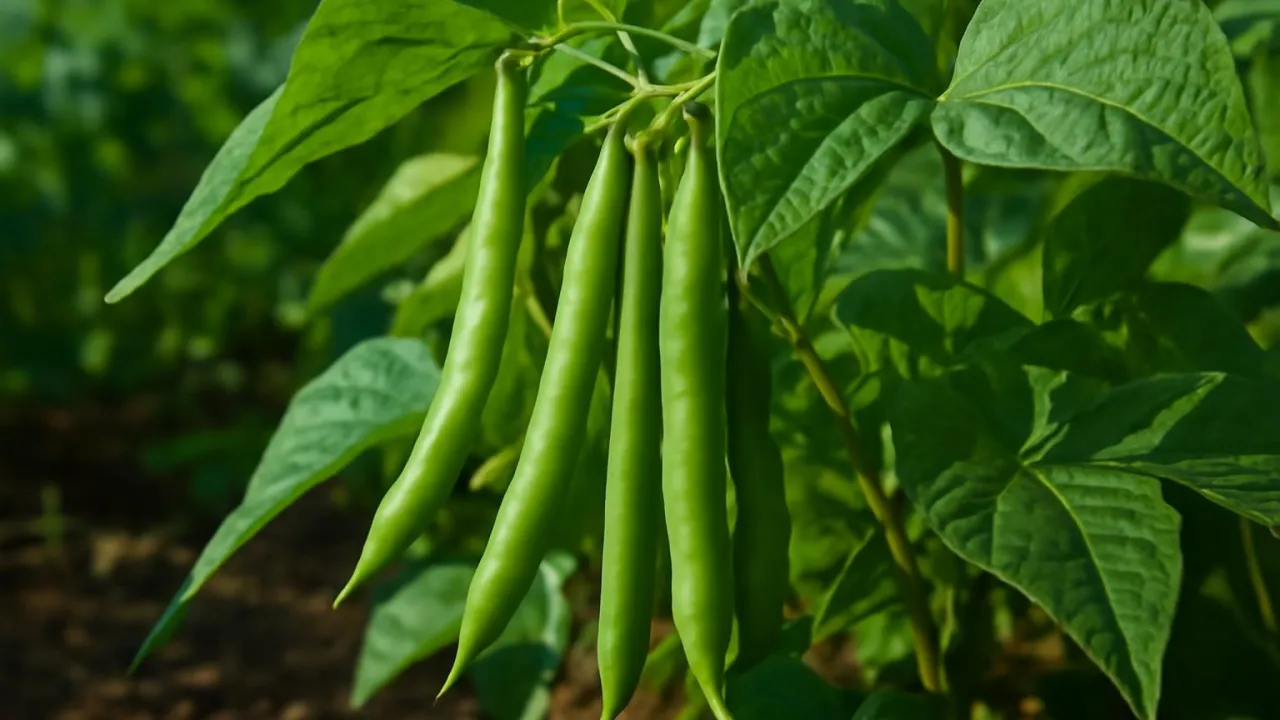
Green beans are actually fruits because they hold seeds inside their pods.
✨ Word Sparks (Grade 2 Glossary)
Tap 🔊 to hear
pollinate
When bees help flowers make seeds
pod
A green shell that holds seeds inside
fiber
Healthy parts in food that help your tummy
🪝
Have you ever heard the crisp snap of a fresh green bean?
1
Green Bean Plants
Green beans grow on plants that need plenty of sun and water to thrive. They produce long, slender that are bright green. Bees visit the flowers to help and make beans. The pods snap when you break them because of their firm texture.
2
Where Green Beans Live
Green beans originally come from Central and South America but now grow worldwide. They like warm weather and well-drained soil. Farmers plant green beans in gardens and fields during spring and summer. The plants climb or spread on the ground depending on the variety.
3
Tasty and Healthy
People eat green beans cooked or raw in many dishes around the world. They are full of vitamins and , which help keep you healthy. The crunchy make a fun sound when snapped in half. Many children enjoy eating green beans because of their fresh taste.
Green beans are botanically fruits because they contain seeds inside their pods.
✨ Word Sparks (Grade 3 Glossary)
Tap 🔊 to hear
camouflage
Color that helps hide from animals
pollinate
Bees help flowers make seeds
nutrients
Good stuff plants and people need
🪝
Did you know green beans are fruits even though we call them vegetables?
1
Green Beans and Their Pods
Green beans are the edible pods of a plant called Phaseolus vulgaris. The pods protect the seeds inside until they are ready to grow. Their firm walls create a crunchy snap when broken. This texture helps protect the seeds from predators and damage.
2
How Green Beans Grow
Green bean plants need sunlight, water, and soil rich in to grow well. Bees the flowers, which helps the plant produce pods full of seeds. The pods develop over several weeks and change from soft to firm. This adaptation helps the beans survive until harvest time.
3
Camouflage and Protection
The green color of the pods helps them blend in with leaves, which is a form of . This protects the beans from some predators that eat plants. The pod’s tough skin also acts as a barrier to insects and animals. These adaptations increase the plant’s chances of survival.
4
Eating Green Beans
People eat green beans cooked or raw in many recipes worldwide. Green beans provide like fiber and vitamins that help keep people healthy. Their crunchy texture and fresh taste make them popular in salads and cooked dishes. Understanding their biology helps us appreciate this common vegetable.
1. Why is the green color important for green beans?
2. What helps green bean flowers make pods?
🤯 Mind-Blowing Fact • Grade 4
Green beans improve soil by fixing nitrogen, helping other plants grow better nearby.
✨ Word Sparks (Grade 4 Glossary)
Tap 🔊 to hear
symbiotic
Living together to help each other
nitrogen-fixing
Plants that add good stuff to soil
ecosystem
A community of plants and animals
🪝
Why do green beans play an important role in many gardens and farms worldwide?
1
Growing Conditions and Adaptations
Green beans thrive in warm climates where they receive full sunlight and consistent watering, which supports their growth cycle. Their climbing or bushy growth habits allow them to adapt to different garden spaces and farming methods. The pods develop a firm texture that helps protect the seeds inside from environmental damage. These adaptations make green beans a reliable crop in many regions.
2
Role in Ecosystems and Food Webs
Green bean plants provide food for many insects, including pollinators like bees, which help fertilize the flowers and produce pods. The pods themselves serve as a food source for various animals and humans, placing green beans within local food webs. Their roots improve soil health, benefiting other plants nearby. This relationship supports sustainable farming and biodiversity.
3
Geographic Distribution and Farming Impact
Originally native to Central and South America, green beans are now cultivated worldwide in temperate and tropical regions. Their ability to grow in diverse climates has made them an important agricultural crop globally. Farmers use green beans to improve soil fertility and provide nutritious food. However, farming practices must balance productivity with environmental care to protect .
4
Human Use and Nutritional Benefits
Green beans are enjoyed cooked or raw in many cuisines, offering vitamins, fiber, and antioxidants essential for human health. Their crunchy texture and mild flavor make them popular in salads, stir-fries, and side dishes. Including green beans in diets supports digestion and overall wellness. Understanding their role helps people appreciate how plants contribute to healthy eating.
Green beans fix nitrogen in soil, reducing fertilizer needs and supporting sustainable farming.
✨ Word Sparks (Grade 5 Glossary)
Tap 🔊 to hear
leguminous
Plants that grow pods with seeds inside
Rhizobium
Helpful bacteria that live in bean roots
cellulose
Plant fibers that make pods strong and crisp
🪝
How do green beans, scientifically Phaseolus vulgaris, contribute to agriculture and nutrition worldwide?
1
Scientific Classification and Botany
Green beans belong to the Fabaceae family, scientifically known as Phaseolus vulgaris, which includes many plants. Unlike many vegetables, green beans are botanically classified as fruits because their pods contain seeds. The plants exhibit determinate or indeterminate growth habits, influencing pod production and harvest timing. Their flowers rely on insect pollination, primarily by bees, to develop healthy pods.
2
Physiological Mechanics and Growth
Green bean plants fix atmospheric nitrogen through root nodules containing bacteria, enriching soil fertility naturally. Their pods develop over approximately 50 to 60 days from flowering to harvest, reaching lengths of 4 to 6 inches. The pod’s crisp texture results from tightly packed fibers and water content, which create the characteristic snapping sound. These physiological traits support both plant survival and human consumption.
3
Agricultural History and Conservation
Originating in Central and South America, green beans have been cultivated for thousands of years and spread globally through trade and agriculture. Modern breeding programs focus on improving disease resistance, yield, and climate adaptability to support sustainable farming. Conservation of heirloom varieties preserves genetic diversity vital for future crop resilience. Sustainable farming practices help reduce environmental impact while maintaining productivity.
4
Nutritional and Culinary Importance
Green beans provide essential nutrients such as vitamin C, vitamin K, fiber, and antioxidants, contributing to human health and disease prevention. Their low calorie and fat content make them a popular choice in balanced diets worldwide. Culinary uses range from raw salads to steamed and stir-fried dishes, showcasing their versatility. Quantitatively, fresh green beans contain approximately 2 grams of fiber per half-cup serving.
5
Comparative Growth and Environmental Impact
Compared to other legumes, green beans grow relatively quickly, maturing in about two months under optimal conditions. They prefer temperatures between 65 and 85 degrees Fahrenheit and require moderate watering to prevent root diseases. The nitrogen-fixing ability reduces the need for synthetic fertilizers, lowering environmental pollution. These factors make green beans a sustainable and efficient crop choice for diverse agricultural systems.