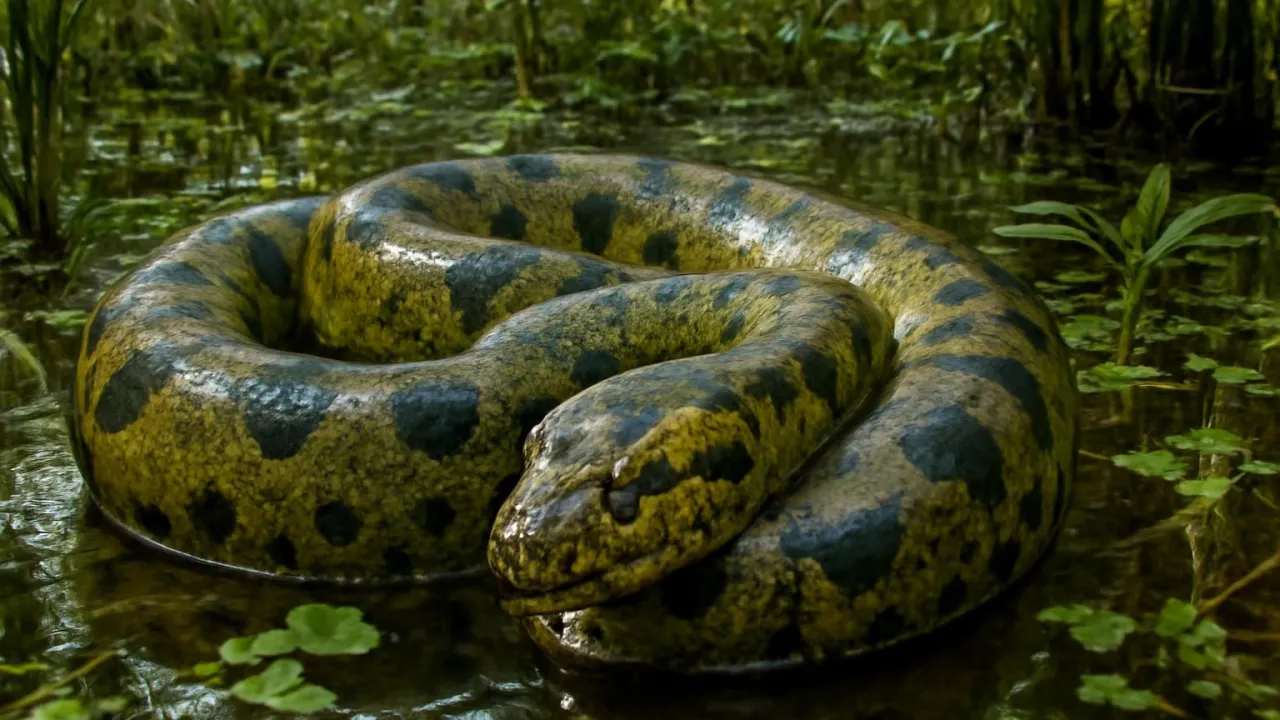
Green anacondas can weigh over 500 pounds, heavier than many people!
✨ Word Sparks (Grade 2 Glossary)
Tap 🔊 to hear
prey
Animals that a hunter eats
muscles
Parts of the body that help move and squeeze
camouflage
Colors or patterns that help hide an animal
🪝
Have you ever seen a snake as big as a small car?
1
Huge and Spotted
The green anaconda is one of the largest snakes in the world, and it has dark green spots. It can grow longer than a school bus, and it moves mostly in water. This snake is very strong and heavy.
2
Swamp Home
Green anacondas live in warm, wet swamps and rivers in South America. They hide under plants and mud to stay safe. They like places with lots of water and shade.
3
Strong Hunter
This snake eats fish, birds, and mammals by squeezing them tightly. It waits quietly in water to catch its . It uses its strong to hold on tight.
1. What helps the green anaconda hide in the swamp?
2. How does the green anaconda catch its food?
🤯 Mind-Blowing Fact • Grade 3
Green anacondas can hold their breath underwater for up to 10 minutes while hunting.
✨ Word Sparks (Grade 3 Glossary)
Tap 🔊 to hear
constrictor
A snake that squeezes prey to catch it
gestation
The time a mother carries babies before birth
ambush
To wait quietly and surprise an animal
🪝
Did you know the green anaconda uses camouflage to surprise its prey?
1
Massive Snake with Camouflage
The green anaconda is one of the heaviest snakes on Earth, growing up to 30 feet long. Its dark green skin with black spots provides excellent camouflage in murky swamp waters. This adaptation helps it avoid predators and sneak up on prey. The snake’s muscular body allows it to constrict animals much larger than itself.
2
Swamp Habitat and Behavior
Green anacondas live in the tropical swamps and slow rivers of South America. They spend much of their time submerged in water to regulate body temperature and hide from threats. Their nostrils and eyes are positioned on top of their heads to breathe and see while mostly underwater. This adaptation aids in hunting and safety.
3
Hunting and Diet
These snakes are predators that rely on stealth and strength to catch prey. They eat fish, birds, mammals, and even caimans by wrapping their muscular bodies around them. The constriction cuts off blood flow, suffocating the prey. This method is energy efficient and effective in their watery environment.
4
Life Cycle and Growth
Female green anacondas give birth to live young after a long period. The babies are about two feet long at birth and grow quickly by eating small animals. Juveniles use camouflage and hiding to avoid predators. As they mature, they become more powerful hunters in the swamp ecosystem.
1. Why does the green anaconda’s skin help it survive?
2. How does the green anaconda kill its prey?
🤯 Mind-Blowing Fact • Grade 4
Green anacondas can stay underwater for up to 10 minutes, helping them surprise prey.
✨ Word Sparks (Grade 4 Glossary)
Tap 🔊 to hear
apex predator
The top hunter in an ecosystem
deforestation
Cutting down many trees in forests
gestation
Time a mother carries babies inside
🪝
How does the green anaconda’s size affect its role in the swamp ecosystem?
1
Gigantic Snake with Camouflage Power
The green anaconda, one of the largest snakes globally, grows up to 30 feet and uses its dark green and black spotted skin as camouflage to blend seamlessly into swamp vegetation. This camouflage allows it to avoid predators and ambush prey effectively, demonstrating an important adaptation for survival in dense tropical wetlands.
2
Habitat and Geographic Range
Green anacondas inhabit tropical swamps, marshes, and slow-moving rivers across northern South America, including the Amazon and Orinoco basins. Their preference for aquatic environments helps regulate their body temperature and provides abundant prey. Human activities like threaten parts of their habitat, impacting their populations.
3
Ecological Role and Food Web
As , green anacondas play a crucial role in controlling populations of fish, birds, mammals, and reptiles in their ecosystem. Their hunting strategy involves ambush predation, where they patiently wait underwater before striking. This behavior maintains balance by preventing overpopulation of prey species and supporting biodiversity.
4
Reproduction and Growth
Female green anacondas give birth to live young after a of about six months, producing up to 40 offspring. The newborn snakes are vulnerable and rely on camouflage and hiding to avoid predators. As they grow, they gradually take on larger prey and contribute more actively to the swamp’s food web.
5
Human Impact and Conservation
Human activities such as and wetland drainage reduce the green anaconda’s habitat and threaten their survival. Conservation efforts focus on protecting wetlands and educating people about the snake’s ecological importance. Preserving these habitats helps maintain biodiversity and the health of tropical swamp ecosystems.
1. Why is the green anaconda important in its ecosystem?
2. What human activity threatens the green anaconda’s home?
🤯 Mind-Blowing Fact • Grade 5
Green anacondas can exert constriction pressures over 90 pounds per square inch, stronger than most animals.
✨ Word Sparks (Grade 5 Glossary)
Tap 🔊 to hear
ovoviviparity
Having babies born alive from eggs inside the mother
apex predator
Top hunter that controls other animal populations
constriction
Squeezing prey tightly to stop breathing or blood flow
🪝
What makes the green anaconda a unique giant among snakes in its tropical habitat?
1
Taxonomy and Scientific Context
The green anaconda, scientifically named Eunectes murinus, belongs to the Boidae family of non-venomous constrictor snakes. It is native to the tropical wetlands of northern South America, including the Amazon and Orinoco basins. Its classification highlights evolutionary adaptations that allow it to thrive in aquatic environments unlike many other snake species.
2
Physiological Adaptations and Mechanics
Green anacondas possess highly muscular bodies that enable powerful of prey, cutting off blood flow and respiration. Their nostrils and eyes are dorsally positioned, allowing breathing and vision while submerged. These snakes can hold their breath underwater for up to 10 minutes, an adaptation critical for stealth hunting in murky waters.
3
Conservation Status and Human Impact
Although green anacondas are not currently endangered, habitat destruction from deforestation and wetland drainage poses significant threats. Human encroachment reduces suitable habitat and prey availability, while illegal hunting for skins also impacts populations. Conservation efforts focus on habitat preservation and education to protect this iconic species.
4
Ecological Role and Quantitative Comparisons
As , green anacondas regulate populations of fish, birds, mammals, and reptiles, maintaining ecosystem balance. They can weigh over 550 pounds (250 kilograms) and reach lengths exceeding 30 feet (9 meters), making them among the heaviest snakes globally. Their force is estimated to be several times stronger than a human’s grip, enabling them to subdue large prey efficiently.
5
Reproductive Biology and Growth Rates
Female green anacondas exhibit , giving birth to live young after a gestation period of approximately six months, producing up to 40 offspring. Neonates measure about two feet (60 centimeters) at birth and grow rapidly by feeding on small aquatic animals. Juveniles rely on camouflage and aquatic habitats to avoid predation during early development stages.