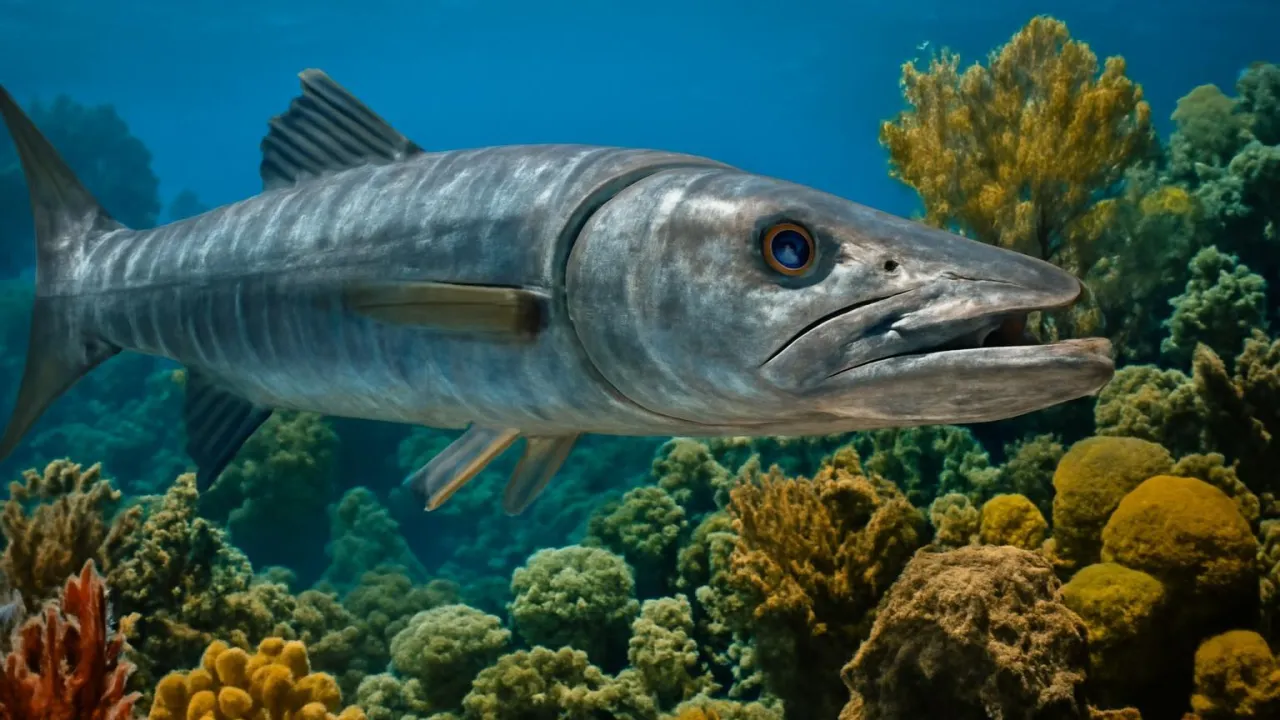
Great barracudas can swim as fast as a speeding car on a highway!
✨ Word Sparks (Grade 2 Glossary)
Tap 🔊 to hear
prey
Animals that get hunted for food
coral reef
Colorful underwater home for many sea creatures
tail
Body part that helps fish swim fast
🪝
Have you ever wondered how some fish swim faster than a car?
1
Speedy Swimmer
The great barracuda can swim very fast, reaching speeds up to 36 miles per hour. It uses its strong to push through the water quickly. This helps it catch before they can escape.
2
Ocean Home
This fish lives in warm tropical and subtropical oceans all over the world. It often hides near and rocky areas where it can surprise its . The warm water helps it stay active and healthy.
3
Sharp Teeth
The barracuda has sharp, pointed teeth that help it grab slippery fish and squid. Its teeth are very strong and can cut through its easily. This makes it a skilled hunter in the ocean.
Great barracudas can swim faster than most boats in the ocean!
✨ Word Sparks (Grade 3 Glossary)
Tap 🔊 to hear
camouflage
Body color that helps hide from others
predator
Animal that hunts other animals for food
adaptation
Body change that helps survival
🪝
Did you know the great barracuda uses its speed and sharp teeth to catch food quickly?
1
Amazing Speed and Camouflage
The great barracuda can swim up to 36 miles per hour, making it one of the fastest fish in the ocean. Its sleek, silver body helps it blend in with the water, a form of . This helps it sneak up on prey without being seen. Speed and camouflage work together to make it a skilled .
2
Habitat and Hunting
Barracudas live in tropical and subtropical oceans, often near coral reefs and rocky areas. These habitats provide shelter and hunting grounds. They use the coral to hide and ambush smaller fish. Their sharp teeth are perfect for grabbing slippery prey quickly.
3
Body Design and Survival
The barracuda’s long, streamlined body reduces water resistance, allowing fast swimming. Its powerful tail fin propels it forward with strong thrusts. The fish’s sharp teeth are arranged in rows to hold prey tightly. These physical features help it survive as a top .
4
Life Cycle
Great barracudas lay eggs that hatch into larvae floating in the open ocean. Young barracudas grow quickly and learn to hunt small fish. As they mature, they become stronger and faster. This life cycle helps maintain their population in the ocean.
Great barracudas help keep coral reef ecosystems balanced by controlling fish populations.
✨ Word Sparks (Grade 4 Glossary)
Tap 🔊 to hear
ecosystem
Community of living things and their home
symbiotic
Living together and helping each other
predator
Animal that hunts others for food
🪝
How does the great barracuda’s speed and sharp teeth affect ocean food webs?
1
Speed and Hunting Success
The great barracuda’s ability to swim up to 36 miles per hour allows it to catch fast-moving prey effectively. Its streamlined body and powerful tail reduce drag, enabling quick bursts of speed. This speed gives it an advantage over many prey species, impacting the balance of ocean life. Faster prey must adapt or face being eaten.
2
Role in the Ecosystem
As a top , the barracuda controls populations of smaller fish and squid, maintaining healthy . It helps prevent any one species from becoming too numerous, which could damage coral reefs. This balance supports biodiversity and the survival of many ocean creatures. Humans also benefit from this natural regulation.
3
Habitat and Distribution
Great barracudas are found in tropical and subtropical oceans worldwide, especially near coral reefs and rocky shorelines. These habitats provide shelter and hunting grounds, creating a relationship with coral species. Human activities like overfishing and pollution threaten these habitats, affecting barracuda populations.
4
Physical Adaptations for Survival
The barracuda’s sharp teeth are arranged in rows that allow it to grasp and tear prey efficiently. Its sleek, silver body provides camouflage in open water, reducing detection by prey and . These adaptations increase its hunting success and survival chances in competitive ocean environments.
1. Why is the barracuda important in ocean ecosystems?
2. Where do great barracudas mostly live?
🤯 Mind-Blowing Fact • Grade 5
Great barracudas can swim faster than many motorboats, reaching speeds over 36 miles per hour.
✨ Word Sparks (Grade 5 Glossary)
Tap 🔊 to hear
apex predator
Top animal hunter with no enemies
hydrodynamic
Shape that moves easily in water
planktonic
Floating tiny animals or plants in water
🪝
What makes the great barracuda a remarkable predator in tropical oceans worldwide?
1
Scientific Classification and Range
The great barracuda, scientifically named Sphyraena barracuda, belongs to the family Sphyraenidae. It inhabits tropical and subtropical marine waters globally, especially around coral reefs and rocky coastlines. This wide distribution allows it to play a significant role in various ocean ecosystems. Its presence is vital for maintaining ecological balance.
2
Physiological Adaptations for Hunting
This species possesses a streamlined, elongated body that reduces drag, enabling swimming speeds up to 36 miles per hour. Its powerful caudal fin generates strong thrusts for rapid acceleration. The barracuda’s razor-sharp, fang-like teeth are arranged in multiple rows, allowing it to grasp and slice through prey efficiently. These adaptations make it an in its habitat.
3
Ecological Role and Conservation
As an , the great barracuda regulates populations of smaller fish and cephalopods, contributing to coral reef health and biodiversity. However, overfishing and habitat degradation threaten its populations in some regions. Conservation efforts focus on sustainable fishing practices and protecting coral reef habitats to preserve this species and its ecological functions.
4
Behavior and Life Cycle
Great barracudas reproduce by spawning eggs that develop into larvae, which drift in open waters before settling in reef habitats. Juveniles grow rapidly and develop hunting skills over time. Their solitary or small group behaviors aid in efficient predation and survival. Understanding their life cycle helps in managing their populations effectively.
5
Comparative Facts and Measurements
Adult great barracudas can reach lengths of up to 6.6 feet (2 meters) and weigh around 100 pounds (45 kilograms). They can swim at speeds exceeding 36 miles per hour (58 kilometers per hour), faster than many motorboats. Their teeth can measure up to 1 inch (2.5 centimeters) long, enabling them to capture agile prey like fish and squid. These impressive traits highlight their evolutionary success.