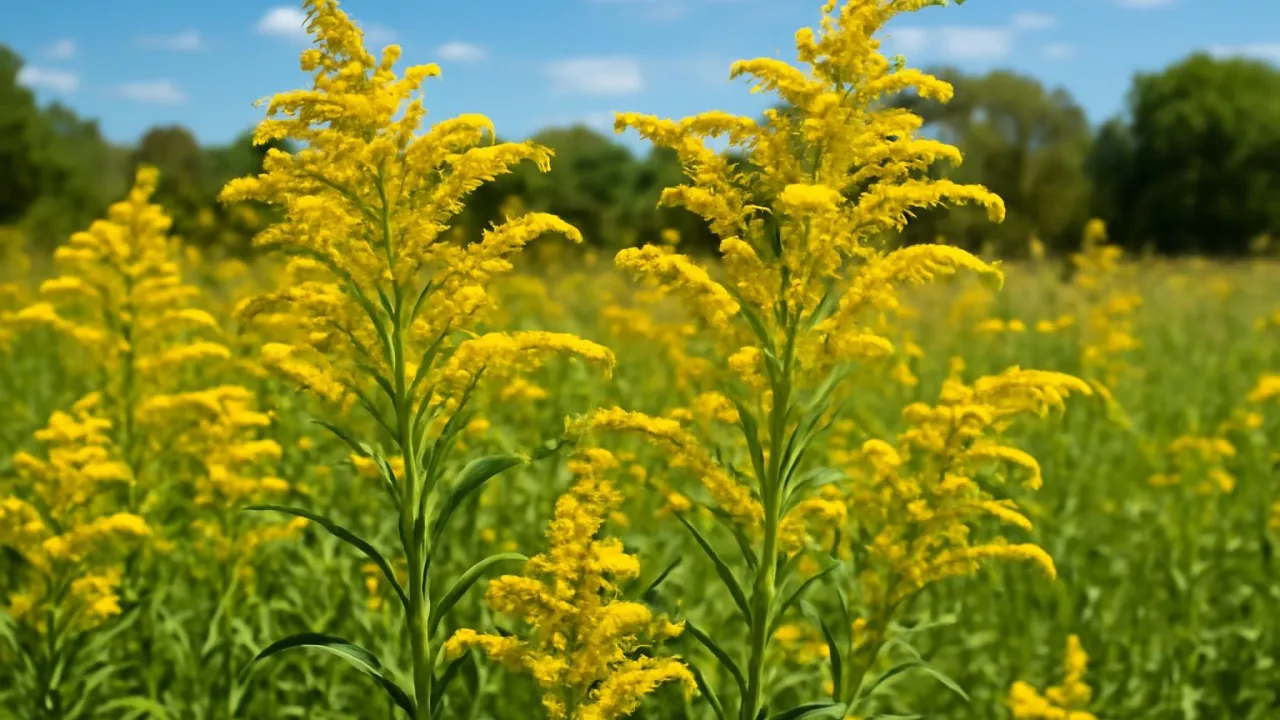
Goldenrod flowers can have over one hundred tiny blooms in a single cluster!
✨ Word Sparks (Grade 2 Glossary)
Tap 🔊 to hear
cluster
A group of things close together
nectar
Sweet juice flowers make for bees
pollinator
An animal that helps flowers make seeds
🪝
Have you seen goldenrod flowers shining bright in sunny fields?
1
Goldenrod’s Bright Flowers
Goldenrod plants have many small yellow flowers that bloom in . These flowers attract bees and butterflies. The bright yellow color helps find them easily.
2
Where Goldenrod Grows
Goldenrod grows in sunny fields and along roadsides where it gets plenty of light. It prefers moist soil but can survive dry places too. The plant grows between one and five feet tall.
3
How Goldenrod Grows
Goldenrod starts as a small seed that grows into a tall plant. It blooms in late summer and early fall. Bees visit the flowers to collect for food.
Goldenrod can support over 100 different insect species, making it an important ecosystem plant!
✨ Word Sparks (Grade 3 Glossary)
Tap 🔊 to hear
pollination
When pollen moves to help make seeds
adaptation
A special trait that helps survival
herbivore
An animal that eats plants
🪝
Did you know goldenrod uses bright yellow flowers to attract helpful pollinators?
1
Goldenrod’s Bright Blooms
Goldenrod plants produce bright yellow flowers arranged in dense clusters called inflorescences. These flowers attract many pollinators such as bees and butterflies. The bright color acts as a visual signal for pollinators searching for nectar. This helps goldenrod reproduce successfully.
2
Growing in Sunny Habitats
Goldenrod thrives in sunny habitats like meadows, fields, and roadsides with well-drained soil. It grows between one and five feet tall, depending on the species and conditions. The plant’s tall stems help it compete for sunlight and spread its pollen widely.
3
Pollination and Survival
Pollinators visit goldenrod flowers to collect nectar and pollen, which helps fertilize the flowers. This process called allows goldenrod to produce seeds for new plants. Goldenrod’s bright flowers and sweet nectar are key to attract these helpful animals.
4
Defending Against Predators
Goldenrod also uses chemical defenses to deter that might eat its leaves or flowers. These chemicals make the plant less tasty and protect it from predators. This helps goldenrod survive in diverse ecosystems.
1. What helps goldenrod flowers attract pollinators?
2. Why does goldenrod produce chemicals in its leaves?
🤯 Mind-Blowing Fact • Grade 4
Goldenrod flowers bloom late in the season, providing critical nectar when few other flowers remain.
✨ Word Sparks (Grade 4 Glossary)
Tap 🔊 to hear
ecosystem
A community of plants and animals living together
pollinator
An animal that helps plants make seeds
distribution
Where plants or animals live and grow
🪝
How does goldenrod’s bright yellow bloom affect its ecosystem and survival?
1
Goldenrod’s Role in Ecosystems
Goldenrod plays a vital role in many by providing nectar and pollen to a wide variety of , including bees, butterflies, and beetles. Its bright yellow flowers bloom in late summer and early fall, filling an important food gap when other flowers fade. This timing supports pollinator populations before winter.
2
Cause and Effect of Flower Color
The bright yellow color of goldenrod flowers causes many to visit frequently, which increases pollination rates. This effect helps goldenrod reproduce efficiently and spread its seeds across large areas. Without these pollinators, goldenrod would struggle to survive and reproduce.
3
Geographic Distribution and Growth
Goldenrod species are native to North America and parts of Europe, thriving in sunny meadows, prairies, and roadsides. They prefer well-drained soils but can tolerate dry or disturbed areas. Their ability to grow in many habitats allows them to support diverse insect communities.
4
Human Impact and Uses
Humans sometimes consider goldenrod a weed because it can spread quickly and crowd out other plants. However, goldenrod is also valued for its role in supporting and its use in traditional medicine. Conservation efforts recognize its importance in maintaining healthy .
1. Why do many pollinators visit goldenrod flowers?
2. How do humans affect goldenrod plants?
🤯 Mind-Blowing Fact • Grade 5
Goldenrod supports over 100 insect species and blooms for up to two months each year, sustaining many ecosystems.
✨ Word Sparks (Grade 5 Glossary)
Tap 🔊 to hear
inflorescence
A group of many small flowers together
taxonomy
How scientists group and name living things
photosynthesis
How plants make food using sunlight
🪝
What scientific secrets help goldenrod thrive and support ecosystems worldwide?
1
Scientific Classification and Taxonomy
Goldenrod belongs to the genus Solidago within the family Asteraceae, which includes daisies and sunflowers. There are about 100 species of goldenrod native mainly to North America and some parts of Europe and Asia. This taxonomic classification helps scientists study their evolutionary relationships and ecological roles. Understanding allows researchers to protect species and their habitats effectively.
2
Physiological Adaptations and Mechanics
Goldenrod’s bright yellow consist of hundreds of tiny florets that efficiently attract diverse pollinators. Its tall, sturdy stems support the flowers and maximize sunlight exposure for . The plant produces chemical compounds that deter herbivores and reduce fungal infections, enhancing survival. These adaptations allow goldenrod to thrive in various environments.
3
Conservation and Botanical History
Historically, goldenrod was misunderstood as a cause of hay fever, but it is actually ragweed pollen that triggers allergies. Conservation efforts emphasize goldenrod’s importance in supporting pollinator biodiversity and maintaining healthy ecosystems. Botanical studies highlight its role in prairie restoration and sustainable agriculture. Protecting goldenrod helps preserve many other species dependent on it.
4
Quantitative Comparisons and Growth
Goldenrod plants typically grow between 1 and 5 feet tall, with some species reaching 6 feet. Their flowering period lasts about 6 to 8 weeks in late summer and fall. Each flower cluster may contain over 100 tiny florets, producing nectar that attracts over 100 insect species, including bees, wasps, and butterflies. This abundance supports complex food webs.
5
Ecological Impact and Human Uses
Goldenrod plays a key role in food webs by supporting pollinators that feed birds and other wildlife. Humans use goldenrod extracts in traditional medicine for anti-inflammatory purposes. Its ability to colonize disturbed soils also makes it valuable for erosion control and habitat restoration projects. These uses highlight goldenrod’s ecological and economic importance worldwide.