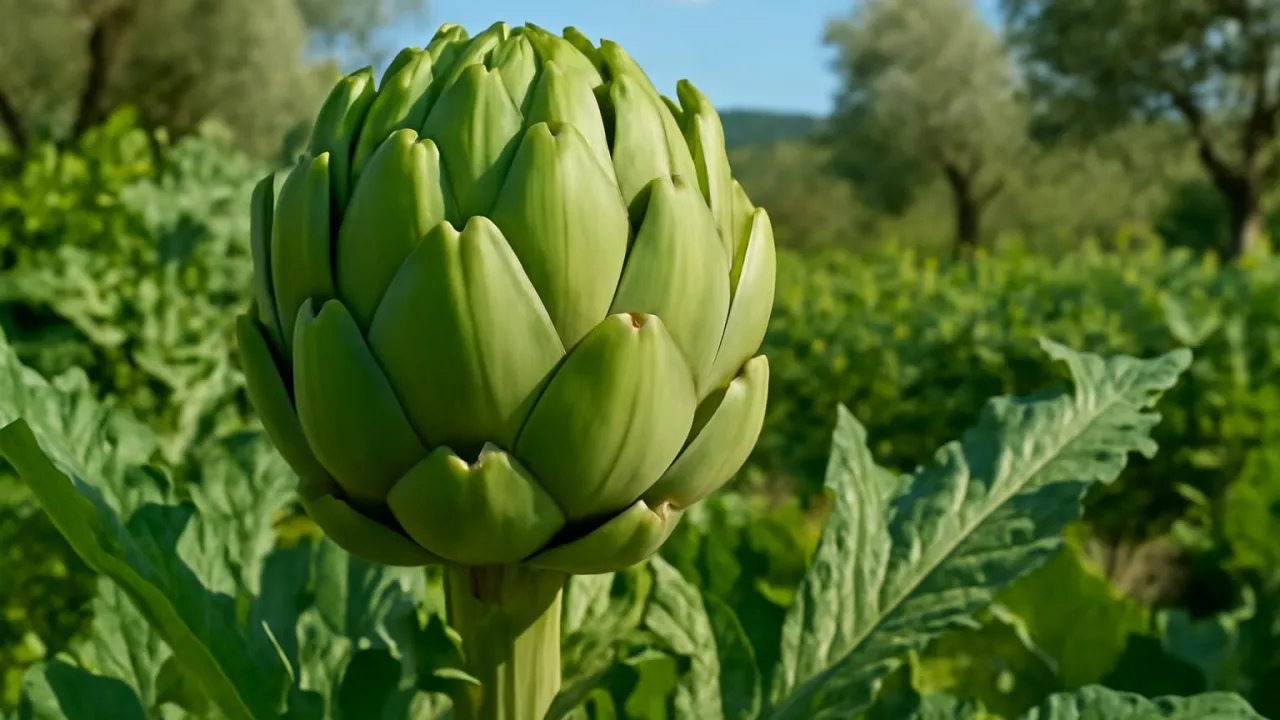
The globe artichoke’s edible part is a flower bud before it blooms fully.
✨ Word Sparks (Grade 3 Glossary)
Tap 🔊 to hear
camouflage
How something blends into its surroundings
pollination
Bees help flowers make seeds by moving pollen
nutrients
Food and minerals plants need to grow
🪝
Did you know the globe artichoke is a flower you eat before it blooms?
1
Appearance and Adaptation
The globe artichoke has tough, spiky leaves that protect its soft heart inside. Its green color helps it blend into the garden. This keeps animals from eating it too early. The plant grows tall to catch sunlight for photosynthesis.
2
Growth and Pollination
Artichokes start as flower buds that have not opened yet. Bees visit the flowers to pollinate them, helping the plant produce seeds. The plant needs from soil and water to grow strong. Its deep roots help it survive dry weather.
3
Eating the Edible Flower
People eat the soft, tasty heart of the artichoke flower bud. The tough leaves are peeled away to reach the heart. Cooking makes the heart tender and delicious. This edible flower is full of fiber and vitamins.
4
Where It Lives and Grows
Globe artichokes grow mainly in Mediterranean climates with warm summers. They are farmed in places like Italy, Spain, and California. The plant prefers sunny spots with good soil drainage. It plays a role in gardens by attracting pollinators.
Globe artichokes protect their edible flower buds with tough, spiny leaves to survive.
✨ Word Sparks (Grade 4 Glossary)
Tap 🔊 to hear
adaptation
A change that helps plants survive better
pollinator
An animal that helps flowers make seeds
ecosystem
A community of plants and animals living together
🪝
How does the globe artichoke protect its tasty flower heart from hungry animals?
1
Protective Structure and Survival
The globe artichoke’s tough, spiny leaves form a natural shield that deters many animals from eating it prematurely. This helps the plant survive long enough to reproduce successfully. Its green color also provides camouflage in the Mediterranean environment. These defenses increase the plant’s chances of producing seeds and growing new plants.
2
Pollination and Ecosystem Role
Bees and other visit the globe artichoke’s flower buds to collect nectar and pollen. This pollination process allows the plant to produce seeds for the next generation. The artichoke supports local by providing food for pollinators and acting as a host plant. It plays an important role in Mediterranean food webs.
3
Growing Conditions and Geographic Range
Globe artichokes thrive in Mediterranean climates with mild, wet winters and hot, dry summers. They are widely cultivated in Italy, Spain, France, and parts of California. The plant requires full sun and well-drained soil to grow optimally. Farmers often use irrigation to supply water during dry periods to improve yields.
4
Human Uses and Agricultural Impact
Humans have cultivated globe artichokes for thousands of years for their edible flower buds. They are harvested before blooming to ensure tenderness. The artichoke is used in many cuisines worldwide, contributing to agricultural diversity. Sustainable farming practices help protect soil health and populations.
2. How do farmers help artichokes grow during dry times?
🤯 Mind-Blowing Fact • Grade 5
Globe artichokes have been cultivated for over 2,000 years and are prized edible flower buds.
✨ Word Sparks (Grade 5 Glossary)
Tap 🔊 to hear
bracts
Leaf-like parts that protect flower buds
herbivory
Animals eating plants for food
perennial
A plant that lives many years
🪝
What makes the globe artichoke a unique edible flower with special adaptations?
1
Scientific Classification and Origins
The globe artichoke, scientifically named Cynara cardunculus var. scolymus, belongs to the Asteraceae family. It is native to the Mediterranean basin, where it has been cultivated since ancient times for its edible flower buds. This plant is a thistle, related to the cardoon and sunflower, and has been selectively bred for larger, tastier buds.
2
Physiological Adaptations and Growth
The artichoke’s spiny protect the immature flower head, preventing by animals. Its large, deeply lobed leaves maximize photosynthesis in full sun environments. The plant develops a deep root system that accesses water during dry Mediterranean summers. Flower buds typically mature over 85 to 120 days before harvest, reaching about 3 to 5 inches in diameter.
3
Conservation and Agricultural History
Globe artichokes have been cultivated since Roman times and remain important in Mediterranean agriculture. Modern farming uses drip irrigation and organic practices to conserve water and soil health. Though not endangered, wild relatives face habitat loss. Conservation efforts focus on preserving genetic diversity for future crop resilience.
4
Ecological and Economic Importance
Artichokes contribute to ecosystems by supporting pollinators such as bees and butterflies. They are a valuable crop, with global production reaching over 1 million metric tons annually. California is the leading producer in the United States, harvesting about 90 percent of the country’s crop. The plant’s edible flower buds are rich in antioxidants, fiber, and vitamins.
5
Quantitative Comparisons and Uses
Artichoke plants can grow up to 5 feet tall and produce buds weighing between 150 and 300 grams. They require temperatures between 50 and 75 degrees Fahrenheit for optimal growth. Cooking methods vary widely, including steaming, boiling, and grilling, which affect texture and flavor. Nutritional studies show artichokes contain about 7 grams of fiber per 100 grams serving.