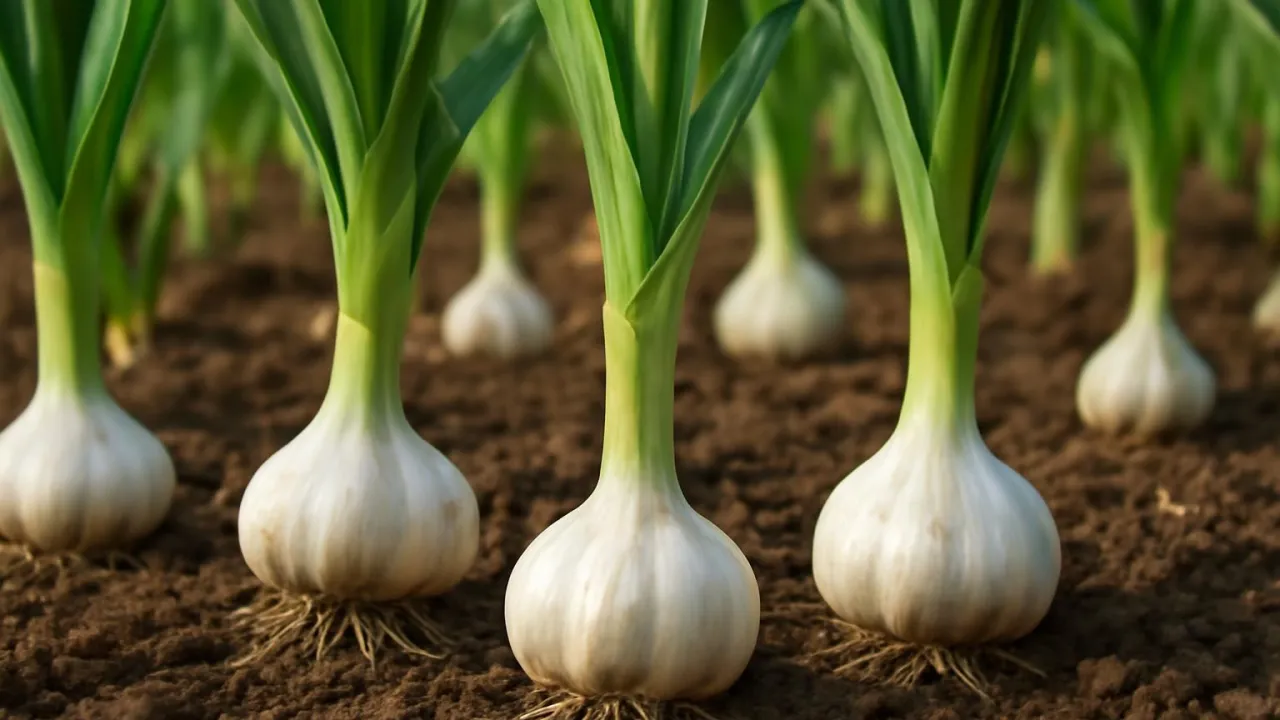
Garlic’s smell comes from sulfur compounds that protect it from bugs and animals!
✨ Word Sparks (Grade 2 Glossary)
Tap 🔊 to hear
nutrients
Food that plants need to grow strong
clove
A small part inside the garlic bulb
compound
Two or more things joined together
🪝
Have you ever noticed how garlic smells strong and spicy when you cut it?
1
Garlic’s Home and Growth
Garlic grows best in gardens with full sun and moderate water. It prefers cool weather during growth. Farmers plant garlic bulbs in the soil in fall. The bulbs then sprout green stalks in early spring.
2
Life Cycle of Garlic
Garlic starts as a bulb underground that stores . Over time, the bulb grows and splits into many . Each clove can grow into a new garlic plant. The green stalks help the plant make food from sunlight.
3
Garlic’s Special Smell
When garlic is cut, it releases a strong, spicy smell. This smell comes from sulfur inside the . The smell helps keep bugs and animals away from the plant. People also use garlic’s smell in cooking to add flavor.
1. What helps garlic plants make food from sunlight?
2. Why do farmers plant garlic bulbs in the fall?
🤯 Mind-Blowing Fact • Grade 3
Garlic’s sulfur compounds act as a natural pesticide to protect it from insects!
✨ Word Sparks (Grade 3 Glossary)
Tap 🔊 to hear
photosynthesis
How plants make food using sunlight
camouflage
A way to hide by blending in
predator
An animal that eats other animals
🪝
Did you know garlic uses its strong smell as a special defense in nature?
1
Garlic’s Growing Habitat
Garlic thrives in temperate regions with well-drained soil and full sunlight. It requires moderate watering to avoid root rot and grow healthy bulbs. The plant grows best in cool seasons, often planted in autumn and harvested in summer.
2
Life Cycle and Adaptations
Garlic begins as a bulb underground that stores nutrients for growth. Each bulb has several cloves, each able to grow a new plant. The green stalks perform to produce energy. This adaptation helps garlic survive in different climates.
3
Garlic’s Chemical Defense
When garlic cloves are crushed, they release sulfur compounds that create a strong odor. This smell acts as by deterring and insects. The chemical defense helps protect the plant from being eaten. Humans use this trait to add flavor in cooking.
4
Garlic in Nature and Humans
Garlic plays a role in ecosystems by deterring pests naturally around other plants. It also benefits humans as a flavorful vegetable and natural medicine. Cultivating garlic has been important for thousands of years worldwide. Its unique smell is both a defense and a useful trait.
2. Why does garlic release a strong smell when crushed?
🤯 Mind-Blowing Fact • Grade 4
Garlic’s pungent sulfur compounds reduce the need for chemical pesticides in farming!
✨ Word Sparks (Grade 4 Glossary)
Tap 🔊 to hear
symbiotic
A helpful relationship between living things
herbivore
An animal that eats only plants
pesticide
A chemical to kill harmful bugs
🪝
Have you wondered how garlic’s smell helps it survive and affect its environment?
1
Garlic’s Geographic Range and Growth
Garlic is native to Central Asia but is now grown worldwide in temperate climates. It grows best in well-drained soils with full sun exposure and moderate watering. Farmers plant garlic bulbs in the fall to allow cold exposure, which triggers proper growth cycles. This seasonal planting helps garlic develop large, healthy bulbs by summer harvest.
2
Cause and Effect of Garlic’s Smell
When garlic cloves are crushed, sulfur compounds are released, producing a pungent odor. This strong smell causes insects and many to avoid the plant, reducing damage from predators. As a result, garlic can thrive without heavy use of . This natural defense mechanism benefits both the plant and nearby crops in the ecosystem.
3
Garlic’s Role in Ecosystems and Agriculture
Garlic acts as a natural pest repellent when planted near other crops, creating a relationship. Its presence helps reduce pest populations, supporting healthier plant growth nearby. Humans have cultivated garlic for thousands of years, appreciating its culinary and medicinal uses. Garlic’s ability to protect itself and others makes it valuable in sustainable farming practices.
4
Human Impact and Distribution
Global demand for garlic has increased due to its health benefits and flavor. Modern farming techniques have expanded garlic production worldwide, including China, India, and the Mediterranean. However, overharvesting and soil depletion can threaten local garlic varieties. Conservation efforts focus on preserving genetic diversity and traditional growing methods.
1. What is one effect of garlic’s strong smell on insects?
2. How does garlic help farmers grow other plants better?
🤯 Mind-Blowing Fact • Grade 5
Garlic’s allicin compound forms only when cloves are crushed, creating its famous strong smell and health benefits!
✨ Word Sparks (Grade 5 Glossary)
Tap 🔊 to hear
allicin
A strong-smelling chemical made when garlic is cut
monoculture
Growing only one type of plant in one area
heirloom
Old plant varieties passed down over time
🪝
Did you know garlic’s powerful sulfur compounds have shaped its biology and human use for thousands of years?
1
Scientific Classification and Origin
Garlic, scientifically named Allium sativum, belongs to the Amaryllidaceae family, closely related to onions and leeks. It originated in Central Asia, where it was first cultivated over 7,000 years ago. Its spread across Europe, Asia, and eventually worldwide was driven by human agriculture and cultural exchange. Today, garlic is a staple crop globally, prized for its culinary and medicinal properties.
2
Physiological Mechanics and Chemical Defense
Garlic’s cloves contain sulfur-containing compounds such as , which form when cells are damaged. These compounds create the plant’s characteristic pungent odor and act as natural antimicrobial agents. The production of allicin deters herbivores and inhibits bacterial and fungal growth, enhancing garlic’s survival. Its bulb structure stores nutrients to support growth during dormant seasons.
3
Conservation and Agricultural History
Traditional garlic varieties face threats from industrial farming and practices that reduce genetic diversity. Conservation efforts focus on preserving strains and sustainable farming methods to maintain resilience against pests and climate change. Archaeological evidence shows garlic’s long-standing role in human diets and medicine, reflecting its cultural significance through history.
4
Quantitative Comparisons and Growth Details
Garlic plants typically grow between 12 to 24 inches tall and produce bulbs weighing from 1 to 2 ounces each. The concentration varies but can reach up to 5 milligrams per gram of fresh garlic. Garlic requires temperatures between 50°F and 70°F for optimal growth and prefers well-drained soils with pH levels from 6.0 to 7.0. Harvesting usually occurs 6 to 8 months after planting.
5
Ecological and Human Impact
Garlic’s natural pest-repellent properties reduce the need for synthetic pesticides in agriculture, promoting ecological balance. Its cultivation supports biodiversity by encouraging companion planting with vegetables like tomatoes and carrots. Additionally, garlic’s medicinal compounds have been studied for cardiovascular and antimicrobial benefits. Sustainable garlic farming integrates traditional knowledge with modern science to enhance food security.