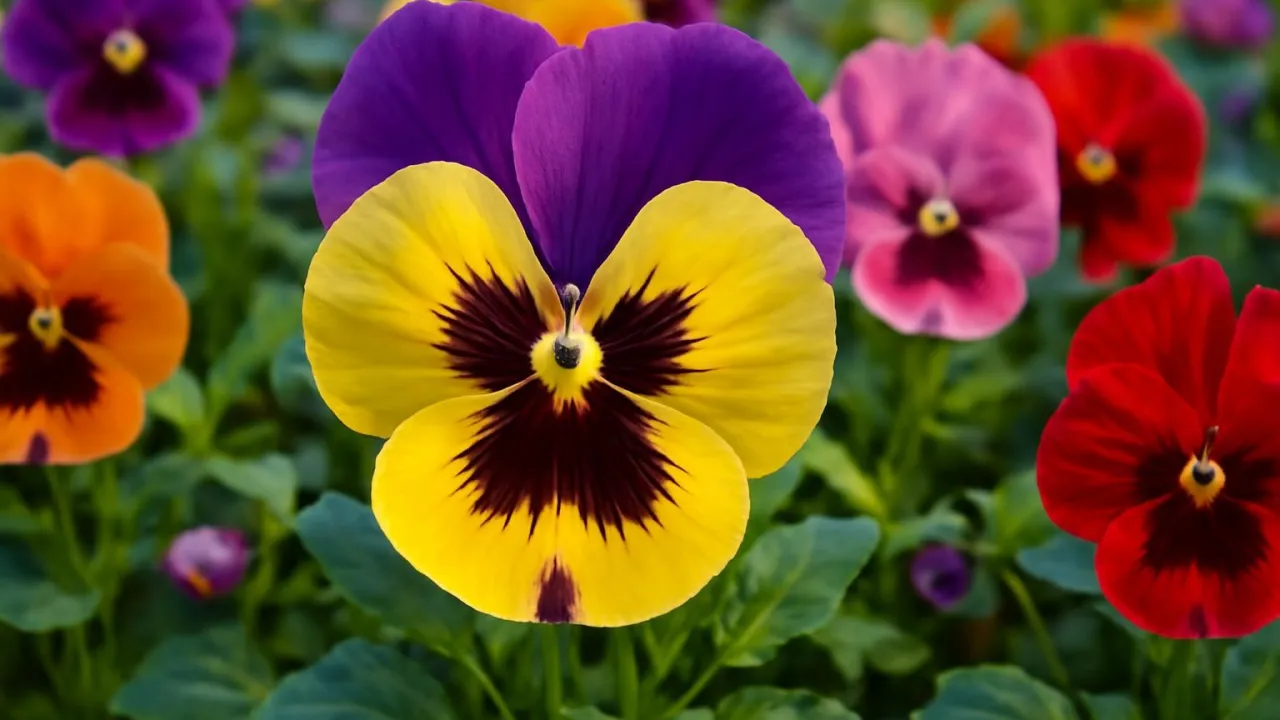
Garden pansies were bred to have colorful petals that look like cheerful faces!
✨ Word Sparks (Grade 2 Glossary)
Tap 🔊 to hear
moist
A little wet, not too dry
nectar
Sweet juice inside flowers for bees
bloom
When a flower opens up fully
🪝
Have you ever seen a flower that looks like a smiling face?
1
Colors and Shapes
Garden pansies have bright petals with many colors. Their petals often look like smiling faces. These flowers can be purple, yellow, or blue. The patterns help bees find easily.
2
Where They Grow
Pansies grow best in gardens with cool weather. They like places with full sun and soil. People plant them in spring and fall seasons. This helps them longer and stay healthy.
3
Growing from Seeds
Pansies start as tiny seeds in the soil. They need water and sunlight to sprout. Bees visit pansies to drink from the flowers. This helps the flowers make new seeds.
Garden pansies use their colorful petals to guide bees for pollination!
✨ Word Sparks (Grade 3 Glossary)
Tap 🔊 to hear
pollination
When bees help flowers make seeds
adaptation
A special trait that helps survival
nutrients
Food plants get from soil to grow
🪝
Why do garden pansies have colorful petals that look like faces?
1
Bright Petals and Camouflage
Garden pansies have bright petals that attract pollinators like bees. The face-like patterns guide bees to nectar. This helps , which is how flowers make seeds. Their colors also help them stand out in gardens.
2
Where Pansies Grow
Pansies grow in temperate regions with cool climates. They prefer moist, well-drained soil and full sunlight. These conditions help the plants absorb and grow strong. They often bloom in spring and fall seasons.
3
Life Cycle and Growth
Pansies start as tiny seeds planted in soil. After sprouting, seedlings grow leaves and stems. Flowers bloom after several weeks, attracting pollinators. leads to seed formation for new plants.
4
Special Adaptations
The face-like petals are an to attract insects. This visual cue helps bees find nectar quickly. Pansies also have a short growing season to avoid hot summer heat. These adaptations improve their survival chances.
Garden pansies help pollinators and support garden ecosystems with their colorful petals!
✨ Word Sparks (Grade 4 Glossary)
Tap 🔊 to hear
photosynthesis
How plants use sunlight to make food
biodiversity
Many different plants and animals living together
pollinator
An animal that helps flowers make seeds
🪝
How do garden pansies’ colorful petals affect their role in ecosystems?
1
Petals and Pollination
Garden pansies have colorful petals with face-like patterns that attract such as bees and butterflies. These patterns serve as visual guides to nectar, increasing pollination success. Pollination allows pansies to reproduce and produce seeds. This process supports the food web by feeding pollinators.
2
Growing Conditions and Distribution
Pansies thrive in temperate climates across many parts of the world, especially in gardens and parks. They prefer moist, well-drained soil and full sunlight to maximize . Gardeners plant pansies mainly in spring and fall because they tolerate cool weather better than heat. Their adaptability helps them spread widely.
3
Ecosystem Roles and Human Impact
Pansies provide nectar for , supporting in gardens and urban areas. Humans cultivate pansies for their beauty, which encourages green spaces and mental well-being. However, overuse of pesticides can harm pollinators visiting pansies. Sustainable gardening practices help protect these important plants and insects.
4
Cause and Effect in Growth
When pansies receive enough sunlight and water, they grow vibrant petals that attract . If conditions are poor, pansies produce fewer flowers, reducing pollination chances. Healthy pansies contribute to a balanced garden ecosystem by supporting insects and other wildlife.
1. Why do pansies bloom mostly in spring and fall?
2. How can humans help protect pansies and pollinators?
🤯 Mind-Blowing Fact • Grade 5
Garden pansies are hybrids scientifically bred for their large, colorful, face-like petals that attract pollinators efficiently.
✨ Word Sparks (Grade 5 Glossary)
Tap 🔊 to hear
hybrid
A plant made by crossing two different plants
chlorophyll
Green stuff in leaves that helps plants make food
cultivar
A plant variety made by people for special traits
🪝
What scientific features make garden pansies unique in plant taxonomy and ecology?
1
Taxonomy and Botanical Classification
Garden pansies belong to the genus Viola and are classified as Viola × wittrockiana. They are part of the Violaceae family, known for their distinctive five-petaled flowers. This hybridization was developed to enhance petal size and color patterns. Their botanical classification helps scientists understand their evolutionary relationships.
2
Physiological Mechanics and Adaptations
Pansies perform photosynthesis using in their leaves to convert sunlight into energy. Their face-like petal patterns act as nectar guides, a visual adaptation that improves pollinator efficiency. These flowers have a short life cycle, allowing them to thrive in temperate climates before hot weather arrives. Their root systems absorb nutrients efficiently from moist, well-drained soils.
3
Conservation and Botanical History
Garden pansies were first bred in the early 19th century by crossing wild Viola species. Their popularity in horticulture has led to many with diverse colors and patterns. While not endangered, maintaining genetic diversity is important to prevent disease susceptibility. Conservation efforts focus on sustainable gardening and protecting pollinator habitats.
4
Quantitative Comparisons
Garden pansies typically grow to heights between 4 and 8 inches (10 to 20 centimeters). Their petals can measure up to 3 inches (7.5 centimeters) across, making them larger than many wild violas. Pansies bloom best between temperatures of 45°F and 65°F (7°C to 18°C). They can survive light frost but not extreme cold or heat.
5
Ecological Impact and Human Benefits
By attracting pollinators such as bees and butterflies, pansies support local ecosystems and biodiversity. Their cultivation in urban gardens improves mental health and promotes environmental awareness. Sustainable gardening practices reduce pesticide use, protecting pollinator populations. Garden pansies also serve as model plants for studying flower coloration and pollination biology.