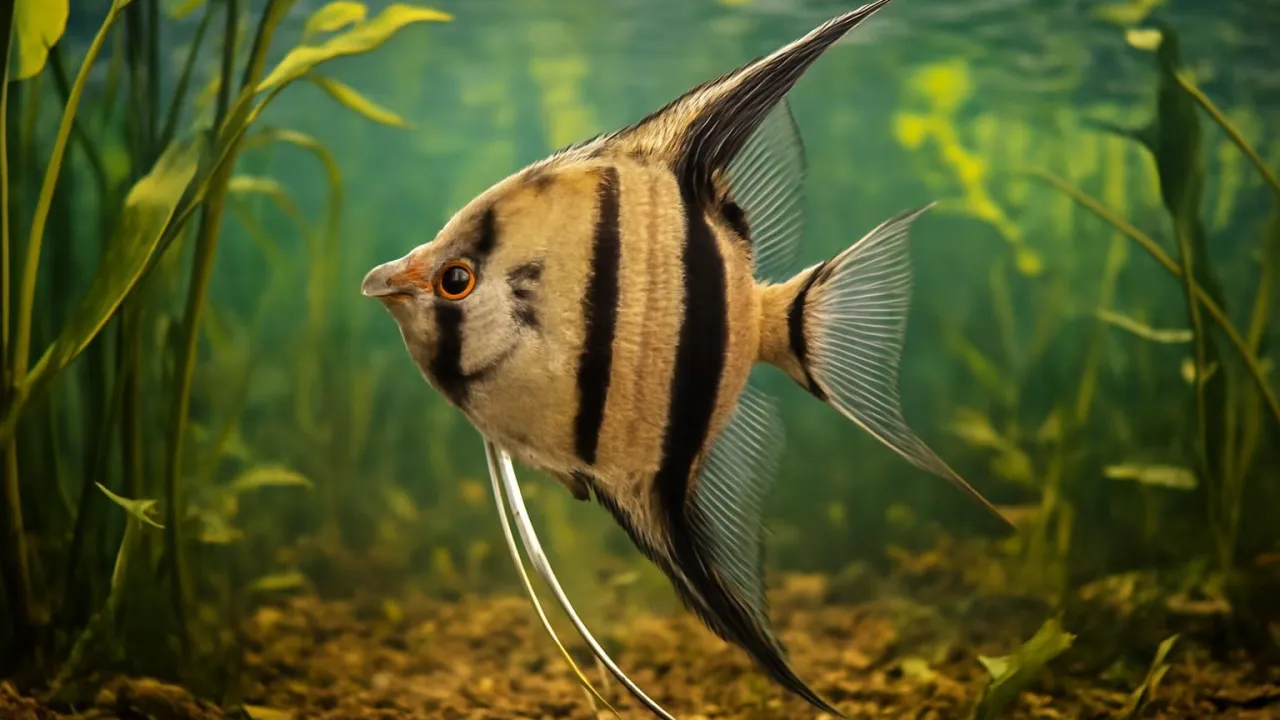
Freshwater angelfish use their wing-like fins to turn quickly and swim gracefully.
✨ Word Sparks (Grade 2 Glossary)
Tap 🔊 to hear
glide
To move smoothly and quietly
predators
Animals that hunt other animals
Amazon
A big river and forest in South America
🪝
Have you ever seen a fish that looks like it’s flying underwater?
1
Body Shape and Movement
Freshwater angelfish have tall, flat bodies that help them through water easily. Their long fins look like wings and help them steer as they swim slowly.
2
Home in the Amazon
These fish live in warm, slow-moving rivers in the Basin. They like places with lots of plants where they can hide from .
3
What Angelfish Eat
Angelfish eat small insects and bits of plants. They use their mouths to pick food from plants or water. Clean water helps them stay healthy and strong.
Freshwater angelfish use camouflage and wing-like fins to survive in dense water plants.
✨ Word Sparks (Grade 3 Glossary)
Tap 🔊 to hear
adaptation
A body change that helps survival
camouflage
Colors or patterns that hide animals
omnivore
An animal that eats plants and animals
🪝
Did you know freshwater angelfish use their wing-like fins to escape predators?
1
Unique Body and Movement
Freshwater angelfish have laterally compressed bodies that help them move through dense plants easily. Their tall dorsal and anal fins act like wings, allowing graceful turns and slow glides. This body shape is an to their watery environment.
2
Habitat and Camouflage
They live in the Amazon Basin’s slow-moving rivers and flooded forests. Their striped patterns provide among plants and shadows, helping them avoid predators. This increases their chances of survival.
3
Diet and Feeding
Angelfish are that eat small insects, larvae, and plant matter. They use their small mouths to pick food carefully from plants and water surfaces. Their diet provides essential nutrients for growth and reproduction.
4
Life Cycle and Reproduction
Freshwater angelfish lay eggs on flat surfaces like leaves or rocks. Both parents guard the eggs until they hatch. This protective behavior increases the survival rate of their young fish.
Freshwater angelfish’s wing-like fins and camouflage patterns help them survive and thrive in the Amazon.
✨ Word Sparks (Grade 4 Glossary)
Tap 🔊 to hear
ecosystem
A community of living things and their home
offspring
Baby animals or plants born from parents
parental care
Parents protecting and helping their babies
🪝
How do freshwater angelfish’s shapes and patterns help them thrive in the Amazon?
1
Body Design and Movement
Freshwater angelfish have laterally compressed bodies that allow them to slip easily through dense aquatic plants, avoiding predators. Their elongated dorsal and anal fins resemble wings, providing precise control and graceful swimming in slow-moving waters. This unique body design is essential for navigating their complex habitat. Their flat bodies reduce water resistance, which helps them move quietly and efficiently.
2
Role in the Ecosystem
As omnivores, angelfish help control insect populations by eating larvae and small insects, while also consuming plant matter. They serve as prey for larger fish, playing a key role in the Amazon food web. Their presence supports the balance of aquatic and biodiversity. This balance is important for the health of the entire river system.
3
Habitat and Geographic Range
Freshwater angelfish inhabit the Amazon Basin’s warm, slow-flowing rivers and flooded forests. They prefer areas rich in submerged plants that offer shelter and breeding sites. Human activities like deforestation and pollution threaten their natural habitats, impacting their populations. Protecting these areas is vital for their survival.
4
Reproduction and Parental Care
These fish lay adhesive eggs on flat surfaces such as leaves or rocks, with both parents fiercely guarding the eggs and fry. This increases survival in a habitat full of predators and environmental challenges, demonstrating a strong evolutionary adaptation. The parents work together to keep their young safe.
2. What role do angelfish play in their ecosystem?
🤯 Mind-Blowing Fact • Grade 5
Freshwater angelfish use hydrofoil-like fins and camouflage to expertly navigate and survive in complex Amazon waters.
✨ Word Sparks (Grade 5 Glossary)
Tap 🔊 to hear
taxonomy
How scientists group living things
hydrofoil
A fin that helps lift and steer in water
biparental
Both parents care for their babies
🪝
What makes freshwater angelfish uniquely adapted to the Amazon’s complex aquatic environment?
1
Scientific Classification and Taxonomy
Freshwater angelfish belong to the family Cichlidae and genus Pterophyllum, scientifically named Pterophyllum scalare. They are closely related to other cichlids found in South America’s freshwater habitats. Their reflects evolutionary adaptations to slow-moving, plant-rich waters. This classification helps scientists understand their biology and ecological relationships.
2
Physiological Adaptations and Mechanics
Their laterally compressed, tall bodies reduce water resistance, enabling precise navigation through dense vegetation. The elongated dorsal and anal fins act like , providing lift and stability during slow, graceful swimming. Their small mouths are adapted for picking insects and plant matter, optimizing their omnivorous diet. These physical traits improve their survival in complex aquatic environments.
3
Ecological Role and Conservation Status
Freshwater angelfish contribute to Amazonian aquatic ecosystems by controlling insect populations and serving as prey for larger predators. However, habitat destruction from deforestation and water pollution threatens their populations. Conservation efforts focus on protecting river habitats to maintain biodiversity and ecosystem health. Public awareness and habitat restoration are vital for their future.
4
Reproductive Behavior and Parental Investment
They exhibit care, with both male and female guarding adhesive eggs laid on submerged surfaces. This high parental investment increases offspring survival rates in predator-rich environments. Their reproductive strategy is a key evolutionary trait for species persistence. Parents also clean the eggs regularly to prevent fungus growth.
5
Quantitative Comparisons and Interesting Metrics
Freshwater angelfish grow up to 6 inches (15 cm) tall, with fins spanning nearly 4 inches (10 cm). They swim at slow speeds averaging 0.5 miles per hour (0.8 km/h), allowing careful maneuvering. Water temperatures in their habitat range from 75 to 82 degrees Fahrenheit (24 to 28 degrees Celsius), ideal for their physiology. Their lifespan in the wild can reach up to 10 years under optimal conditions.