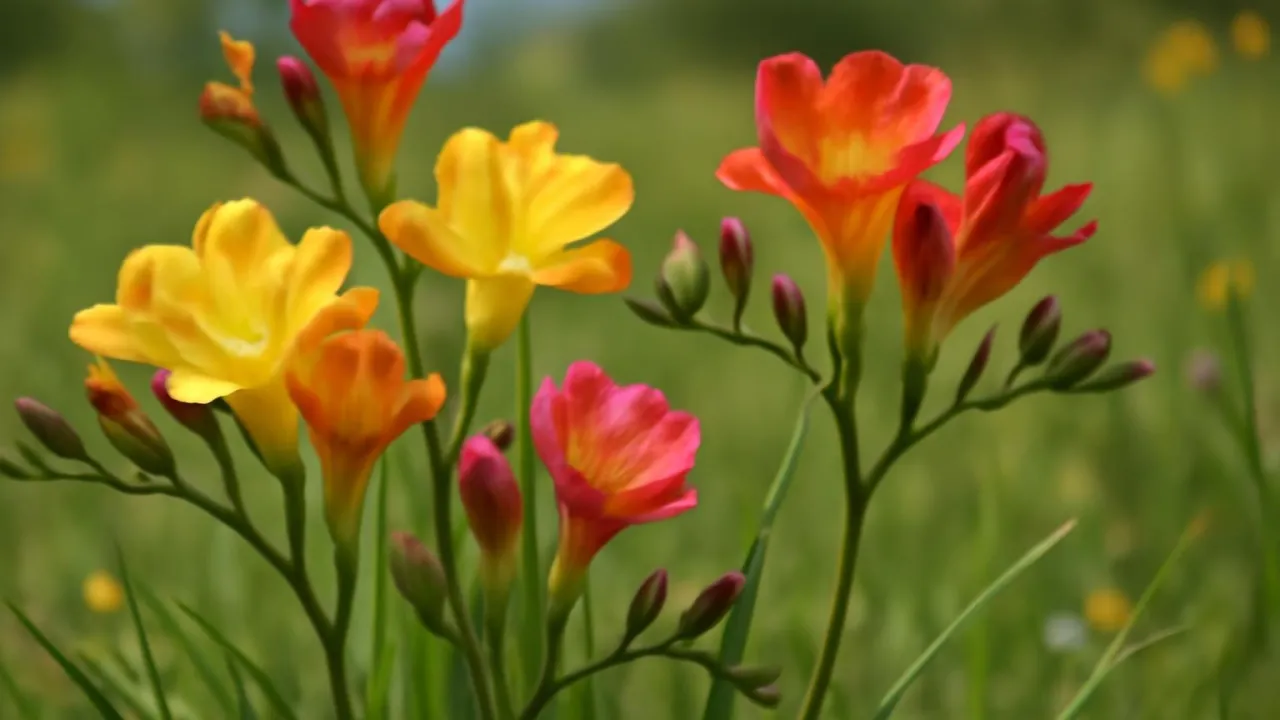
Freesia flowers are so fragrant that they are used to make perfumes and scented products.
✨ Word Sparks (Grade 2 Glossary)
Tap 🔊 to hear
fragrance
A nice smell from flowers or plants
nectar
Sweet juice inside flowers for bees
stem
The long part that holds the flower
🪝
Have you ever smelled a flower that smells like candy or perfume?
1
Bright and Colorful
Freesia flowers bloom in many bright colors like yellow, pink, white, and purple. They grow on tall, thin . People love to plant them in gardens because they look so pretty.
2
Sweet Fragrance
These flowers have a strong, sweet smell that smells like perfume or candy. Bees and butterflies come to freesia flowers to get . The smell helps the flowers attract these helpful insects.
3
Warm Places to Grow
Freesias grow best in warm places with lots of sunlight and dry soil. They come from South Africa and other warm areas. Gardeners often grow them in pots or flower beds.
Freesia flowers have bulbs underground that store food and water for dry times.
✨ Word Sparks (Grade 3 Glossary)
Tap 🔊 to hear
pollination
When pollen moves to help flowers make seeds
adaptation
A change that helps plants survive
nutrients
Food that plants need to grow
🪝
Did you know that freesia flowers use their sweet scent to survive?
1
Bright Colors and Petals
Freesias have brightly colored petals that help them stand out to pollinators. These petals come in colors like yellow, pink, purple, and white. Their shape helps guide insects to the nectar inside. This is an to attract pollinators.
2
Fragrance and Pollination
The strong sweet fragrance of freesia flowers attracts bees and butterflies. These pollinators carry pollen from one flower to another, helping the plants reproduce. This process is called and is important for flower survival.
3
Habitat and Growth
Freesias grow naturally in warm, dry climates like South Africa. They prefer well-drained soil and full sun. Their bulbs store to survive dry seasons. This helps them grow year after year.
4
Role in Ecosystems
Freesias play a role in food webs by providing nectar for pollinators. Their bright colors and scents help them avoid predators by attracting helpful insects. Humans also grow freesias for decoration and fragrance.
1. What do freesia bulbs store to help survive dry seasons?
2. Why is pollination important for freesias?
🤯 Mind-Blowing Fact • Grade 4
Freesias’ scent can repel some harmful insects while attracting helpful pollinators, balancing their ecosystem role.
✨ Word Sparks (Grade 4 Glossary)
Tap 🔊 to hear
pollinator
An animal that helps flowers make seeds
ecosystem
A community of plants and animals living together
conservation
Protecting plants and animals in nature
🪝
How do freesia flowers’ colors and scents affect their survival in nature?
1
Color and Fragrance for Survival
Freesia flowers use their bright colors and strong fragrance to attract like bees and butterflies, which helps with reproduction. This cause-and-effect relationship ensures the plants can produce seeds and continue their species. Their scent also deters some predators that dislike strong smells, helping protect the flowers.
2
Ecosystem Role and Food Webs
Freesias provide nectar, an important food source for , linking them to the local food web. These pollinators, in turn, support other animals higher in the food chain. Humans also benefit from freesias by cultivating them for gardens and the perfume industry, showing their economic importance.
3
Geographic Distribution
Native to South Africa, freesias thrive in Mediterranean climates with warm, dry summers and mild winters. They have been introduced worldwide to similar climates and are popular in gardens across Europe, North America, and Australia due to their beauty and fragrance. This wide distribution shows their adaptability.
4
Human Impact and Conservation
While wild freesia populations are stable, habitat loss and overharvesting could threaten them in the future. Cultivated varieties help reduce pressure on wild plants. efforts focus on protecting natural habitats and promoting sustainable gardening practices to preserve these lovely flowers.
Freesia’s fragrance molecules can travel several meters, guiding pollinators from far away.
✨ Word Sparks (Grade 5 Glossary)
Tap 🔊 to hear
corm
A bulb-like stem that stores food underground
volatile
Easily evaporates to make smells in the air
hybrid
A plant made by crossing two different kinds
🪝
What fascinating scientific secrets make freesias unique among fragrant flowering plants?
1
Scientific Classification and Origins
Freesia belongs to the Iridaceae family and includes about 15 species native to southern Africa’s Cape Provinces. These perennial plants grow from , which are underground storage organs that help them survive seasonal droughts and nutrient-poor soils. Their evolutionary history shows adaptation to Mediterranean climates with dry summers and wet winters.
2
Physiological Adaptations and Mechanics
Freesias produce organic compounds that create their strong, sweet fragrance, attracting specific pollinators such as bees and butterflies. Their funnel-shaped flowers and colorful petals guide pollinators efficiently to nectar, maximizing pollination success. The store carbohydrates and water, enabling survival during dry seasons.
3
Ecological and Economic Importance
In their native ecosystems, freesias contribute to pollination networks supporting biodiversity. Economically, they are cultivated worldwide for cut flowers and perfume production, with their scent compounds used in many fragrances and cosmetic products. The global floriculture industry values freesias for their vibrant colors and lasting fragrance.
4
Conservation and Cultivation History
While wild freesia populations remain stable, habitat destruction and climate change pose risks. Cultivation began in Europe in the 19th century, leading to many varieties with enhanced colors and scents. Conservation efforts emphasize protecting native habitats and promoting sustainable horticulture to preserve genetic diversity.
5
Quantitative Comparisons and Growth
Freesias typically grow 6 to 12 inches tall and bloom in early spring, producing clusters of 6 to 8 flowers per stem. Their store enough nutrients to survive dry seasons lasting several months. The fragrance intensity varies among species and can be detected up to several meters away, demonstrating effective chemical signaling. Compared to other fragrant flowers, freesias have one of the most potent scents relative to their size.