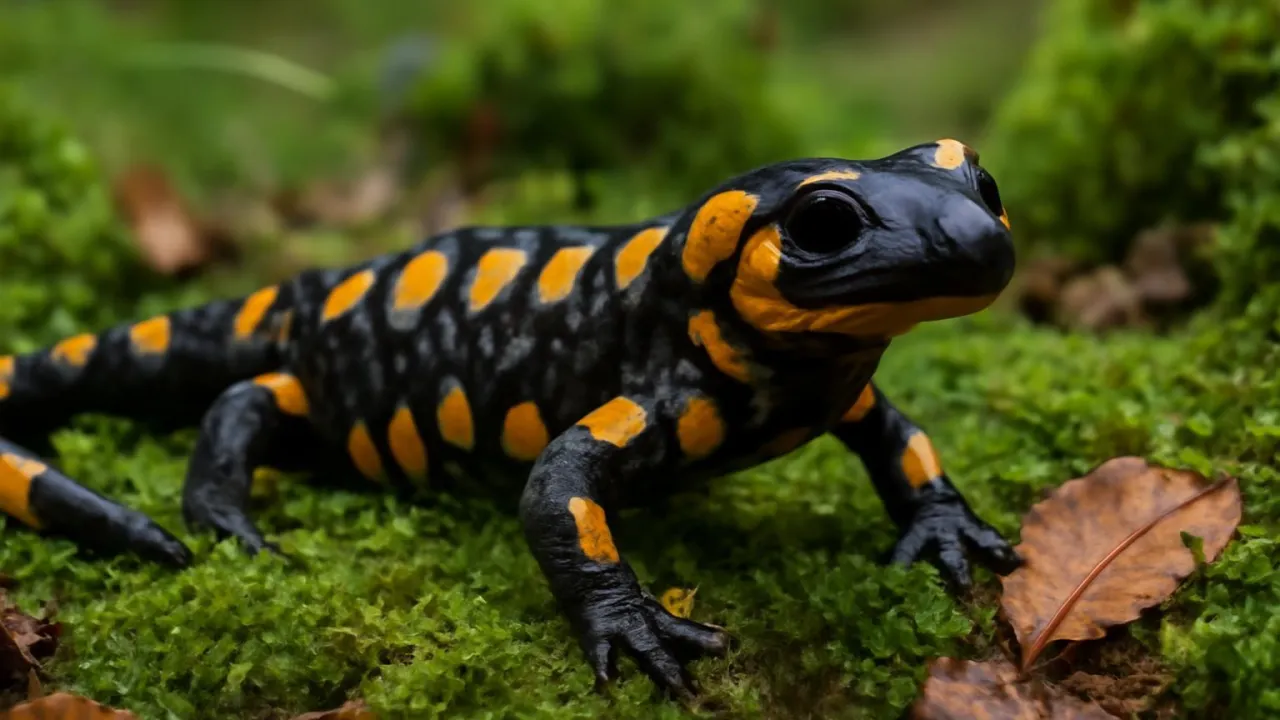
Fire salamanders can shoot poison from their skin to scare away enemies!
✨ Word Sparks (Grade 2 Glossary)
Tap 🔊 to hear
predator
An animal that hunts other animals for food
moist
A little wet or damp
sticky
Takes hold and does not let go easily
🪝
Have you ever seen an animal with bright colors that warn others?
1
Bright Colors Warn Predators
The fire salamander has shiny black skin with bright yellow spots and stripes. These colors warn other animals that it is poisonous. It moves slowly but uses its bright colors to stay safe.
2
Living in Wet Forests
Fire salamanders live in damp forests near streams and ponds. They hide under rocks, logs, and leaves to stay . They come out mostly at night when it is cooler.
3
Eating Bugs and Worms
This salamander eats insects, worms, and small bugs it finds on the forest floor. It catches food with its tongue and swallows it quickly. Eating helps it grow and stay healthy.
Fire salamanders’ poison can cause muscle cramps and pain in predators!
✨ Word Sparks (Grade 3 Glossary)
Tap 🔊 to hear
aposematic
Bright colors that warn animals not to eat
invertebrates
Animals without bones like worms and bugs
larvae
Young animals that look different from adults
🪝
Did you know some animals use bright colors as a clever survival trick?
1
Warning Colors and Camouflage
The fire salamander has bright yellow spots on shiny black skin that warn predators it is poisonous. This bright coloration is a form of signaling to avoid being eaten. Its skin secretes toxins that can hurt animals that try to bite it.
2
Habitat and Adaptations
Fire salamanders live in moist, temperate forests in Europe where they hide under logs and leaves. Their smooth skin helps them absorb moisture, which is important because they breathe partly through their skin. They prefer cool, damp places near streams.
3
Diet and Feeding
They eat insects, worms, and other small found on the forest floor. Using a sticky tongue, the salamander quickly catches prey to get nutrients it needs. This diet helps it grow and stay healthy in its environment.
4
Life Cycle and Defense
Fire salamanders lay eggs in water, where develop before becoming land animals. Their bright colors also help warn predators during all life stages. When threatened, they can secrete poison to defend themselves from predators.
1. What does aposematic coloring do for the fire salamander?
2. Why is moist skin important for fire salamanders?
🤯 Mind-Blowing Fact • Grade 4
Fire salamanders’ poison is strong enough to cause muscle cramps in animals that try to eat them!
✨ Word Sparks (Grade 4 Glossary)
Tap 🔊 to hear
aposematic
Bright colors that warn predators not to eat
ecosystem
A community of living things and their home
conservation
Protecting nature and animals from harm
🪝
How do fire salamanders use their bright colors to survive in forests?
1
Bright Colors Signal Danger
Fire salamanders display bright yellow spots on black skin as a warning to predators that they are toxic. This coloration reduces attacks, helping salamanders survive longer in their forest habitats. Predators learn to avoid them after unpleasant experiences. This defense helps maintain their population in the .
2
Role in Forest Ecosystems
These salamanders play an important role in forest food webs by controlling insect populations. They serve as prey for some larger animals that can tolerate their toxins. Their presence indicates a healthy, moist forest with clean water sources. This balance helps keep the forest environment stable.
3
Habitat and Human Impact
Fire salamanders thrive in temperate European forests with cool, damp conditions near streams. However, pollution and deforestation threaten their habitats, reducing safe places to live and breed. efforts focus on protecting wetlands and forest areas to support their populations. Protecting these habitats benefits many other species as well.
4
Defense Mechanisms and Behavior
When threatened, fire salamanders secrete a toxic substance from skin glands that can cause pain or muscle cramps in predators. They are mostly nocturnal, hiding during the day to avoid heat and dryness. Their slow movements are balanced by their strong chemical defenses. This combination helps them survive in a dangerous world.
1. Why do fire salamanders have bright yellow spots?
2. What threatens fire salamander habitats?
🤯 Mind-Blowing Fact • Grade 5
Fire salamanders’ skin toxins are so strong they can cause muscle cramps in animals that try to eat them!
✨ Word Sparks (Grade 5 Glossary)
Tap 🔊 to hear
alkaloid
A natural chemical that can be poisonous
metamorphosis
The change from young to adult form
cutaneous
Related to the skin or outer body surface
🪝
What makes the fire salamander a fascinating example of chemical defense in amphibians?
1
Scientific Classification and Distribution
The fire salamander, scientifically named Salamandra salamandra, belongs to the family Salamandridae and is native to temperate forests across central and southern Europe. Its range includes countries such as Germany, France, and Italy, where it inhabits moist deciduous and mixed woodlands.
2
Physiological Adaptations and Defense
This amphibian produces potent toxins through specialized skin glands, which it secretes when threatened to deter predators. The bright aposematic coloration consisting of black skin with vivid yellow patterns serves as a visual warning, reducing predation risk. Its smooth, moist skin facilitates respiration, allowing gas exchange through the skin.
3
Life Cycle and Reproductive Behavior
Fire salamanders exhibit internal fertilization, with females depositing larvae in clean, slow-moving streams where aquatic larvae develop over several weeks. The larvae possess external gills and undergo before transitioning to terrestrial adulthood. This complex life cycle requires both aquatic and terrestrial habitats for survival.
4
Ecological Role and Conservation Status
As both predator and prey, fire salamanders regulate invertebrate populations and provide food for some resistant predators, contributing to ecosystem balance. Habitat loss from deforestation and water pollution threatens their populations, leading to conservation efforts emphasizing habitat preservation and pollution control.
5
Quantitative Comparisons and Interesting Facts
Adult fire salamanders measure between 15 and 25 centimeters in length and weigh approximately 40 to 150 grams. Their toxin secretion can cause muscle cramps in predators, making them one of the most chemically defended amphibians in Europe. They are primarily nocturnal and can live up to 20 years in the wild. Their slow movement is compensated by their strong chemical defenses and warning colors.