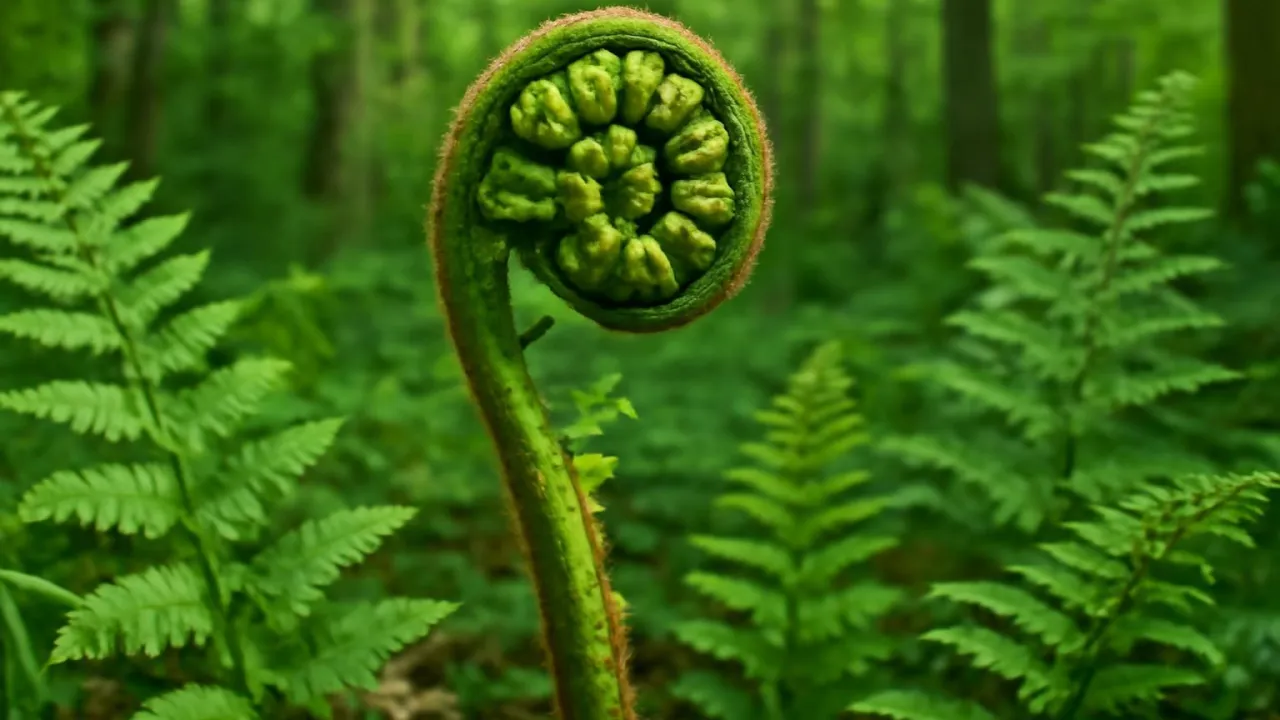
1. What shape do fiddlehead ferns look like when small?
2. Can people eat fiddlehead ferns?
🤯 Mind-Blowing Fact • Grade 2
Fiddlehead ferns are one of the first wild plants people eat in spring!
✨ Word Sparks (Grade 2 Glossary)
Tap 🔊 to hear
frond
A fern leaf with many smaller leaflets
harvest
To gather plants or food from nature
moist
Slightly wet or damp
🪝
Have you ever seen a fern that looks like a tight green spiral?
1
Fiddlehead Ferns in Nature
Fiddlehead ferns grow in cool, shady forests with soil. They like places with fresh water nearby. These ferns appear in early spring when the weather is still cool.
2
How Fiddleheads Grow
The fern starts as a curled-up green coil called a fiddlehead. It slowly unfurls as it grows taller and stronger each day. Soon, it becomes a full fern with many leaflets.
3
A Special Fern to Eat
People fiddleheads because they taste fresh and a little like spinach. They must be cooked well to be safe and yummy. Many chefs use them in spring dishes.
2. Why must people cook fiddleheads before eating?
🤯 Mind-Blowing Fact • Grade 3
Fiddlehead ferns use their tight spiral shape as a natural shield for young leaves!
✨ Word Sparks (Grade 3 Glossary)
Tap 🔊 to hear
adaptation
A change that helps plants or animals survive
photosynthesis
How plants make food from sunlight
camouflage
When something blends into its surroundings
🪝
Did you know fiddlehead ferns protect themselves by curling tightly like a spiral?
1
Fiddlehead Ferns and Their Habitat
Fiddlehead ferns grow in temperate forests where shade and moisture are plentiful. Their curled shape helps protect the young leaves from cold and predators. These ferns thrive near streams or damp soil that provides essential nutrients.
2
How Fiddleheads Grow and Adapt
The young fern fronds start tightly coiled in a spiral called a fiddlehead. This coil helps protect the delicate leaf tips during early growth. As the fern grows, it slowly unfurls to capture sunlight for .
3
Fiddleheads in the Food Chain
Fiddlehead ferns provide food for animals and humans in spring. They contain nutrients that help animals survive after winter. Humans harvest fiddleheads carefully to avoid damaging the fern population.
4
Special Features of Fiddleheads
The spiral shape of fiddleheads is an that protects young leaves from damage. Their bright green color helps them among other plants. This adaptation increases their chances of survival in the wild.
1. What does the spiral shape of fiddleheads protect?
2. Why do fiddlehead ferns grow near streams or damp soil?
🤯 Mind-Blowing Fact • Grade 4
Fiddlehead ferns play a key role in forest food webs by feeding animals and people in early spring!
✨ Word Sparks (Grade 4 Glossary)
Tap 🔊 to hear
ecosystem
A community of plants and animals living together
herbivore
An animal that eats only plants
conservation
Protecting plants and animals from harm
🪝
How does the unique spiral shape of fiddlehead ferns help them survive in forests?
1
Fiddlehead Ferns’ Forest Home
Fiddlehead ferns grow mainly in temperate forests of North America and Asia, where shade and moisture are abundant. These conditions create a perfect that supports their growth and development. The ferns often grow near streams, which provide continuous water supply and help maintain soil moisture.
2
Growth and Adaptation Strategies
The young fiddlehead fern fronds curl tightly into a spiral, protecting the delicate leaf tips from frost and . This adaptation reduces damage during early growth stages, allowing the plant to survive harsh weather. As the fronds unfurl, they maximize sunlight capture for photosynthesis, supporting rapid growth.
3
Role in the Ecosystem
Fiddlehead ferns contribute to forest food webs by providing early spring nutrients to animals like deer and birds. Humans also harvest fiddleheads carefully, balancing their culinary use with efforts. This symbiotic relationship highlights the fern’s importance in both natural and human-influenced .
4
Geographic Distribution and Human Impact
These ferns are native to cooler climates across North America and parts of Asia, thriving in moist, shaded environments. Overharvesting can threaten local populations, so sustainable harvesting practices are essential to protect fiddlehead fern habitats. efforts focus on educating people about responsible gathering.
1. Why do fiddlehead ferns curl into spirals when young?
2. What can happen if too many fiddleheads are harvested?
🤯 Mind-Blowing Fact • Grade 5
The fiddlehead fern’s spiral growth reduces frost damage by half, protecting young leaves in cold climates!
✨ Word Sparks (Grade 5 Glossary)
Tap 🔊 to hear
circinate vernation
Young fern leaves curled up in a spiral
spores
Tiny plant seeds that grow new ferns
sustainable
Using resources without harming nature
🪝
What scientific secrets does the fiddlehead fern’s spiral shape reveal about plant survival?
1
Scientific Classification and Botanical Context
The fiddlehead fern, scientifically named Matteuccia struthiopteris, belongs to the family Onocleaceae within the order Polypodiales. It is a deciduous fern native to temperate regions of North America and Asia. Unlike flowering plants, it reproduces via found on the undersides of mature fronds, making it an ancient plant species.
2
Physiological Mechanics of Growth
Fiddlehead ferns exhibit , meaning their young fronds emerge tightly coiled in a spiral to protect delicate tissues. This coiling minimizes damage from environmental stressors like frost and herbivory during early development. As the frond unfurls, photosynthetic efficiency increases, allowing rapid energy production for growth.
3
Conservation and Sustainable Harvesting
Due to their popularity as a seasonal delicacy, fiddlehead ferns face pressure from overharvesting in some regions. harvesting guidelines recommend picking only a few fiddleheads per plant to ensure continued growth and reproduction. Conservation efforts also emphasize habitat protection to maintain healthy fern populations.
4
Botanical History and Cultural Significance
Fiddlehead ferns have been consumed by Indigenous peoples in North America for centuries, valued for their nutritional content and unique flavor. They appear in traditional springtime diets and cultural practices, symbolizing renewal and growth. Modern culinary interest has increased their global popularity as a gourmet vegetable.
5
Quantitative Comparisons and Environmental Adaptations
Fiddlehead fronds typically unfurl to lengths of about 2 to 3 feet (60 to 90 centimeters) within weeks during spring. They thrive in soil temperatures ranging from 45°F to 65°F (7°C to 18°C), which supports optimal growth. Their spiral coiling reduces frost damage by up to 50%, a critical adaptation for survival in temperate climates.