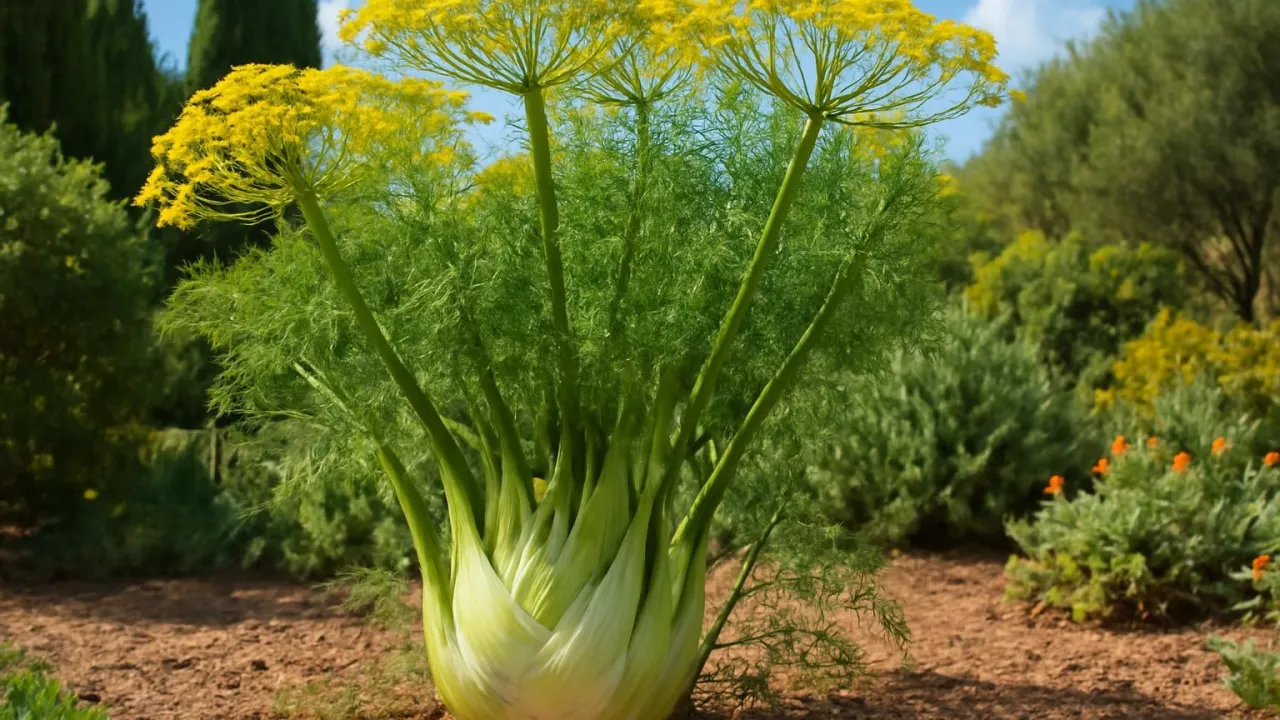
Fennel’s sweet licorice flavor comes from natural oils inside its bulb and leaves!
✨ Word Sparks (Grade 2 Glossary)
Tap 🔊 to hear
bulb
The round part of a plant that grows underground
stalk
The tall, thin part that holds leaves and flowers
licorice
A sweet flavor like candy from a special plant
🪝
Have you ever tasted a vegetable that smells like candy?
1
What Is Fennel Like?
Fennel has crunchy white and green that look like celery. Its feathery leaves smell sweet like . People eat the bulb, stalks, and leaves raw or cooked.
2
Where Does Fennel Grow?
Fennel grows best in warm, sunny gardens with well-watered soil. It can grow up to six feet tall in good weather. Farmers plant fennel in many countries around the world.
3
A Special Flavor
Fennel tastes sweet and fresh like candy, which makes it special. This flavor comes from natural oils inside the plant. Many people use fennel in salads or soups.
Fennel’s licorice scent both protects it from predators and attracts helpful pollinators!
✨ Word Sparks (Grade 3 Glossary)
Tap 🔊 to hear
photosynthesis
How plants use sunlight to make food
pollinator
An animal that helps plants make seeds
adaptation
A change that helps plants survive better
🪝
Did you know fennel uses its special smell to protect itself?
1
Fennel’s Unique Features
Fennel has a crunchy white bulb that stores nutrients for the plant’s growth. Its feathery green leaves help with by capturing sunlight. The plant’s tall stalks support the leaves and flowers high above the ground.
2
Where Fennel Thrives
Fennel grows best in warm, sunny climates with well-drained soil rich in nutrients. It is native to the Mediterranean but has adapted to many regions worldwide. This helps fennel survive in different ecosystems.
3
How Fennel Protects Itself
Fennel produces natural oils that smell like licorice, which helps keep predators away. This scent also attracts like bees, aiding in the plant’s reproduction. These oils act as a natural defense and a survival .
4
Fennel in Our Food
Humans use fennel in cooking because of its sweet, fresh flavor and crunchy texture. It is often added to salads, soups, and roasted dishes to add taste and nutrients. Fennel also provides fiber and vitamins that support health.
Fennel’s licorice oils both defend it and build helpful partnerships with pollinators!
✨ Word Sparks (Grade 4 Glossary)
Tap 🔊 to hear
symbiotic
A helpful relationship between two living things
herbivore
An animal that eats only plants
invasive
A plant that spreads too much and harms others
🪝
How does fennel’s flavor help it survive and grow in many places?
1
Fennel’s Physical Traits
Fennel grows tall with crunchy white bulbs that store water and nutrients to survive dry periods. Its feathery leaves increase surface area for photosynthesis, helping the plant make energy efficiently. The tall stalks hold flowers that attract pollinators, ensuring reproduction. These physical traits allow fennel to thrive in various climates.
2
Ecosystem Role and Protection
The licorice scent from fennel’s natural oils repels , reducing damage from predators. At the same time, this scent attracts bees and other pollinators, creating a relationship that benefits both plants and insects. This balance helps fennel thrive in its ecosystem and supports biodiversity.
3
Geographic Spread and Human Impact
Originally from the Mediterranean, fennel has spread worldwide through human cultivation and seed dispersal. Farmers grow fennel in gardens and farms because it adds flavor and nutrition to food. However, in some areas, wild fennel can become , affecting local plant communities and ecosystem balance.
4
Fennel in Agriculture and Cooking
Humans harvest fennel for its edible bulb, stalks, and leaves, using it fresh or cooked in many dishes. Its sweet flavor enhances salads, soups, and roasted meals, making it popular in Mediterranean and global cuisines. Sustainable farming helps protect fennel’s natural habitats and ensures continued growth.
Fennel’s aromatic compound anethole both protects it and flavors many foods worldwide.
✨ Word Sparks (Grade 5 Glossary)
Tap 🔊 to hear
anethole
A natural oil that gives fennel its sweet smell
naturalized
A plant that grows wild outside its original home
carbohydrates
Plant sugars that store energy for growth
🪝
How does fennel’s biology make it a unique vegetable and natural protector?
1
Scientific Classification and Origins
Fennel, scientifically named Foeniculum vulgare, belongs to the Apiaceae family, which includes carrots and parsley. It is native to the Mediterranean basin but has in many temperate regions worldwide. Its classification helps scientists understand its relationships with other aromatic plants. This knowledge supports agricultural and conservation efforts globally.
2
Physiological Adaptations and Mechanics
Fennel’s bulb stores and water, enabling survival during dry spells, while its hollow stalks provide structural support and transport nutrients. The feathery leaves maximize photosynthetic efficiency by increasing light capture. Its production of , an aromatic compound, deters herbivores and attracts pollinators, aiding reproduction.
3
Ecological Role and Conservation
Fennel plays a dual ecological role by repelling herbivorous insects with its strong scent and simultaneously attracting beneficial pollinators such as bees and butterflies. While widely cultivated, wild fennel populations require monitoring due to invasive tendencies in non-native habitats. Conservation efforts focus on balancing agricultural use with ecosystem health to protect biodiversity.
4
Culinary History and Human Uses
Humans have cultivated fennel for thousands of years, using its bulb, stalks, and seeds in cooking and traditional medicine. Its sweet licorice flavor, caused by , enhances a variety of dishes worldwide, especially in Mediterranean cuisine. Fennel seeds are also valued for their digestive and medicinal properties in many cultures.
5
Quantitative Comparisons and Growth
Fennel plants can reach heights between three and six feet, with bulbs weighing up to one pound. They thrive in temperatures ranging from 50 to 80 degrees Fahrenheit (10 to 27 degrees Celsius). The plant’s growth rate and aromatic oil concentration vary depending on soil nutrients, sunlight, and climate conditions, influencing flavor and size.