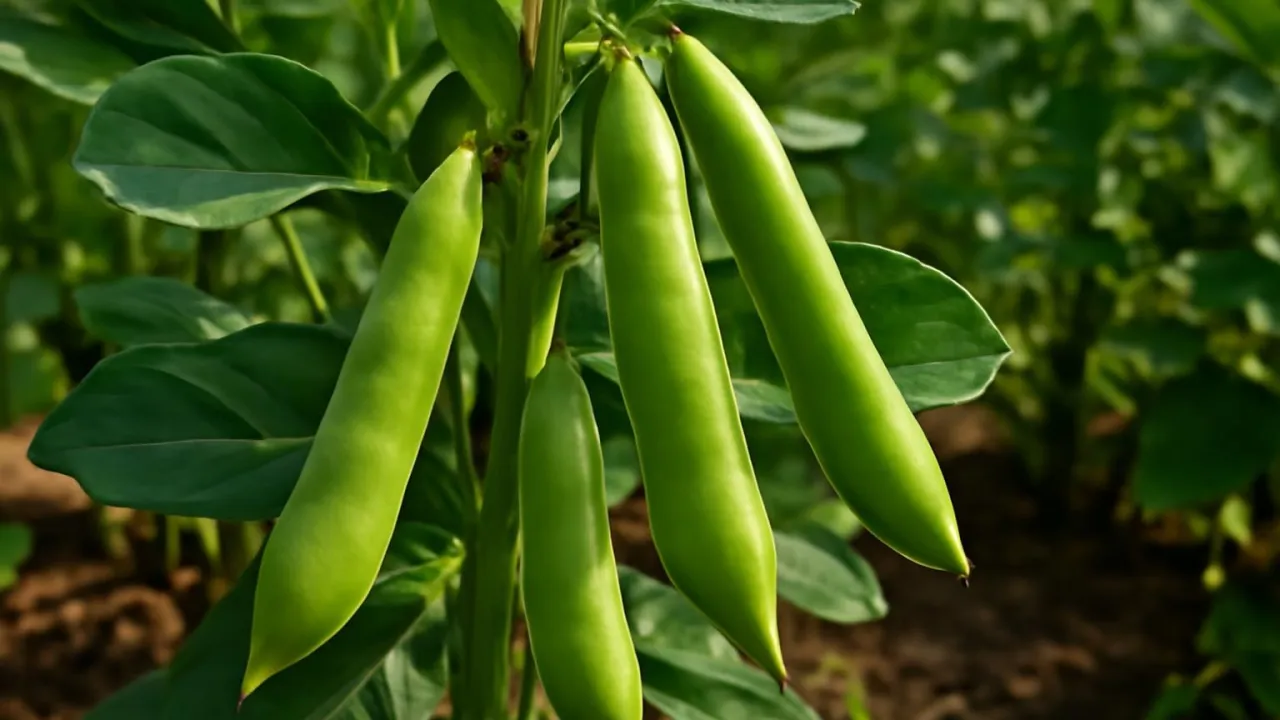
Fava beans help the soil by adding natural nitrogen for other plants to grow.
✨ Word Sparks (Grade 2 Glossary)
Tap 🔊 to hear
pollinate
When bees help flowers make seeds
nitrogen
A gas that helps plants grow strong
harvest
To pick plants when they are ready
🪝
Have you ever seen beans growing inside big green pods?
1
Fava Beans and Their Pods
Fava beans grow inside large green pods that protect them well. The pods are thick and can be smooth or slightly fuzzy. When ripe, the pods open to show the soft beans inside.
2
Where Fava Beans Live
Fava bean plants grow best in warm places with full sun and soft soil. They can reach up to four feet tall when healthy. Bees visit the flowers to help and make beans.
3
Why People Like Fava Beans
People cook fava beans fresh or dried in many dishes around the world. The beans taste creamy and slightly sweet when cooked well. They are healthy and give energy to those who eat them.
Fava beans fix nitrogen in soil, helping other plants grow better nearby.
✨ Word Sparks (Grade 3 Glossary)
Tap 🔊 to hear
nodules
Small bumps on roots that help plants get nitrogen
photosynthesis
How plants use sunlight to make food
pollination
When pollen moves to make seeds grow
🪝
Did you know fava beans help the soil while they grow?
1
Fava Beans and Their Pods
Fava beans grow inside large green pods that protect them from insects and weather. The pods are thick and sometimes fuzzy, making a natural shield. When mature, the pods split open to release the beans inside.
2
How Fava Beans Grow and Adapt
The fava bean plant can grow up to four feet tall in warm climates. It uses bright green leaves to capture sunlight for . Its root system has special that fix nitrogen, enriching the soil naturally.
3
Fava Beans in Nature and Farming
Fava beans attract pollinators like bees that help with to produce seeds. Farmers grow fava beans to improve soil health and add nutrients for other crops. This makes fava beans important in many food webs and ecosystems.
4
Eating and Using Fava Beans
People eat fava beans cooked fresh or dried in many recipes worldwide. The beans are rich in protein and fiber, making them healthy food. They have a creamy texture and slightly sweet flavor when cooked well.
1. What special part helps fava beans add nitrogen to soil?
2. Why do farmers grow fava beans?
🤯 Mind-Blowing Fact • Grade 4
Fava beans naturally add nitrogen to soil, reducing the need for chemical fertilizers and helping the environment.
✨ Word Sparks (Grade 4 Glossary)
Tap 🔊 to hear
fertile
Soil rich in nutrients for plants to grow
rotation
Growing different crops to keep soil healthy
ecosystem
A community of plants, animals, and environment
🪝
How do fava beans help both people and the environment around them?
1
Fava Beans’ Role in Nature
Fava beans grow in large green pods that protect the seeds from pests and harsh weather. Their thick pods open when ripe to release the beans for new plants to grow. This natural defense helps the plant survive in many environments and climates.
2
How Fava Beans Improve Soil
The roots of fava bean plants have nodules that fix nitrogen from the air into the soil. This process enriches the soil with nutrients, making it more for future crops and reducing the need for chemical fertilizers. As a result, farmers often rotate fava beans with other plants to keep soil healthy.
3
Fava Beans in Ecosystems and Farming
Fava beans attract pollinators such as bees, which help with pollination and seed production. They provide food for many insects and animals, playing an important role in food webs and maintaining balance. Humans cultivate fava beans worldwide for food and soil improvement.
4
Fava Beans as Food and Culture
People enjoy fava beans in many cuisines, cooking them fresh or dried in soups, stews, and salads. The beans are rich in protein, fiber, and vitamins, supporting healthy diets and nutrition. Their popularity spans continents, showing their cultural and nutritional importance across many countries.
1. Why do farmers rotate fava beans with other crops?
2. What important role do bees play with fava beans?
🤯 Mind-Blowing Fact • Grade 5
Fava beans can fix up to 150 kilograms of nitrogen per hectare each year, enriching soil naturally.
✨ Word Sparks (Grade 5 Glossary)
Tap 🔊 to hear
symbiotic
A helpful relationship between two living things
legume
A plant that grows beans or peas in pods
biodiversity
Many different kinds of plants and animals living together
🪝
Did you know fava beans are both ancient crops and natural soil enhancers?
1
Scientific Classification and Origins
Fava beans, scientifically named Vicia faba, belong to the family Fabaceae. They originated in the Mediterranean and parts of Asia, where they have been cultivated for thousands of years. Their ability to fix nitrogen makes them valuable in sustainable agriculture worldwide. Ancient farmers prized them for enriching poor soils naturally.
2
Physiological Adaptations and Growth
The fava bean plant grows between two and four feet tall, with broad leaves that maximize photosynthesis. Its root system contains nitrogen-fixing nodules formed by bacteria, which convert atmospheric nitrogen into usable nutrients. This biological process reduces the need for synthetic fertilizers in farming, benefiting the environment significantly.
3
Agricultural Importance and Conservation
Farmers use fava beans in crop rotation to improve soil fertility and reduce pests naturally. This practice supports sustainable farming by lowering chemical inputs and increasing yields. Conservation efforts promote fava bean cultivation to maintain and soil health in various climates. They are essential for organic and regenerative agriculture worldwide.
4
Nutritional Value and Culinary Uses
Fava beans are rich in protein, fiber, vitamins, and minerals, making them a nutritious food source globally. They are consumed fresh, dried, or cooked in diverse dishes such as stews, salads, and spreads. Their creamy texture and mildly sweet flavor make them popular in many cultures, contributing to food security and healthy diets.
5
Quantitative Comparisons and Environmental Impact
Fava bean plants can grow up to four feet tall and fix nitrogen at rates of up to 150 kilograms per hectare annually. They thrive best in temperatures between 60 and 75 degrees Fahrenheit (15 to 24 degrees Celsius). Their nitrogen-fixing ability significantly reduces greenhouse gas emissions by lowering fertilizer use. This makes fava beans a key crop for climate-smart agriculture.